
Lieferung heute & morgen

Qualitätsgarantie

Willkommens-Angebote freischalten: KOSTENLOSE Lieferung | Bis zu 80 % RABATT | Kostenlose 30-Tage-JoyPlus-Testphase
App herunterladen
Rising summer temperatures are making it essential to cool down our own homes. The heat can quickly become a burden, especially in attic apartments or poorly insulated rooms. A portable air conditioner offers a flexible and ready-to-use solution without the need for complex structural modifications.
This article serves as a guide. We will introduce you to various models and explain the most important criteria you should consider in your decision. Our goal is to provide you with an objective foundation so you can find the right unit for your individual needs.
The selection of units is vast. To make an informed decision, a few technical aspects are of central importance.
Cooling capacity is the decisive factor for an air conditioner's effectiveness. It is usually specified in BTU (British Thermal Unit) or kilowatts (kW). A higher BTU number means greater cooling power. As a rule of thumb:
Also consider factors like ceiling height, sun exposure, and the number of people in the room, as these will further influence your cooling requirements.
A portable air conditioner often runs for several hours a day, so power consumption plays a significant role. Pay attention to the energy efficiency class. Units with an energy efficiency class of A or higher operate more economically and help keep electricity costs under control.
The noise level, measured in decibels (dB), is particularly relevant if you are looking for a quiet air conditioner for the bedroom. Models with a sound power level below 55 dB in normal operation are considered relatively quiet. Many units also offer a special sleep mode that further reduces fan speed and, consequently, the noise level.
Modern units are often more than just air conditioners. A 3-in-1 air conditioner combines cooling, dehumidifying, and fan functions. This is especially practical for regulating the indoor climate throughout the year. Some models even offer an air conditioner with a heating function, making them useful during transitional seasons as well.
Every portable monobloc air conditioner requires an air conditioner with an exhaust hose to expel the warm air outside. A window installation kit is usually included in the package. For tech-savvy users, an air conditioner with app control can be appealing, allowing operation via a smartphone or voice assistant.
Here is a selection of units that cover different requirements and applications.
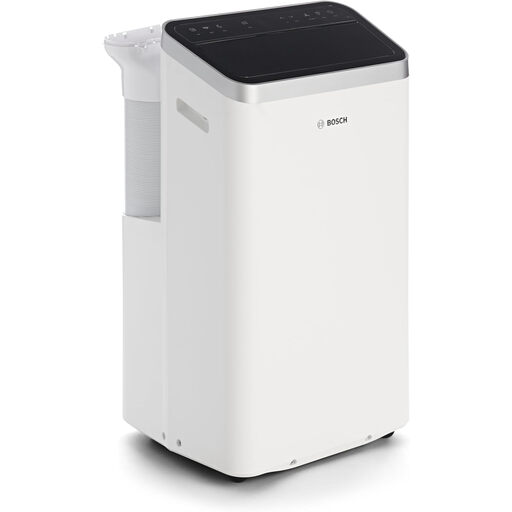
Why it stands out: The Bosch Cool 4000 combines brand quality with thoughtful features. The "Easy Cool Select" function simplifies operation with preset modes for automatic, quiet, and sleep settings.
Pros:
Who is it for? This model is a solid choice for users seeking a reliable and energy-efficient cooling solution for medium-sized living rooms or bedrooms, who also value ease of use.
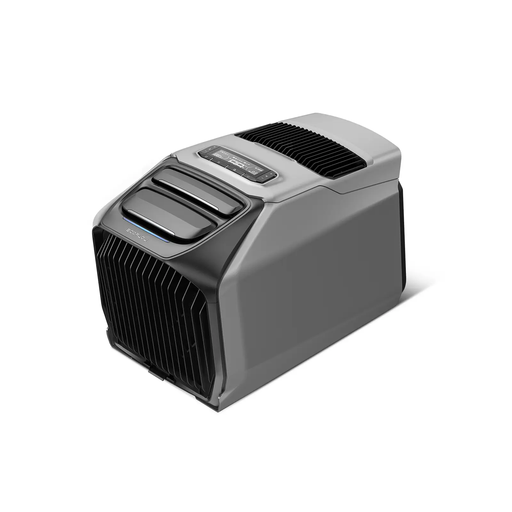
Why it stands out: The EcoFlow WAVE 3 is specifically designed for mobile use. With an optional battery, it can operate wirelessly for up to 8 hours, making it ideal for camping, RVs, or use in a garden shed.
Pros:
Who is it for? Ideal for campers, van owners, and anyone who needs a powerful, portable climate control solution for on-the-go or for locations without direct power access.
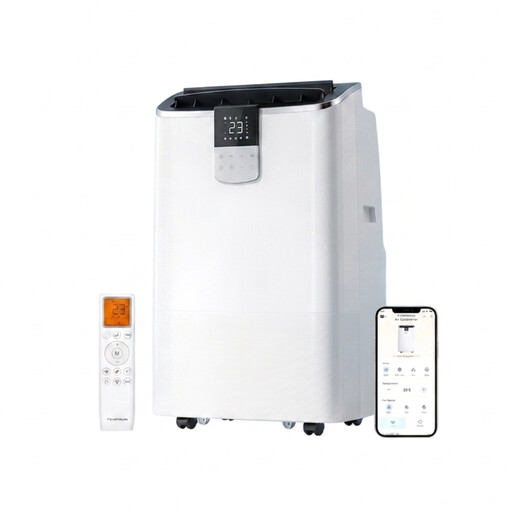
Why it stands out: With a powerful cooling capacity of 14,000 BTU, this unit is designed for the rapid cooling of larger rooms. The integration of Wi-Fi and voice control offers modern convenience.
Pros:
Who is it for? This model is aimed at users who want to effectively cool large living rooms, lofts, or home offices and appreciate the convenience of smart app and voice control.
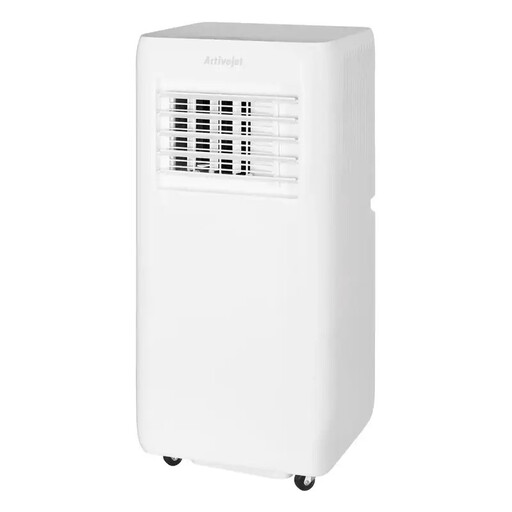
Why it stands out: The Activejet KPS-7000APP offers a solid set of basic features, including smart functions, at an attractive price-performance ratio. It's a great entry-level solution for smaller rooms.
Pros:
Who is it for? A suitable option for budget-conscious buyers looking for an air conditioner for a smaller apartment or office who don't want to miss out on the convenience of app control.
Was the right model for your needs not included? In our category overview, you'll find a wider selection of units with different performance characteristics and features.
Discover more portable room air conditioners
Yes, portable monobloc air conditioners require an exhaust hose. The unit draws in warm room air, cools it, and releases it back into the room. The heat generated in this process is expelled outside through the hose. Without this exhaust, the room would not cool down effectively. While there are devices without an exhaust hose (so-called air coolers), they operate on the principle of evaporation and do not achieve the same cooling performance as a true air conditioner.
The noise level varies depending on the model and operating mode. The manufacturer's specifications usually refer to the maximum sound power level, which is typically between 50 and 65 dB. This is comparable to a normal conversation (approx. 60 dB). Many units have a sleep or silent mode where the fan speed, and thus the noise level, is reduced, making operation in the bedroom more pleasant.
Power consumption depends on the cooling capacity (kW), the energy efficiency class, and the duration of use. A unit with a cooling capacity of 2.6 kW (approx. 9,000 BTU) and energy efficiency class A typically has a power consumption of around 1.0 kW per hour in cooling mode. To estimate the cost, you can multiply this power consumption by your electricity price per kilowatt-hour (kWh) and the daily operating hours.