Rising summer temperatures are making it increasingly necessary to cool homes and workspaces. While permanently installed air conditioning systems often involve significant effort and structural modifications, a portable air conditioner offers a flexible and ready-to-use alternative. These units can be set up without professional help and moved from room to room as needed.
As a Joybuy Product Recommendation Officer, my role is to provide you with clear and objective guidance in the portable air conditioner market. This article introduces various models and their technical features to help you select a suitable solution for your specific needs.
What to Look for When Choosing a Portable Air Conditioner
The decision for a specific model depends on objective criteria. The following points will help you understand the technical specifications and make an informed choice.
1. Cooling Capacity (BTU) and Room Size
Cooling capacity is measured in BTU (British Thermal Unit) per hour and is the most critical factor for a unit's effectiveness. Insufficient capacity leads to inefficient cooling, while an oversized unit consumes unnecessary energy. As a rule of thumb:
- Small rooms (up to 25 m?): Units with around 7,000–9,000 BTU are generally sufficient.
- Medium-sized rooms (25–40 m?): Models with 10,000–12,000 BTU are a good choice here.
- Large rooms (over 40 m?): For open-plan living areas or offices, an air conditioner for large rooms with 14,000 BTU or more is recommended.
Also consider ceiling height, sun exposure, and the number of people in the room, as these factors also affect cooling requirements.
2. Features and Use Cases
Modern units offer more than just cooling. Depending on your needs, the following features may be relevant:
- Air conditioner with heating function: Models with an integrated heat pump can serve as an additional heat source during transitional seasons, making them usable year-round.
- Smart air conditioner: Units with Wi-Fi connectivity can be controlled via an app or voice assistant (e.g., Alexa, Google Assistant). This allows you to pre-cool rooms or create schedules.
- Battery-powered air conditioner: For off-grid use, such as camping or in an RV, there are special models with an integrated or optional battery. Such a camping air conditioner offers maximum flexibility.
- Dehumidifier mode: Almost all portable air conditioners include a function to reduce humidity, which noticeably improves the indoor climate in humid weather.
3. Operating Noise Level (Decibels)
The noise level, specified in decibels (dB(A)), is especially important if the unit will be used in a bedroom or office. A quiet air conditioner operates at levels below 50 dB(A) in normal mode. Look for models with a special sleep mode that reduces fan speed and, consequently, noise. Split-system units, where the compressor is placed outside the room, are inherently the quietest option.
Portable Air Conditioner Recommendations
Here is a selection of units that are well-suited for different use cases due to their specific technical features.
Midea PortaSplit-E 12K
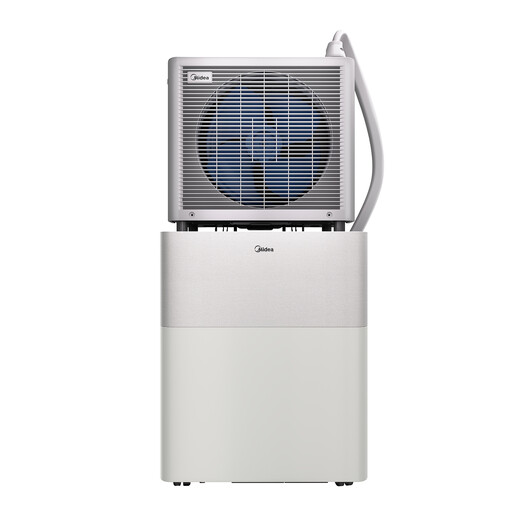
- Why it stands out: The PortaSplit-E combines the flexibility of a portable unit with the efficiency and low noise of a split system. The compressor is located in the outdoor unit, which reduces the indoor noise level to 39 dB(A). The high energy efficiency class A++ ensures economical operation.
- Pros:
- Cooling and heating function: Usable year-round.
- High cooling capacity:12,000 BTU for rooms up to 105 m?.
- Energy efficiency: Class A++.
- Low noise level: Ideal for noise-sensitive areas.
- Who it's for: Users looking for a powerful and quiet solution for larger living spaces or offices who value high energy efficiency and year-round use.
Cecotec ForceClima 9100
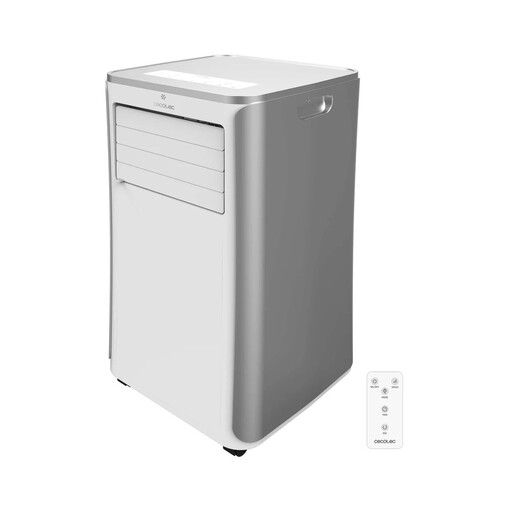
- Why it stands out: This portable air conditioner is designed for low-noise operation. According to the manufacturer, its "Soundless" technology minimises compressor vibrations. With 9,000 BTU, it offers solid cooling performance for standard-sized rooms.
- Pros:
- 4-in-1 functionality: Cooling, fan, dehumidifier, and sleep mode.
- Cooling capacity:9,000 BTU for rooms up to 25 m?.
- User-friendly: Touch control panel and remote control.
- Energy efficiency: Class A.
- Who it's for: Users looking for a functional and cost-effective air conditioner for bedrooms, children's rooms, or small offices who appreciate simple operation.
EcoFlow WAVE 3
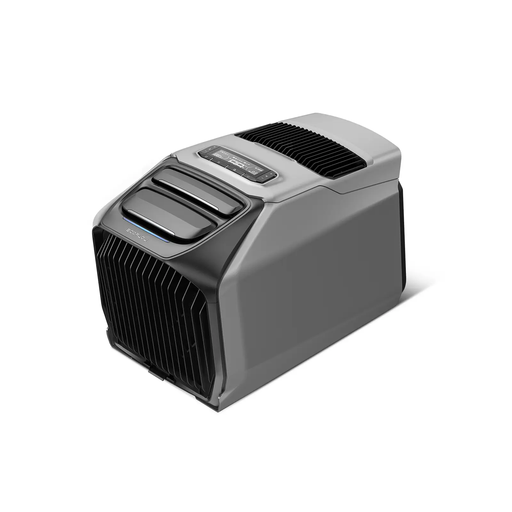
- Why it stands out: The EcoFlow WAVE 3 is designed as a battery-powered air conditioner, enabling off-grid operation for up to 8 hours (with a separately available add-on battery). This makes it a versatile solution for outdoor activities.
- Pros:
- Battery-powered: Maximum portability for camping, RVs, and boats.
- Cooling and heating function:6,100 BTU cooling capacity and 6,800 BTU heating capacity.
- Smart control: Operation and monitoring via app.
- Flexible charging options: Can be charged via a wall outlet, solar, car charger, or add-on battery.
- Who it's for: Outdoor enthusiasts, campers, and owners of RVs or vans who need a self-sufficient and powerful camping air conditioner on the go.
Temprium 14000 BTU
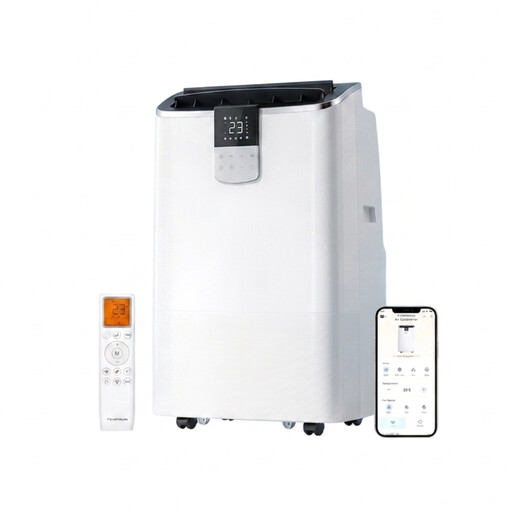
- Why it stands out: This model is a powerful air conditioner for large rooms and a fully-featured smart air conditioner. With 14,000 BTU of cooling capacity and app and voice control, it offers high comfort and efficiency.
- Pros:
- Powerful cooling capacity:14,000 BTU for rooms up to 33 m?.
- Smart control: Compatible with app, Amazon Alexa, and Google Assistant.
- 4-in-1 functions: Cooling, fan, dehumidifier, and auto mode.
- Auto-oscillation: Ensures even distribution of cool air throughout the room.
- Who it's for: Tech-savvy users with larger living or office spaces who appreciate seamless integration into their smart home system and convenient remote control.
Discover More Options
This selection covers various user profiles. If you want to compare more models with different performance features and for other room sizes, you can find a wider selection in our Portable Air Conditioner with Exhaust Hose category.
Frequently Asked Questions
How does a portable air conditioner with an exhaust hose work?
A portable monobloc air conditioner draws in warm room air, cools it via a refrigeration cycle, and releases the cooled air back into the room. The heat generated in this process is expelled outside through a flexible exhaust hose, typically routed through a partially open window or a dedicated wall vent.
How important is the energy efficiency class for a portable air conditioner?
The energy efficiency class (e.g., A, A+, A++) indicates how efficiently a unit converts electricity into cooling power. A unit with a higher efficiency class consumes less electricity for the same performance, which significantly reduces operating costs over its lifespan. Investing in a more efficient model can therefore pay off in the long run.
Can I also use a portable air conditioner for heating?
Yes, many models are equipped as an air conditioner with heating function. These units use heat pump technology to reverse the refrigeration cycle. Instead of expelling heat outside, they extract heat from the outdoor air and release it into the room. This is an energy-efficient method for heating rooms during transitional seasons.


