
Lieferung heute & morgen

Qualitätsgarantie

Willkommens-Angebote freischalten: KOSTENLOSE Lieferung | Bis zu 80 % RABATT | Kostenlose 30-Tage-JoyPlus-Testphase
App herunterladen
The freedom of camping or travelling in an RV is all about independence. But rising summer temperatures can quickly compromise that freedom. A constant, comfortable temperature in your vehicle or tent is crucial for restful sleep and overall well-being. That's why many travellers are looking for a solution that doesn't require a permanent 230V connection.
This article serves as a guide. We'll introduce various models and explain the technical features relevant to making an informed purchasing decision, especially for use on the go.
Choosing the right unit depends on your individual needs. Three criteria are particularly important for mobile use.
The key feature of a portable air conditioner with a battery is its ability to operate off-grid. Pay attention to the battery capacity, usually specified in watt-hours (Wh), and the resulting runtime. Also, check the charging options. Models that can be charged via the vehicle's 12V socket, a 230V outlet, or even solar panels offer maximum flexibility for a self-sufficient, battery-powered air conditioner.
Cooling power is often measured in BTU (British Thermal Unit) per hour. For small to medium-sized RVs, vans, or tents, values between 5,000 and 8,000 BTU are generally sufficient. For larger vehicles or in very high ambient temperatures, models with up to 12,000 BTU may be a better choice. Some units also offer an integrated heating function. Such an air conditioner with a heating function for your car or RV is a practical addition, especially for travel during the shoulder seasons.
A portable air conditioner for camping should be compact and lightweight. Check the weight and dimensions to ensure the unit is easy to transport and store. Every compressor-based air conditioner produces hot exhaust air that must be vented outside. Check what accessories for installing the exhaust hose (e.g., window adapters) are included and how complex the installation is in your RV or tent.
Based on the criteria mentioned, we have compiled a selection of units that cover different needs—from completely self-sufficient battery solutions to powerful devices for use with an external power source.
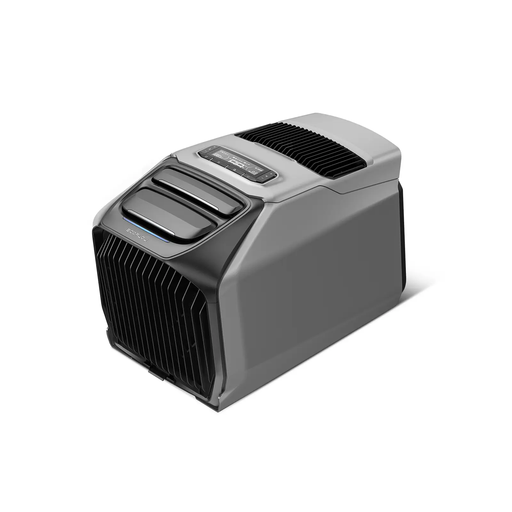
Why it stands out: The EcoFlow WAVE 3 is specifically designed for off-grid use. It combines cooling and heating power with an optional add-on battery that is essential for self-sufficient operation. Its versatile charging options, including solar, make it a perfect choice for van-lifers and campers who value independence.
Pros:
Who is it for? Ideal for RV owners, campers, and boaters who are looking for a true portable air conditioner with a battery and need maximum flexibility in their power supply.
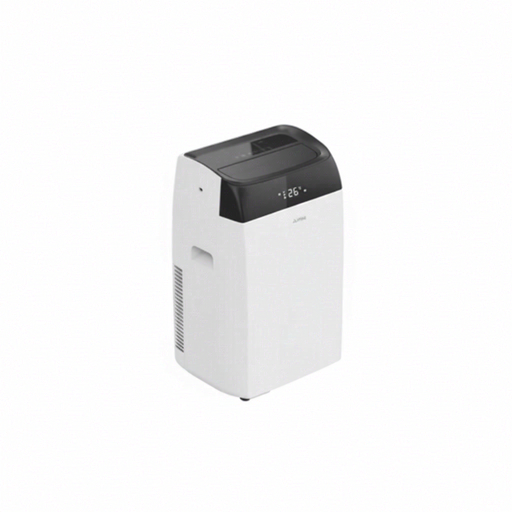
Why it stands out: The Daitsu APD 12FCX is a 4-in-1 unit that combines cooling, heating, dehumidifying, and ventilation in one device. With its heat pump technology, it offers efficient heating performance, making it suitable for year-round use. It requires an external 230V power source, such as those available at campsites or provided by a generator or a large power station.
Pros:
Who is it for? For users who need a powerful and versatile air conditioner for their RV or holiday home and have access to a reliable 230V connection.
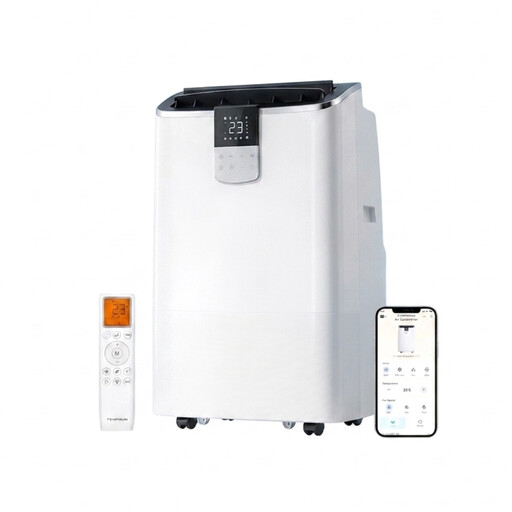
Why it stands out: This model from Temprium focuses on powerful cooling performance and modern controls. Its integration with Wi-Fi and voice control (compatible with Amazon Alexa and Google Assistant) offers a high level of convenience. Like the Daitsu model, it is designed to run on a 230V power source.
Pros:
Who is it for? For tech-savvy users looking for a high-performance portable air conditioner for use at a fixed pitch with a power connection, who also value smart control options.
The models presented here cover specific use cases. If you want to compare other units or are looking for a solution for different room sizes and requirements, you can find a wider selection in our category.
? Discover more models in the Portable Floor Air Conditioner category
1. How long does a portable air conditioner with a battery run? The runtime heavily depends on the battery capacity (in Wh), the selected cooling level, and the outside temperature. According to the manufacturer, models like the EcoFlow WAVE 3 can operate for 2 to 8 hours on a 1024Wh battery. The runtime is extended in Eco mode or at a lower cooling setting.
2. Does every portable air conditioner need an exhaust hose? Yes, all portable air conditioners that use a compressor generate heat as a byproduct of the cooling process. This heat must be vented outside through an exhaust hose to cool the room effectively. Without venting the warm air, the unit would heat the room.
3. Can I run a portable air conditioner with solar panels? Yes, some models, especially those designed for off-grid use, can be powered directly or indirectly by solar energy. The EcoFlow WAVE 3, for example, can be connected to compatible solar panels to charge the battery during operation. For conventional 230V units, you would need a system consisting of solar panels, a charge controller, a battery (power station), and an inverter that can provide sufficient power.