
Lieferung heute & morgen

Qualitätsgarantie

Willkommens-Angebote freischalten: KOSTENLOSE Lieferung | Bis zu 80 % RABATT | Kostenlose 30-Tage-JoyPlus-Testphase
App herunterladen
A portable air conditioner can be a flexible solution for rented homes, bedrooms, home offices or individual living spaces. It requires no permanent wall installation and can be wheeled into another room when needed. However, not every portable air conditioner will automatically provide a comfortable room temperature. The right capacity, effective exhaust air management and accessories that suit your window are all crucial.
A specification such as 9000 BTU air conditioner or 12000 BTU air conditioner describes the cooling capacity according to a particular testing method. Actual suitability also depends on ceiling height, sunlight exposure, insulation, window area and the number of people in the room.
As a rough guide:
This is why manufacturers’ room-size recommendations should only be treated as a guide. An attic room exposed to direct sunlight may need more power than a shaded room of the same size.
A portable air conditioner with exhaust hose directs warm process air outside. If the window remains wide open, some of the outside heat will flow back in. This reduces the cooling effect and can increase electricity consumption.
A portable air conditioner with window seal is therefore a practical choice. Before buying, check whether the window opens upwards, sideways or as a casement window. A universal seal will not fit every design. The hose length and diameter must also be compatible with the appliance.
Portable air conditioners contain a compressor and are therefore louder than a basic fan. When choosing an air conditioner for a bedroom, you should consider not only the advertised figures, but also the sleep mode, lowest fan setting and timer. A rating of around 50 dB(A) should not be interpreted as complete silence.
Alongside BTU, cooling capacity in kilowatts, the EER value and the energy efficiency class are also relevant. An appliance with a higher capacity can cool a room more quickly, but it will often use more electricity too. The power consumption stated on the rating plate does not always directly correspond to the cooling capacity.
An energy-efficient air conditioner should be suitable for the size of the room and not be permanently oversized. Running costs also depend on how many hours the appliance operates each day. A timer or automatic temperature control can reduce unnecessary operating time.
The exhaust hose should be routed to the window as directly as possible, without tight bends. The appliance needs sufficient clearance all around it for air intake and heat dissipation. The exact minimum clearances are specified in the relevant instruction manual.
For tenants, a portable air conditioner is particularly appealing because it does not require permanent structural installation. Even so, the window seal should fit securely. Depending on the building and installation method, homeowners may find that a fixed solution is more efficient in the long term.
A 3-in-1 air conditioner typically combines:
An air conditioner with dehumidifying function can be useful in a humid room. Depending on the humidity level, condensation water will collect and may need to be drained manually. Self-evaporation reduces the need for emptying the tank, but does not eliminate it in every operating situation.
An air conditioner with heating function extends the appliance’s range of uses. You should check the heating capacity, energy efficiency in heating mode and permitted operating temperatures. WLAN control, a remote control and a 24-hour timer make operation more convenient, but they cannot replace suitable cooling capacity and correct exhaust air management.
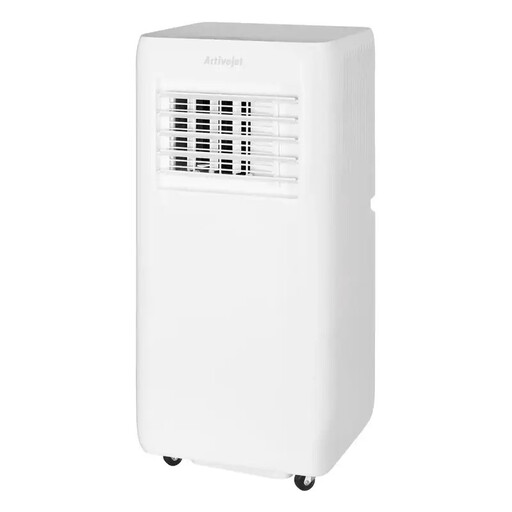
Why this product suits this profile: According to the product details, this appliance combines cooling, dehumidification and ventilation, and is designed for rooms of up to 25 m². WLAN via the Tuya Smart app, a remote control and a timer provide additional operating options.
The product details explicitly state the cooling capacity, noise level of up to 53 dB(A), window installation and washable filter.
Energy efficiency class A, 24-hour timer and four castors for moving the appliance between rooms.
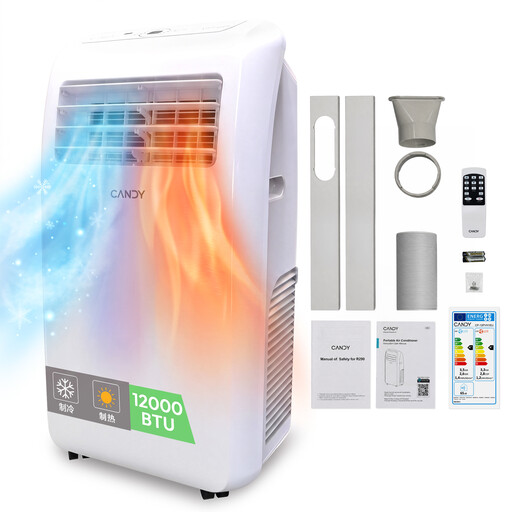
Why this product suits this profile: The 4-in-1 specification includes cooling, dehumidification, ventilation and heating. According to the product details, the model is designed to cool rooms of up to 35 m² and heat rooms of up to 25 m².
The description states that a window kit for vertical and horizontal sliding windows is included. It also lists the dimensions, weight and possible water shut-off function.
12000 BTU, energy efficiency class A+ and heating and cooling in a single appliance.
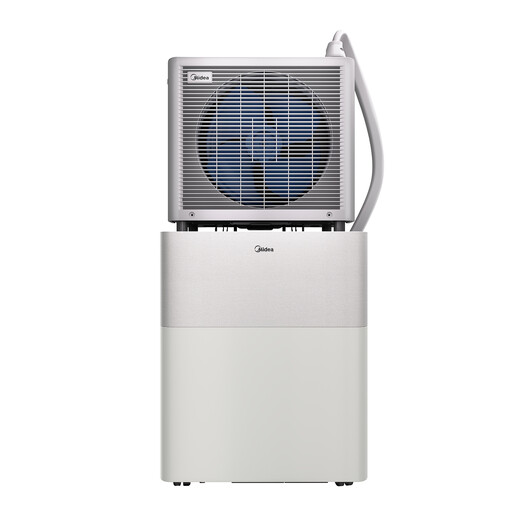
Why this product suits this profile: This portable split system is aimed at users who prefer higher cooling capacity and a two-part design. According to the product details, it offers 12000 BTU, cooling, dehumidification and ventilation.
The design reduces the limitations of a conventional exhaust hose. Before buying, however, you should check the 45.5 kg weight, footprint and installation requirements.
Energy efficiency class A++ and a stated noise level of 39 dB(A).
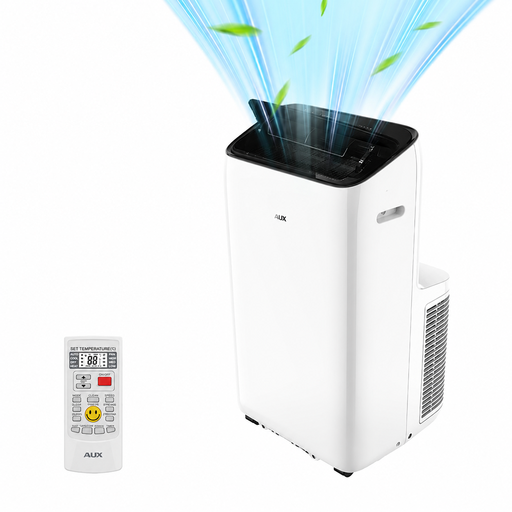
Why this product suits this profile: According to the manufacturer’s details, this portable air conditioner offers 12000 BTU, three operating modes, a WLAN app, remote control and timer. It is therefore suitable for users who frequently switch between manual and digital control.
The product description lists a window kit, washable filter and self-evaporation among the included features. The stated noise level is 64 dB.
450 m³/h air volume, three fan speeds and R290 refrigerant according to the product details.
We have put together a complete, regularly updated list of products that fully meet these strict selection criteria and the safety regulations applicable in the EU.
Before using the appliance for the first time, bear the following points in mind:
An additional window seal measuring 3 or 4 metres may be useful if the supplied kit does not fit the width of your window. The key considerations are the dimensions, attachment method and compatibility with the exhaust hose.
Position the appliance close to a window. Attach the exhaust hose to the appliance and route it outside through a window kit or suitable seal. Warm air must not flow back into the room. The exact installation method depends on the model and window design.
The cost depends on power consumption, electricity tariff, operating time, room temperature and insulation. As a guide, multiply the electrical power consumption in kilowatts by the operating hours and your electricity price per kilowatt-hour. A timer and a sensible temperature setting can help limit operating time.
Its service life depends on usage, filter maintenance, transport and storage. Regular cleaning, unobstructed airways and dry, frost-free storage outside the season help maintain proper operation. The applicable warranty and maintenance terms are those specified by the relevant manufacturer.