
Lieferung heute & morgen

Qualitätsgarantie

Willkommens-Angebote freischalten: KOSTENLOSE Lieferung | Bis zu 80 % RABATT | Kostenlose 30-Tage-JoyPlus-Testphase
App herunterladen
Rising summer temperatures make targeted cooling for individual rooms like bedrooms, home offices, or living rooms a necessity. A portable air conditioner offers a flexible, installation-free solution. However, given the multitude of models with different features, the selection process can be complex.
This guide is designed to explain the most important criteria and present a selection of units for various applications. The goal is to provide you with an informed basis for your decision when purchasing a suitable air conditioner.
To find the right unit, several technical characteristics and functional aspects should be considered. The following points will help guide your choice.
The cooling capacity, often specified in BTU (British Thermal Unit) per hour, is the decisive factor for a unit's effectiveness. Insufficient power leads to inadequate cooling, while an oversized unit consumes unnecessary energy. Manufacturers typically specify the maximum room size in square metres (m?) or room volume in cubic metres (m?) for which a unit is designed. As a rule of thumb: the larger the room and the more intense the sun exposure, the higher the BTU rating should be.
A quiet air conditioner is particularly advantageous in a bedroom or office. The noise level is measured in decibels (dB). Models with values below 55 dB in normal operation are considered relatively quiet. Many units feature a special sleep mode that reduces the fan speed and, consequently, the noise level. Additional comfort features such as a timer, various fan speeds, or a dehumidifying function increase everyday flexibility.
A key advantage is mobility. Casters and carrying handles make it easy to transport the unit from one room to another. For use outside the home, such as an air conditioner for an RV or while camping, a battery-powered air conditioner is an interesting option. Such models offer independence from the power grid. Smart control is also becoming increasingly important. A smart air conditioner can be operated via Wi-Fi and a smartphone app, allowing for remote control of temperature and operating modes and enabling integration into a smart home system.
Based on the criteria mentioned, we have compiled a selection of units that cover different needs—from powerful cooling for large rooms to off-grid use on the go.
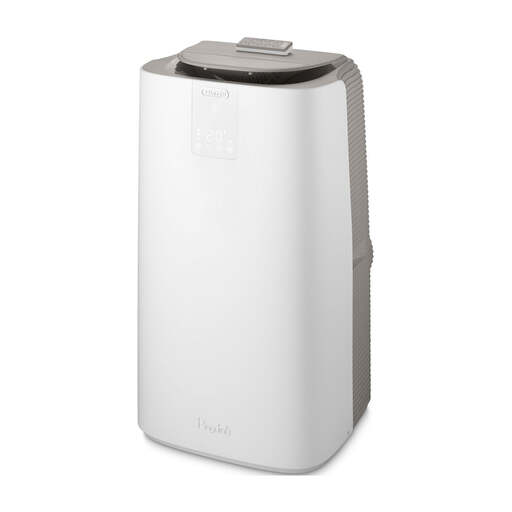
De’Longhi Pinguino PAC AP120 GentleJet Portable Air Conditioner
Why it stands out: This model is distinguished by its high cooling capacity, which the manufacturer states is designed for rooms up to 110 m?. The "Eco Real Feel" technology automatically adjusts temperature and humidity to create a comfortable indoor climate with optimised energy consumption.
Pros:
Who is it for? For users seeking a powerful and energy-efficient cooling solution for larger living rooms, bedrooms, or offices, who also value automatic climate control.
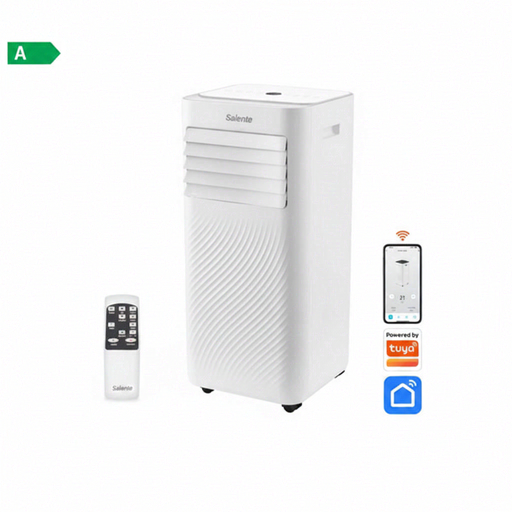
Salente SummerICE9, Smart Portable Air Conditioner, 9000 BTU, Wi-Fi + Bluetooth
Why it stands out: The Salente SummerICE9 is a smart air conditioner that connects to the Tuya SmartLife app via Wi-Fi and Bluetooth. This allows for complete remote control from a smartphone, making it particularly appealing for tech-savvy users.
Pros:
Who is it for? For users looking for an air conditioner for rooms of 12–20 m? who appreciate the convenience of app control and smart home integration.
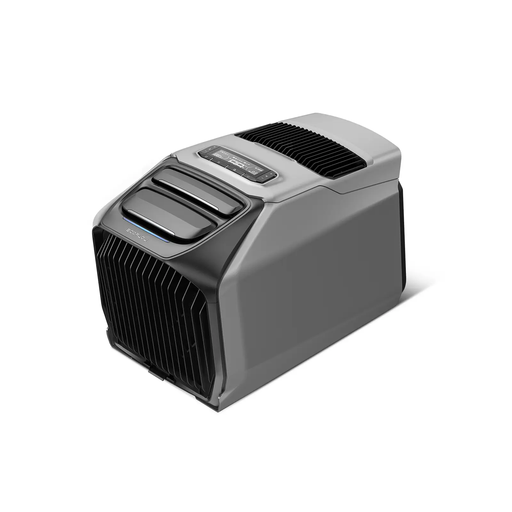
EcoFlow WAVE 3 Portable Air Conditioner, 1800W Cooling & 2000W Heating
Why it stands out: The EcoFlow WAVE 3 is designed as a versatile, portable air conditioner that can not only cool but also heat. Its greatest strength is the option for battery operation (add-on battery sold separately), making it ideal for use when camping, in an RV, or in other off-grid situations.
Pros:
Who is it for? For outdoor enthusiasts, campers, and owners of RVs or vans who need a robust and flexible climate control solution on the go and require both cooling and an air conditioner with a heating function.
The models presented here use an exhaust hose to vent warm air outside. However, other technologies are available on the market. If you are interested in units that operate without this hose, you can find more information and product options in our category for vent-free air conditioners.
A portable monobloc air conditioner draws in warm room air. Inside, a refrigerant cycle extracts heat from the air. The cooled air is blown back into the room, while the absorbed heat is expelled outside through a flexible exhaust hose via a tilted window or a wall opening. This heat exchange is essential for the cooling process.
The noise level varies depending on the model, operating mode, and fan speed. Manufacturer specifications usually refer to the sound pressure level at a certain distance or the sound power level directly at the unit. Values between 50 and 65 dB are common. A quieter unit below 55 dB is recommended for noise-sensitive areas like the bedroom. Sleep mode further reduces the noise level.
Some models, like the EcoFlow WAVE 3, are equipped with a heat pump function and can therefore also be used as an air conditioner with a heating function. They reverse the refrigeration cycle, extracting heat from the outside air and releasing it into the room. This makes them a practical year-round solution for small spaces or for use in an RV.