
Lieferung heute & morgen

Qualitätsgarantie

Willkommens-Angebote freischalten: KOSTENLOSE Lieferung | Bis zu 80 % RABATT | Kostenlose 30-Tage-JoyPlus-Testphase
App herunterladen
As summer temperatures climb, the desire for a cool breeze in your own home grows stronger. A portable air conditioner seems like the ideal solution: it's flexible, can be installed without major renovations, and is ready to use right out of the box. But the market is flooded with devices making lofty promises they often can't keep.
As your Joybuy Product Recommendation Officer, I'm here to help you separate fact from marketing hype. In this guide, I'll show you the most common pitfalls to avoid when buying and which technical specs truly matter, so you can make an informed decision for your air conditioner for your home.
Many buyers are disappointed after their purchase because the unit doesn't deliver the expected performance or the operating costs are unexpectedly high. This is often due to these three common misconceptions:
To avoid these pitfalls, you should check three core parameters before buying. This objective data will help you assess the actual performance and suitability of a unit for your needs.
Cooling capacity is measured in BTU (British Thermal Unit) per hour. This unit describes how much heat energy a device can remove from a room per hour. As a rule of thumb for rooms with average insulation and standard ceiling height:
Note that factors like large window areas, south-facing exposure, or additional heat sources (computers, TVs) can increase your cooling needs.
The energy efficiency class (indicated on a scale, e.g., from A to G) is a direct indicator of operating costs. A Class A unit consumes significantly less electricity than a Class C unit to deliver the same cooling performance. Also, pay attention to the refrigerant used. Modern devices use more environmentally friendly refrigerants like R290 (Propane), which has a much lower global warming potential than older agents. All units with an exhaust hose featured here use this refrigerant.
An air conditioner with an exhaust hose is the standard for effective cooling, as the warm air must be actively vented outside. Additionally, modern devices offer useful extra functions:
Instead of a one-size-fits-all recommendation, we have selected units that cater to different user profiles and requirements.
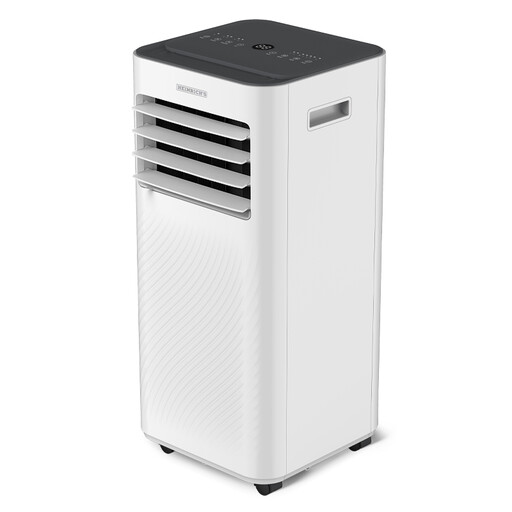
Why it's a good fit: Ideal for users looking for reliable cooling for standard rooms like bedrooms or home offices, who also value a great price-performance ratio. Its 4-in-1 functionality makes it useful all year round.
With 9000 BTU, it offers realistic cooling performance for rooms up to 33 m? (approx. 355 sq ft) without making false promises. The Class A energy efficiency rating helps keep operating costs in check.
4-in-1 Functionality: Cools, heats, dehumidifies, and ventilates in one unit. Includes app control for modern convenience.
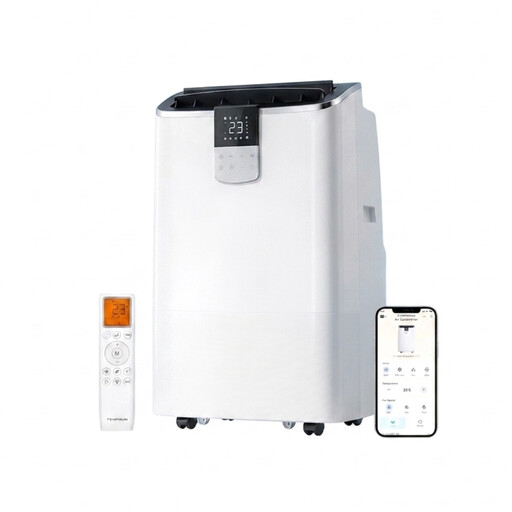
Why it's a good fit: Perfect for anyone who values maximum comfort and smart features. Ideal for living rooms or larger offices where convenient control via app or voice is desired.
The 12000 BTU capacity is designed for rooms up to 28 m? (approx. 300 sq ft), ensuring effective cooling. Smart control allows for on-demand use, which prevents unnecessary continuous operation and high electricity costs.
Smart Control: Compatible with the TEMPRIUM app, Amazon Alexa, and Google Assistant. Auto-Swing: The automatic air distribution ensures even cooling throughout the room.
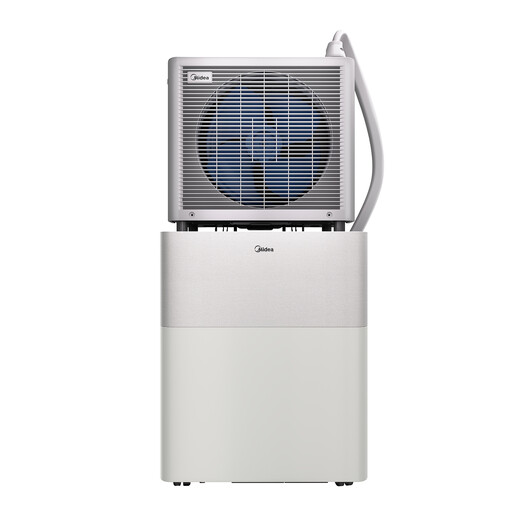
Why it's a good fit: For users seeking a solution with maximum efficiency and minimal indoor noise. Its split-unit design is superior to monoblock units in terms of performance and noise level.
Thanks to its split design, the noisy compressor is located in the outdoor unit, which reduces indoor noise disturbance to a minimum (39 dB(A)). The A++ energy efficiency class ensures low operating costs despite its high performance.
Outstanding Energy Efficiency (A++): Significantly more economical in consumption than conventional portable units. Very Quiet Operation: The indoor noise level is comparable to that of a quiet refrigerator.
We have compiled a complete, up-to-date list of products that fully meet these strict selection criteria and all relevant safety regulations.
For efficient cooling, it's crucial that the warm exhaust air is completely vented outside and that no warm outdoor air can flow back into the room. Use the included window kit for this purpose. Install the window slider or seal according to the instructions and connect the hose. Keep the exhaust hose as short and straight as possible, as every bend obstructs airflow and reduces the unit's efficiency.
The cost depends on the unit's power consumption (in watts or kilowatts), how long you use it, and your electricity rate. For example: a unit with a power consumption of 1,000 watts (1 kW) costs about 40 cents per hour to run, assuming an electricity price of 40 cents per kilowatt-hour (kWh). A unit with a Class A energy efficiency rating is significantly cheaper in the long run than an inefficient model.
Yes, some models are designed as a portable air conditioner with a heating function. These 4-in-1 units use a heat pump principle to reverse the cooling cycle. Instead of removing heat from the room, they bring in heat from the outside. This is an efficient way to provide heating during the transitional seasons, but it generally does not replace a full-fledged heating system during very cold winter temperatures.