
Lieferung heute & morgen

Qualitätsgarantie

Willkommens-Angebote freischalten: KOSTENLOSE Lieferung | Bis zu 80 % RABATT | Kostenlose 30-Tage-JoyPlus-Testphase
App herunterladen
A portable air conditioner can be a flexible solution for rented homes, home offices or individual bedrooms. It doesn’t need to be permanently mounted on a wall and can be wheeled into another room when needed. However, a few common assumptions can lead to disappointment: a high BTU rating doesn’t automatically guarantee a comfortable room temperature, a low decibel rating is hard to assess without knowing the test conditions, and the window kit supplied won’t fit every type of window.
This guide explains which technical details really matter, which features suit your day-to-day needs and how to avoid common buying mistakes.
Manufacturers often state a recommended floor area or room size. However, this depends on several factors, including ceiling height, sunlight, insulation, the number of people in the room and heat sources such as computers or televisions. An attic room with large south-facing windows places greater demands on an air conditioner than a shaded room.
For smaller rooms, models rated at around 7,000 to 9,000 BTU, or approximately 2.0 to 2.6 kW of cooling capacity, are often suitable. For larger living spaces, models with 10,000 to 12,000 BTU may be a better choice. Treat the manufacturer’s recommendation as a guide, not a guarantee that will apply in every situation.
An air conditioner with an exhaust hose needs to expel warm air to the outside. If the hose is simply placed through a partly open window, warm air from outside will flow back in. This reduces the actual cooling performance and can increase energy consumption.
A window seal for portable air conditioners reduces this exchange of air. Check the type of window, the length of the seal and the diameter of the exhaust hose. The available 4 m window seal and 3 m window seal may suit different windows depending on their width and where the seal is fitted. Before buying, compare your measurements with the product description.
A compressor-based unit makes noise while cooling. Ratings such as 49, 51, 52 or 53 dB(A) are technical reference points, and how loud they seem depends on the distance, room and floor surface. If you’re looking for an air conditioner for the bedroom, a sleep mode, timer and several fan speeds are also worth considering. A lower stated noise level doesn’t mean a unit will be inaudible in every situation.
Compare not only the BTU rating but also the stated output in kW and the recommended room size. A portable air conditioner for small rooms with a 2.0 kW output may be enough for a small office or bedroom. In a larger living room or open-plan kitchen and living area, a 12,000 BTU unit may be better suited to your needs.
You should also take ceiling height into account. A manufacturer may recommend a unit for an area of 25 m², but a room with a particularly high ceiling will have a much larger air volume.
The energy efficiency rating shows how a unit performs under defined conditions. It doesn’t tell you directly how much your monthly bills will be. The main factors are power consumption in watts, how long you use the unit and your electricity tariff.
A simple way to estimate consumption is to:
Even an A or A+ rated unit can add significantly to your electricity costs if it runs for long periods.
A 3-in-1 air conditioner usually combines cooling, fan and dehumidifying functions. An air conditioner with a dehumidifier can be useful when the air in a room feels muggy, although dehumidifying mode doesn’t always work in the same way as cooling mode. Also check whether you’ll need to empty a water tank by hand.
An air conditioner with a remote control makes it easier to adjust the settings from your sofa or bed. Wi-Fi control through an app can be useful for setting schedules and cooling a room in advance. Check that the app is compatible with your smartphone and home Wi-Fi network.
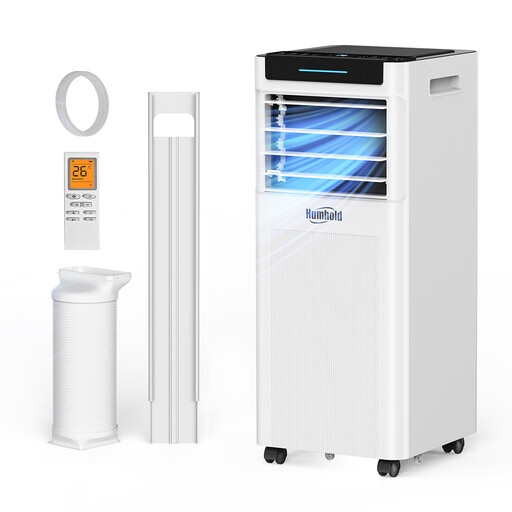
Why this product suits this profile: This unit is designed for smaller rooms of up to 28 m², according to the stated recommendation, and offers cooling, dehumidifying and fan functions. Its castors and window kit make it easy to use in different rooms.
The product specifications state an output of 2.0 kW, a 24-hour timer and a stated noise level of under 49 dB in sleep mode. This makes it easier to match the unit to the room size and how you plan to use it.
R290 refrigerant, washable filter, remote control and included window kit.
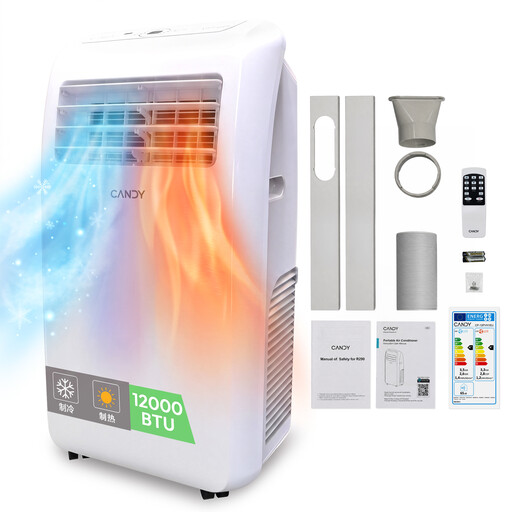
Why this product suits this profile: Its stated cooling capacity of 3.5 kW is designed for rooms of up to 35 m². The model also has a heating function and a window kit for vertical and horizontal sliding windows.
The technical specifications list cooling and heating outputs separately, give the dimensions and weight, and state the clearance needed for air circulation.
Cooling, heating, dehumidifying and fan functions; A+ energy efficiency rating according to the product information, plus a 24-hour timer.
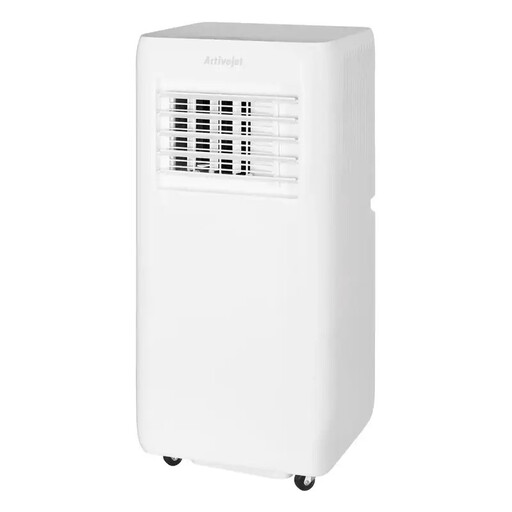
Why this product suits this profile: For offices, bedrooms or smaller living spaces of up to 25 m², the manufacturer lists a 7000 BTU rating, Wi-Fi control through the Tuya Smart app and a remote control.
The product description states the maximum noise level of 53 dB(A), power consumption, recommended room size and need to vent the exhaust air outside.
Cooling, dehumidifying and fan functions, a 24-hour timer, washable filter and four castors.
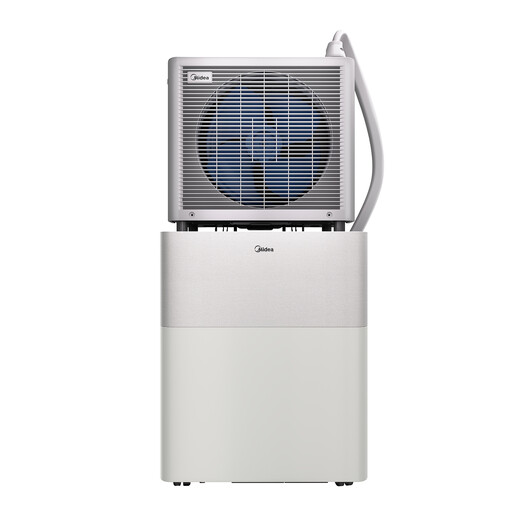
Why this product suits this profile: This portable mini-split system may appeal if you’re looking for a higher stated energy efficiency rating and both cooling and heating functions.
The product specifications state an A++ energy efficiency rating, R32 refrigerant, 220–240 V and a weight of 45.5 kg. This helps you assess the installation and moving requirements realistically.
Cooling, dehumidifying and fan functions in one system; stated cooling capacity of 12,000 BTU and a heating function.
We’ve put together a complete, regularly updated list of products that meet these strict selection criteria and the safety regulations in force in the EU.
Place the portable air conditioner on a level, stable surface and leave the clearance from walls and furniture specified in the instructions. Keep the exhaust hose as short and straight as possible, avoiding sharp bends. Use an earthed socket and avoid extension leads or multiway adaptors unless the manufacturer explicitly permits them.
For units using R290 or R32, follow the manufacturer’s safety instructions. Do not damage the refrigerant circuit. Unplug the unit before cleaning or maintenance. Clean the filters as instructed and make sure they are completely dry before putting them back in.
Connect the exhaust hose to the unit and route it outside through a window kit or window seal. Close the window as tightly as possible to prevent warm air from outside flowing back in. Before buying, check that the accessories are suitable for a casement, tilt-and-turn or sliding window.
The cost depends on power consumption, how long the unit runs and your electricity rate. A unit with a power consumption of 750 watts uses 0.75 kWh for each hour of operation, based on a simple calculation. In practice, the compressor may pause at times depending on the target temperature and room conditions. This figure is therefore only a rough guide.
Its lifespan depends on how it’s used, cleaned, transported and stored. A clean filter, clear air vents and proper storage over winter can help keep it running well. Also follow any waiting times required after moving or tilting the unit, as stated in the instruction manual.