
Lieferung heute & morgen

Qualitätsgarantie

Willkommens-Angebote freischalten: KOSTENLOSE Lieferung | Bis zu 80 % RABATT | Kostenlose 30-Tage-JoyPlus-Testphase
App herunterladen
A portable air conditioner can be a flexible solution for rented flats, home offices, bedrooms or campervans. It doesn’t require permanent wall installation and can be moved when needed. However, unclear performance figures, missing window seals and underestimated operating noise often lead to disappointing purchases.
So before you buy, don’t just consider the price and BTU rating. The right room size, exhaust connection, energy consumption, noise level and features are all important.
A 9000 BTU portable air conditioner isn’t necessarily right for every home. Room volume, sunlight, insulation, window area and the number of people all affect how much cooling you need. A unit rated at around 7000 BTU may be enough for a small bedroom or home office, while larger or particularly warm rooms may need more power.
The room size stated by the manufacturer should therefore be treated as a guide, not a guarantee of a particular room temperature.
A portable air conditioner with an exhaust hose needs to vent warm air outside. If the hose is simply passed through a tilted-open window, warm air from outside can flow back into the room. This reduces efficiency and can increase energy consumption.
A suitable window kit or flexible air conditioner window seal closes the gap around the exhaust hose. Before buying, check that the accessory is suitable for your type of window.
Manufacturers use different testing conditions. A figure for sleep mode may be considerably lower than the maximum operating noise level. If you’re choosing an air conditioner for the bedroom, check both figures. Compressor starts, airflow and vibrations can also affect how loud the unit seems.
BTU/h and kilowatts indicate cooling capacity. Here are a few examples from the product specifications:
If you live in a loft, have large windows or get direct sunlight, it may be worth choosing a unit with extra capacity. However, a larger unit isn’t automatically more efficient, as frequent switching on and off can affect how it runs.
The energy efficiency rating and stated power consumption can help you compare models. The AUX models with 9000 and 12000 BTU are listed with energy efficiency class A and an EER of 2.6. According to the product specifications, the Candy model has an A+ rating for cooling and heating.
Always check the figures behind claims that an air conditioner is energy-efficient. These include:
Several of the models on offer use R290 refrigerant, which is flammable. The refrigerant circuit must not be damaged. Safety instructions, minimum clearances and the information in the manual must be followed.
Keep the exhaust hose as short as possible and avoid sharp bends. The unit also needs enough clearance from walls, and its air grilles must not be blocked. Depending on the humidity, you may need to empty the water tank manually, even if the unit has a self-evaporating function.
Washable filters should be cleaned regularly and allowed to dry completely before being put back in. Unplug the unit before carrying out any maintenance. A portable air conditioner should be connected to a suitable earthed socket. Extension leads and multi-way adaptors may not be suitable, depending on the unit and its power requirements.
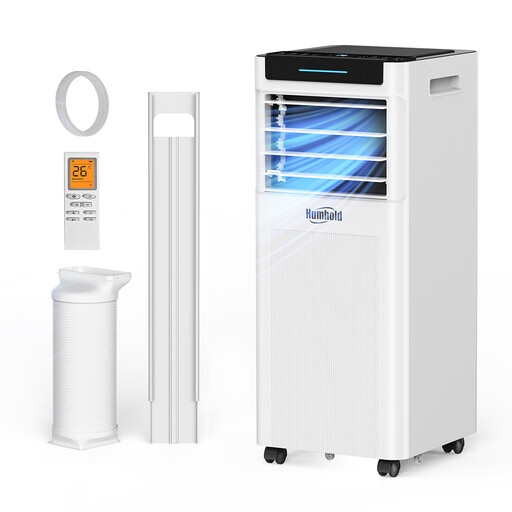
Why it suits this profile: This compact 19.7 kg unit offers cooling, dehumidifying and fan functions. According to the product specifications, it is designed for rooms up to 28 m².
The included window kit helps direct the exhaust outside. According to the supplier, sleep mode operates at under 49 dB.
2.0 kW cooling capacity, 24-hour timer, remote control and washable filter.
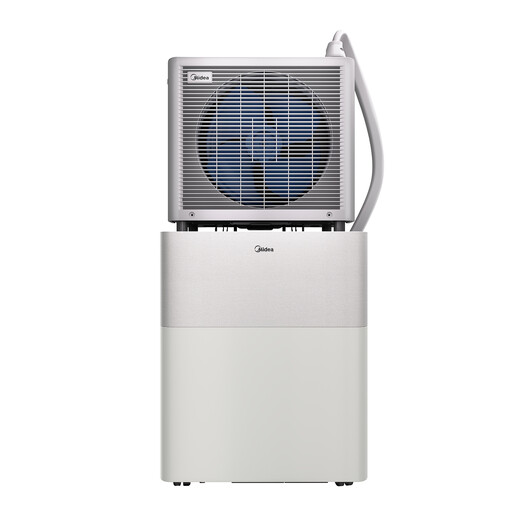
Why it suits this profile: This portable mini-split design is aimed at buyers looking to combine 12000 BTU, cooling and heating, and a stated energy efficiency rating of A++.
The technical specifications include the energy class, R32 refrigerant, weight and noise level of 39 dB(A), giving you key details for comparison.
Cooling and heating functions, 12000 BTU and a mini-split design intended for more permanent use.
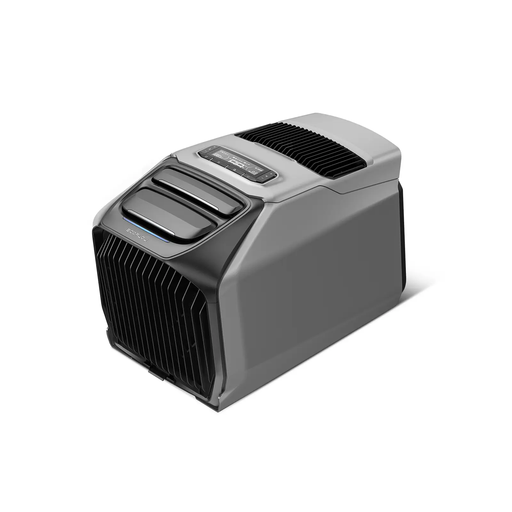
Why it suits this profile: This unit is designed for camping, motorhomes, SUVs and van life. According to the product specifications, an optional battery allows it to run without a cable.
The exhaust must also be vented outside when the unit is used in a vehicle. The product specifications clearly state this installation requirement.
1800 W cooling capacity, 2000 W heating capacity, app control and a stated 44 dB in sleep mode.
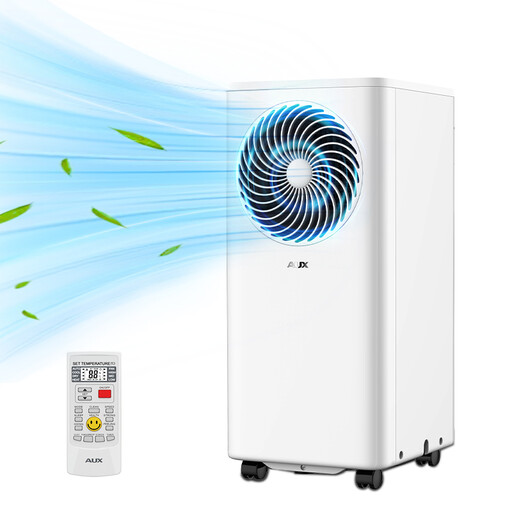
Why it suits this profile: Wi-Fi app, remote control, timer, plus cooling, dehumidifying and fan modes make this a good choice if you prefer to have several ways to control your unit.
Alongside its smart features, the specifications clearly state the rated power, airflow of 330 m³/h, noise levels and filter details.
2600 W cooling capacity, Wi-Fi, 24-hour timer, three operating modes and washable filter.
Depending on your window measurements, a 3 m sealing strip or a 4 m window seal may provide extra insulation. Before ordering, check the measurements against the window perimeter and the route for the exhaust hose.
We’ve put together a complete, regularly updated list of products that meet these strict selection criteria and fully comply with the safety regulations in force in the EU.
Place the unit on a flat, stable surface with enough clearance from the walls. Run the exhaust hose outside through a closed window kit, keeping it as short and straight as possible. Don’t cover the air inlet or outlet.
Its lifespan depends on how many hours it’s used, how well the filter is maintained, how it’s stored and whether the manufacturer’s instructions are followed. Regular cleaning, dry storage and careful handling of the hose and window kit can help reduce wear. If you notice unusual noises or smells, switch off the unit and unplug it.
Running costs depend on the power consumption, the number of hours it’s used each day and the price of electricity. The formula is: Power consumption in kilowatts × hours of use × price per kilowatt-hour. Using a timer, choosing a unit suited to the room and sealing the window effectively can help prevent unnecessary running time.