
Lieferung heute & morgen

Qualitätsgarantie

Willkommens-Angebote freischalten: KOSTENLOSE Lieferung | Bis zu 80 % RABATT | Kostenlose 30-Tage-JoyPlus-Testphase
App herunterladen
A portable air conditioner can be a flexible solution for rented homes, bedrooms, home offices or living spaces. It usually requires no permanent installation and can be moved to another room whenever needed. However, models vary considerably in cooling capacity, noise levels, energy consumption and exhaust-air management.
Anyone who focuses solely on the BTU rating or a low purchase price can easily overlook important details. Three typical pitfalls are particularly relevant:
A portable air conditioning unit is particularly appealing to tenants, as no permanent installation on the exterior wall is required. With classic monoblock units, warm exhaust air is channelled outside through a hose. This requires a window to be opened or sealed with a window kit.
A portable air conditioner with an exhaust hose also needs sufficient space behind the unit. The hose should be as short and straight as possible, without sharp bends. Many portable models have castors and handles, making it possible to move them between the bedroom and living area.
Camper and vanlife users have different requirements. Compact dimensions, power supply, battery operation and the ability to direct exhaust air outside are all important. A unit designed for a living space is not automatically suitable for use in a vehicle.
Cooling capacity is often stated in BTU/h or kilowatts. According to the product specifications of various models, a 9000 BTU portable air conditioner is typically suitable for small to medium-sized rooms. A 12000 BTU portable air conditioner may be a sensible choice for larger or more overheated rooms.
However, room size alone is not enough to make the right choice. You should also check:
An air conditioner that is too small may run for long periods without reaching the desired temperature. An oversized unit, on the other hand, may switch on and off more frequently.
An energy-efficient air conditioner should not be assessed solely by its energy efficiency class. Power consumption in watts and the EER value are also relevant. According to the product specifications, for example, the Activejet KPS-7000APP has a power consumption of 750 W in cooling mode and energy efficiency class A.
During prolonged use, the timer, thermostat, sleep mode and effective window sealing all affect actual electricity consumption. The energy class is therefore a useful comparison figure, but it is not a guarantee of specific running costs.
For a bedroom air conditioner, pay attention to the stated noise level in the lowest operating mode. For example, one Humhold model is described as having a sleep mode below 49 dB, while other units are listed at between 52 and 64 dB. Measurement conditions may vary from one manufacturer to another.
An air conditioner with dehumidifier can be useful when the air in a room feels muggy. Check whether the condensed water evaporates automatically or needs to be emptied regularly via a tank or drainage hose.
A Wi-Fi air conditioner enables control via an app. An air conditioning unit with remote control, on the other hand, offers an independent way to operate the unit from anywhere in the room. Other practical features include a 24-hour timer, a washable filter and automatic shut-off when the water tank is full.
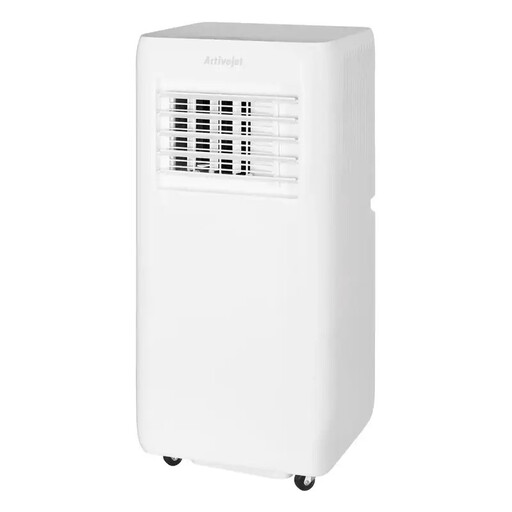
Why this product suits this profile: The unit is specified for rooms of up to 25 m² and combines cooling, dehumidification and ventilation in a compact housing.
The product specifications state 7000 BTU/h, 750 W cooling capacity, energy efficiency class A and an exhaust hose for window installation.
Washable filter, Wi-Fi control via the Tuya app, remote control and 24-hour timer.
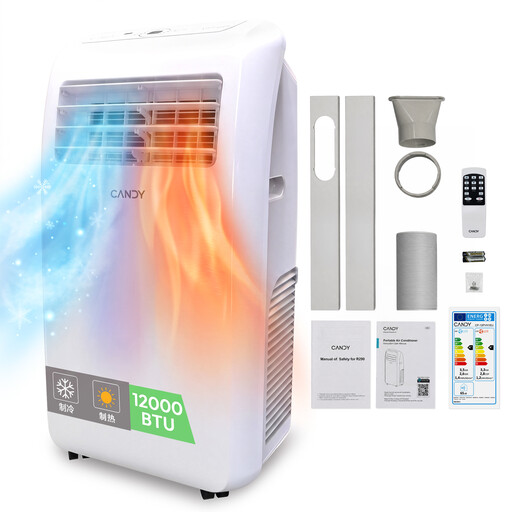
Why this product suits this profile: This 4-in-1 unit is specified for rooms of up to 35 m² and provides cooling, heating, dehumidification and ventilation.
According to the product description, a window kit for vertical and horizontal sliding windows is included. Check the heating capacity and stated room size against your own room before buying.
12000 BTU/h, energy efficiency class A+, 400 m³/h airflow and a 24-hour timer.
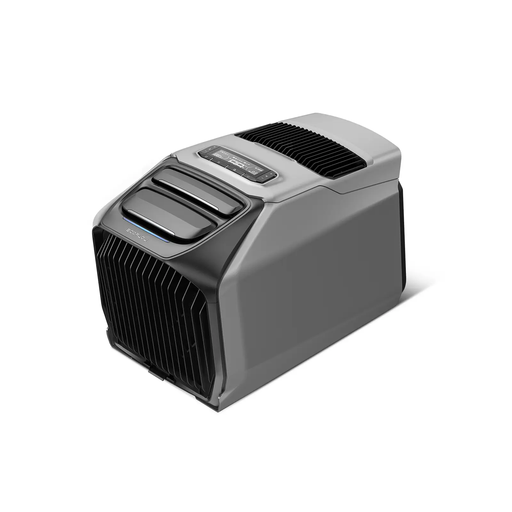
Why this product suits this profile: This compact unit is designed for camping, motorhomes, SUVs and vanlife, and can be powered with an additional battery.
The usage instructions explicitly state that exhaust air must be directed outside. The unit is not intended for use while driving.
6100 BTU cooling capacity, 6800 BTU heating capacity, app control and up to eight hours of battery operation according to the product specifications.
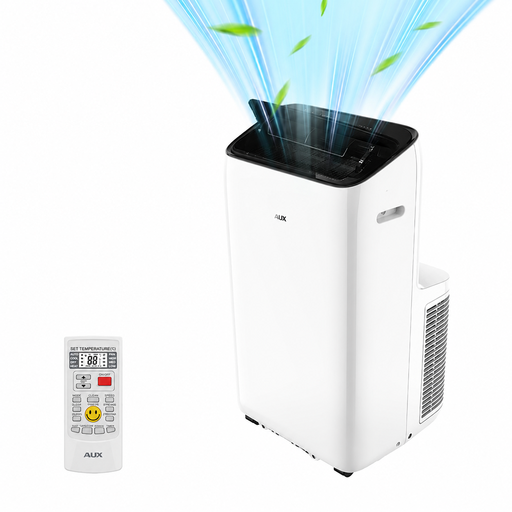
Why this product suits this profile: Its 12000 BTU class and 450 m³/h airflow are designed for larger living spaces, home offices or a range of different usage scenarios.
The product data provides specific figures for capacity, airflow, weight and noise level. When positioning the unit, ensure there is sufficient clearance and an unobstructed exhaust-air route.
Wi-Fi app, remote control, timer, three fan speeds, self-evaporation and a window kit according to the product description.
We have put together a complete, regularly updated list of products that fully meet these strict selection criteria and the safety regulations applicable in the EU.
Before using the unit for the first time, place it on a level, stable surface. Some models require a waiting period after transport to allow the compressor oil to settle. The window kit must fit tightly; otherwise, warm outside air will flow back inside.
Also bear the following in mind:
Attach the exhaust hose to the unit and connect it to the window kit. The window kit should seal the opening as completely as possible. For incompatible windows, a separate window seal for portable air conditioners may be required. Warm exhaust air must be directed outside.
Its lifespan depends on how often it is used, filter maintenance, transport and correct positioning. Regular cleaning, unobstructed air openings and following the manufacturer’s instructions can help support reliable operation. No single lifespan can be given for all models.
Running costs depend on power consumption, electricity tariff, room temperature, usage time and insulation. For a rough estimate, multiply the power consumption in kilowatts by the operating hours and the current unit rate on your electricity tariff. Using the timer, setting a moderate temperature and properly sealing the window can reduce unnecessary running time.