
Lieferung heute & morgen

Qualitätsgarantie

Willkommens-Angebote freischalten: KOSTENLOSE Lieferung | Bis zu 80 % RABATT | Kostenlose 30-Tage-JoyPlus-Testphase
App herunterladen
A portable air conditioner can be a flexible solution for rented flats, bedrooms, home offices or temporary use in motorhomes. It generally requires no permanent wall installation and can be moved from one room to another on its castors. However, portable air conditioners vary considerably in cooling capacity, noise levels, energy consumption and included accessories.
Anyone who focuses solely on the BTU rating or terms such as “quiet” and “energy-efficient” may overlook important details. Three common purchasing mistakes occur particularly frequently:
Cooling capacity is often stated in BTU/h and additionally in watts. A 9000 BTU air conditioner corresponds to approximately 2.6 kW of cooling capacity according to the listed product specifications, while a 12000 BTU air conditioner often reaches around 3.5 kW. However, suitability depends on more than just the floor area.
Also take the following into account:
Manufacturers’ stated maximum room sizes should therefore be treated as a guide. A well-sealed window can have a greater impact on practical performance than a slightly higher BTU rating.
With a portable air conditioner featuring an exhaust hose, the hose should be routed to the window as briefly and straight as possible, without tight bends. The hose must not be covered or severely compressed. Otherwise, heat can build up.
Depending on the model, an air conditioner with window kit includes an adjustable bracket or sealing panels for sliding or casement windows. For windows that open outwards, an additional window seal for portable air conditioners may be useful. A window sealing hose or a 3–4 m sealing strip closes the open window area around the exhaust hose.
Before buying, measure:
Portable air conditioners operate using a compressor and fan. They are therefore inherently audible. Figures of around 49 to 64 dB(A) in the product specifications should not be directly compared with the noise level of a small fan.
A 3-in-1 air conditioner usually combines cooling, ventilation and dehumidification. Some models also offer a heating function. A portable air conditioner with heating function can be useful during the transitional seasons, but it does not automatically replace a fully fledged room heater.
Useful features include:
When assessing energy efficiency, pay attention to the specific rating and the power consumption in watts. Running costs depend on operating time, room temperature, insulation and your electricity tariff. A simple guide is:
Power consumption in kW × operating hours × electricity price per kWh = approximate electricity cost
This calculation does not take into account the fact that the compressor may switch off temporarily depending on the temperature control.
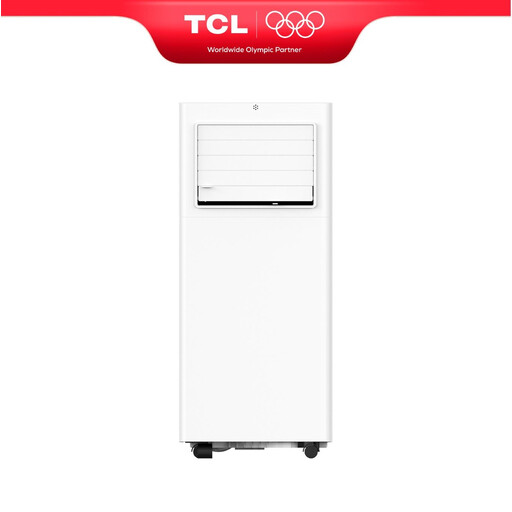
Why this product matches the profile: This 9000 BTU unit offers cooling, ventilation and dehumidification, as well as a remote control. The included sliding-window kit supports straightforward standard installation.
The cooling capacity, three operating modes and included accessories are clearly specified. This makes it possible to check before buying whether the window and room size are suitable.
9000 BTU, two fan speeds, 24-hour timer and washable dust filter.
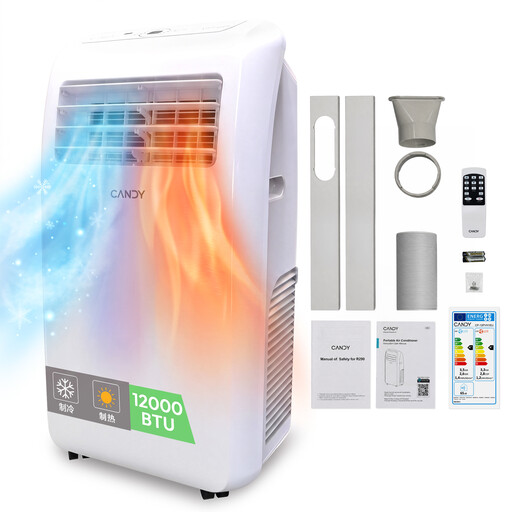
Why this product matches the profile: This model offers four modes: cooling, dehumidification, ventilation and heating. With 12000 BTU of cooling capacity and a window kit, it is designed for larger rooms.
The specifications list cooling and heating capacity separately. Dimensions, weight, air circulation and window compatibility can also be checked before ordering.
Four operating modes, A+ according to the product specifications, 400 m³/h air circulation and a 24-hour timer.
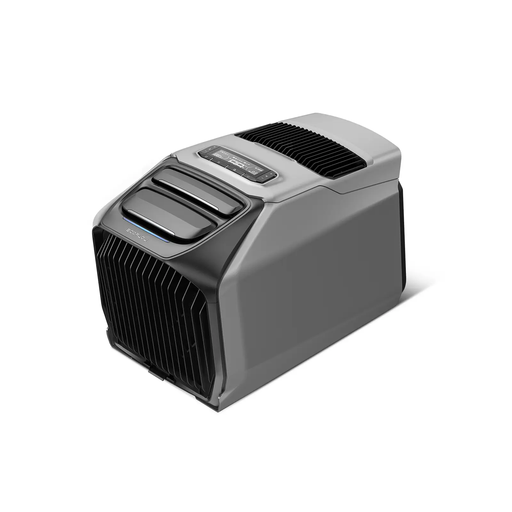
Why this product matches the profile: This unit is designed for camping, motorhomes, SUVs and van life. It offers cooling and heating, app control and optional battery operation.
The product specifications explicitly state that the exhaust hose must be routed outside and that the unit must not be used while driving.
6100 BTU cooling capacity, 6800 BTU heating capacity, app control, 44 dB in sleep mode and up to 8 hours of battery life according to the supplier.
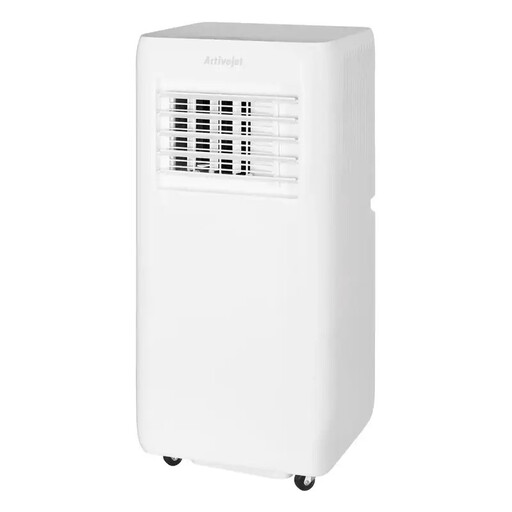
Why this product matches the profile: Wi-Fi via the Tuya Smart app complements the remote control, LED display and 24-hour timer. It is ideal for users who want to operate their air conditioner on a schedule.
Alongside the app, the product also includes a conventional remote control and manual operation. If the Wi-Fi connection fails, basic settings remain available.
7000 BTU, energy efficiency class A according to the product specifications, Tuya app, washable filter and four castors.
We have put together a complete, regularly updated list of products that fully meet these strict selection criteria and the safety regulations applicable in the EU.
Place the portable air conditioner on a level, stable surface and leave the clearance from walls and furniture specified in the instructions unobstructed. The exhaust hose must lead outside. Use an earthed socket and, where possible, avoid extension leads or multiway adaptors if the manufacturer advises against them.
For units containing R290, the refrigerant is flammable. The refrigerant circuit must not be damaged. Clean the filter in accordance with the operating instructions and unplug the unit before cleaning. After transporting the unit on its side, a waiting period may be required before switching it on, depending on the model.
Connect the exhaust hose to the unit and route it outside through the window kit. A window seal reduces the gap around the hose and prevents warm outdoor air from entering uncontrollably. Before buying, check the window dimensions and the type of mounting supplied.
The cost depends on power consumption, usage time and the electricity price. Multiply the stated power consumption in kilowatts by the operating hours and your price per kilowatt-hour. A timer and an appropriate temperature setting can reduce unnecessary running time.
There is no single lifespan that applies in every case. It is influenced by how intensively the unit is used, filter maintenance, transport and proper storage. Regular cleaning, unobstructed airflow and following the manufacturer’s instructions can help maintain the unit’s intended performance.