
Lieferung heute & morgen

Qualitätsgarantie

Willkommens-Angebote freischalten: KOSTENLOSE Lieferung | Bis zu 80 % RABATT | Kostenlose 30-Tage-JoyPlus-Testphase
App herunterladen
A portable air conditioner can cool rooms flexibly without requiring permanent wall installation. This makes it an interesting option for tenants, home workers, homeowners and campers. At the same time, unclear performance figures, poorly planned exhaust air and underestimated running costs often lead to unsuitable purchases.
The following criteria will help you choose a portable air conditioning unit based on clear technical data and assess marketing claims correctly.
The BTU/h figure describes cooling capacity, but on its own does not indicate how quickly a room will actually cool down. Ceiling height, exposure to sunlight, insulation, window area and the number of people present all affect the required capacity.
As a rough guide based on the respective product specifications, the following may apply:
These figures are not a universal guarantee. Rooms in lofts or those with large south-facing windows may require higher performance.
A portable air conditioner with an exhaust hose must direct warm process air outside. If the hose is simply placed through an open window, warm outdoor air will flow back in. This reduces the actual cooling effect.
Check the following before buying:
Textile or flexible seals are suitable for many windows. The 3 m and 4 m options in the range may provide an additional solution, depending on the window size and installation position. Check compatibility against the measurements before buying.
A compressor air conditioner produces operating noise. Figures such as 49 dB, 52 dB or 63 dB(A) are therefore more useful than general terms such as ‘whisper-quiet’. Check whether the figure refers to sleep mode or the maximum setting.
The energy efficiency rating is not a substitute for considering running costs. For a rough estimate:
Electricity costs = power consumption in kW × operating hours × electricity price per kWh
A unit with a power consumption of 1,000 watts uses approximately 5 kWh after five hours of operation. Actual consumption depends on the room temperature, target temperature, insulation and compressor running time.
A 9000 BTU portable air conditioner is often intended for bedrooms, smaller living rooms or home offices. A 12000 BTU portable air conditioner may be more suitable for larger rooms or spaces with a higher heat load. The advertised floor area is not the only important factor; also check the stated cooling capacity in watts or BTU/h.
When choosing a unit, you should also check whether the figure was determined using a transparent testing procedure and whether the appliance is suitable for the intended temperature range.
A 3-in-1 air conditioning unit typically combines:
An air conditioner with dehumidifier can be practical in a muggy indoor climate. However, the dehumidification mode does not replace a dedicated dehumidifier when large quantities of moisture need to be removed continuously.
A unit with an additional heating function is a portable air conditioner with heater. Here, you should consider the heating capacity, energy consumption and stated room size separately from the cooling specifications.
Wi-Fi, app control, a remote control and a 24-hour timer make the unit easier to use, but do not alter its basic cooling performance. A washable filter reduces ongoing replacement-part costs, but it must be cleaned regularly and allowed to dry completely.
In high humidity, the water tank may fill despite self-evaporation. A unit with continuous drainage or a drain hose is then more practical. If your main aim is dehumidification, check the stated dehumidification capacity in litres per day.
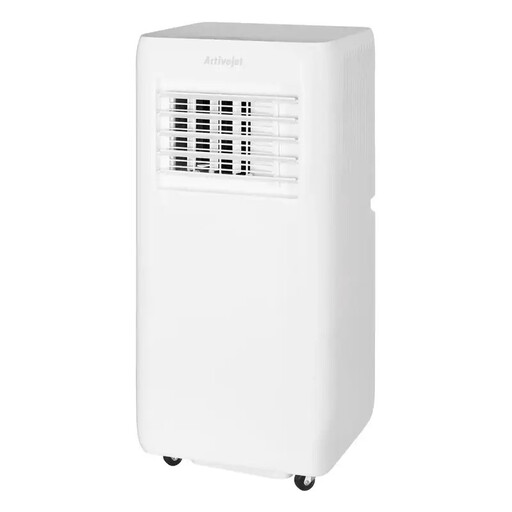
Why this product suits the profile: According to the product specifications, this 7000-BTU unit is intended for rooms of up to 25 m² and combines cooling, dehumidification and ventilation. Wi-Fi control, a remote control and a timer provide additional operating options.
The stated room size and maximum noise level of 53 dB(A) make it possible to choose based on specific data rather than vague advertising claims.
A energy efficiency rating, washable filter, 24-hour timer and compatibility with the Tuya Smart app.
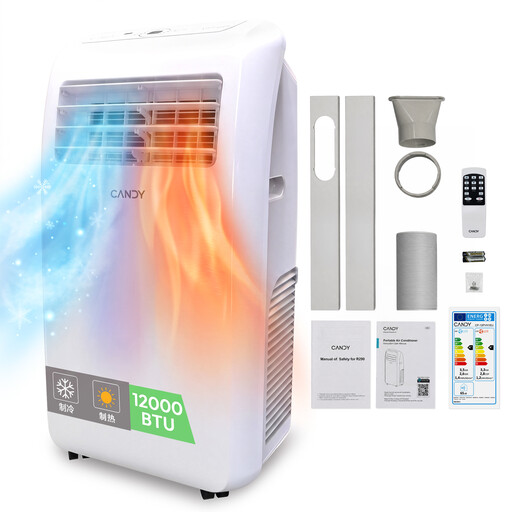
Why this product suits the profile: According to the product data, this model offers 12000 BTU of cooling capacity for larger rooms of up to around 35 m², as well as an additional heating mode.
The separate cooling and heating capacity figures prevent the two values from being confused. According to the description, the window kit is included.
Four operating modes, an A+ energy efficiency rating, 400 m³/h airflow and a 24-hour timer.
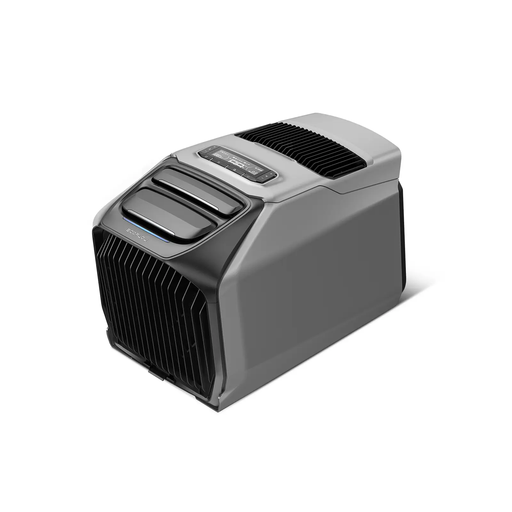
Why this product suits the profile: According to the manufacturer, this compact unit is designed for campers, van-life users and vehicles. It offers cooling, heating, app control and optional battery operation.
The specifications explicitly state that exhaust air must be directed outside. This means vehicle installation remains something to plan for, rather than being presented as requiring no installation at all.
6100 BTU cooling capacity, 6800 BTU heating capacity, 44 dB in sleep mode and an optional battery with a stated runtime of 2 to 8 hours.

Why this product suits the profile: If your main aim is to reduce humidity or dry laundry, you do not necessarily need a portable air conditioner. According to the product description, this unit is intended for areas of up to 60 m².
The stated capacity of up to 16 litres per day refers to dehumidification, not cooling. This makes it easier to choose the right type of appliance for your actual needs.
Adjustable target humidity of 40 to 70 per cent, 2.5-litre tank, 24-hour timer and a stated sleep mode from 30 dB.
We have put together a complete, regularly updated list of products that fully meet these strict selection criteria and the safety regulations applicable in the EU.
Place the unit close to the window. Attach the exhaust hose to the appliance and route it outside through a suitable window kit. A window seal reduces the flow of warm outdoor air back into the room. A textile seal may be required for casement or tilt-and-turn windows; sliding windows often accommodate the supplied panel or frame systems.
Its service life depends on operating hours, filter care, transport, storage and maintenance. Regular cleaning, unobstructed airways and dry, frost-protected storage outside the season can help provide the conditions for reliable operation. Specific durability information should be taken from the manufacturer’s warranty and operating instructions.
Power consumption, operating time and your personal electricity tariff are the key factors. Multiply the power consumption stated on the rating plate or data sheet by the operating hours and the price per kilowatt-hour. Timers, choosing the right room size, closed windows and effective sealing can reduce unnecessary running time.