
Lieferung heute & morgen

Qualitätsgarantie

Willkommens-Angebote freischalten: KOSTENLOSE Lieferung | Bis zu 80 % RABATT | Kostenlose 30-Tage-JoyPlus-Testphase
App herunterladen
A portable air conditioner can be used without permanent wall installation, making it an appealing option for rented homes, bedrooms, home offices, offices or seasonal use in living areas. Portable air conditioners can also provide a flexible solution in campers or vehicles. However, the stated BTU rating alone does not determine whether an air conditioner will work effectively in everyday mobile use.
Three common buying pitfalls occur particularly often:
Cooling capacity is often specified in BTU/h or kilowatts. According to the respective product details, a 9000 BTU portable air conditioner is often suitable for medium-sized rooms. However, its actual suitability also depends on ceiling height, window area, exposure to sunlight, insulation and the number of people in the room.
As a general guide, buyers can compare the following:
This means that manufacturers’ room-size recommendations should be treated as guidance rather than a guarantee. Attic rooms or spaces with large south-facing windows may require higher capacity.
A portable air conditioner with an exhaust hose directs warm process air outside. The hose should be as short and straight as possible, without tight bends. At the same time, the window opening must be sealed.
An air conditioner with a window kit may already include suitable brackets or panels. However, with casement, tilt or sliding windows, you should check whether the supplied system is actually compatible. A flexible window seal for portable air conditioners can close the opening around the exhaust hose. This reduces the flow of warm air back into the room and can make operation more efficient.
For retrofitting or a second window, the following sizes are available, for example:
Before buying, measure the window perimeter, hose diameter and type of fastening.
An energy-efficient portable air conditioner is not determined solely by its energy efficiency rating. Power consumption, daily operating time and the target room temperature are also important. Compare the EER, rated power and energy class directly in the product data sheet.
Useful additional features may include:
For appliances using R290 or other refrigerants, follow the manufacturer’s safety instructions. Air outlets must not be blocked. The appliance should be connected directly to a suitable earthed socket; extension leads and multi-socket adapters should be avoided in accordance with the operating instructions.
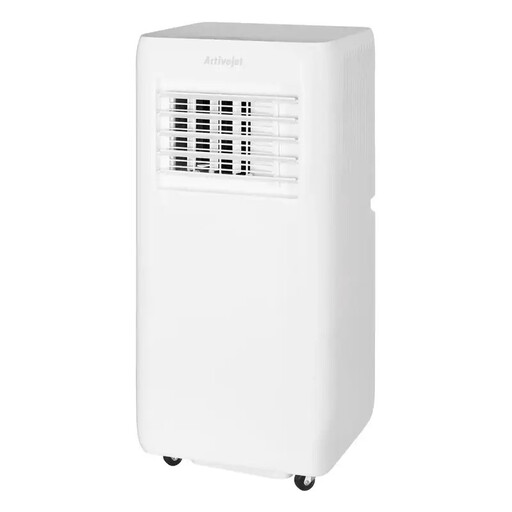
Why this product suits the profile: This appliance combines 7000 BTU with cooling, dehumidifying and fan operation and, according to the product details, is intended for rooms of up to 25 m². Wi-Fi app control, a remote control and a 24-hour timer provide convenient operating options.
The stated room recommendation and specific maximum noise level of 53 dB(A) make it easier to assess the appliance before buying.
A energy efficiency class, washable filter, four castors and app control.
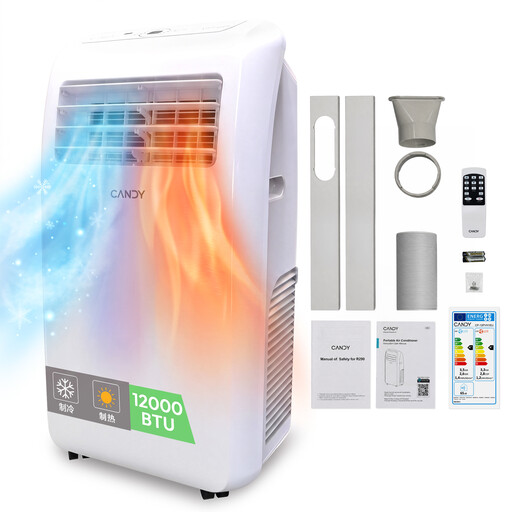
Why this product suits the profile: This air conditioner offers cooling, heating, dehumidifying and fan operation. According to the product data, it is designed for rooms of up to 35 m² and comes with a window kit.
The specifications state the cooling and heating capacity, A+ energy class, dimensions and weight. This provides a better basis for planning the room and installation location.
Four operating modes, 24-hour timer, remote control and window kit for vertical and horizontal sliding windows.
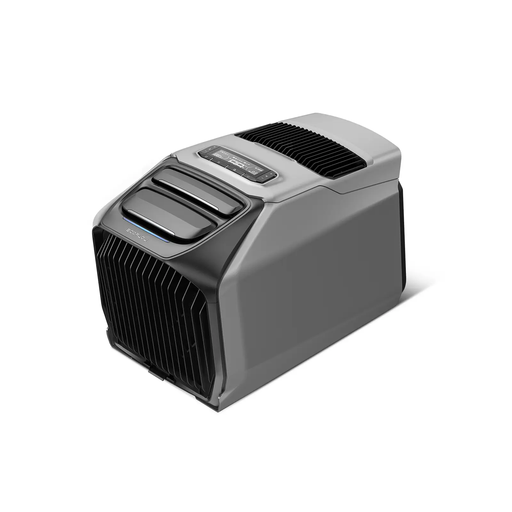
Why this product suits the profile: According to the product details, this compact air conditioner is intended for campers, motorhomes, SUVs and vans. It offers cooling and heating, as well as app control and optional battery operation.
The product data explicitly states the required external exhaust, intended vehicle use and power supply options.
6100 BTU cooling capacity, 6800 BTU heating capacity, app connectivity and a stated noise range of 44 to 58 dB.
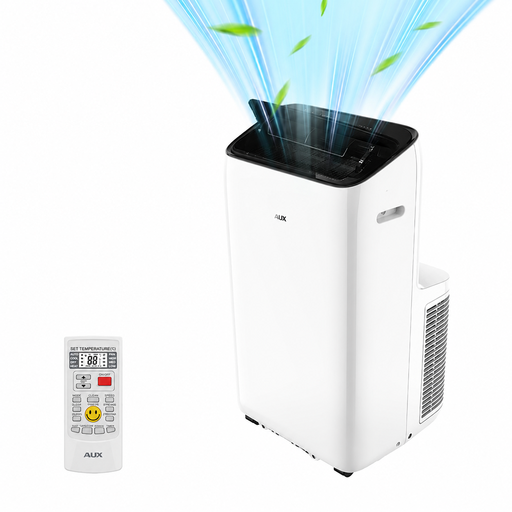
Why this product suits the profile: With 12000 BTU, a stated airflow of 450 m³/h and three operating modes, this air conditioner is aimed at larger living or working areas.
The specifications for power consumption, dimensions, weight and noise level help you assess ongoing use and the installation location realistically.
Wi-Fi app, remote control, 24-hour timer, automatic condensate evaporation and washable filter.
We have put together a complete, regularly updated list of products that fully meet these strict selection criteria and the safety regulations applicable in the EU.
Before using the appliance for the first time, place it on a level, stable surface. Leave sufficient space between the air conditioner, walls and furniture for air intake and exhaust. Attach the exhaust hose to the appliance and route it outside. The window kit or window seal must be positioned so that the opening remains as closed as possible.
Clean the filters regularly in accordance with the operating instructions and make sure they are completely dry before reinstalling them. In high humidity or dehumidifying mode, the water tank may become full despite automatic evaporation. A suitable drain and the “Water Full” indicator are therefore useful points to check.
This depends on the model and operating mode. For the appliances mentioned, manufacturers’ stated noise levels range from below 49 dB to around 64 dB(A), for example. Sleep mode, a lower fan setting and sufficient distance from the bed can reduce noise levels. Compare the figures directly before buying.
The exhaust hose is routed outside using the window kit or a suitable window seal. The window must be securely fixed in place. Before buying, check the window type, available opening width and hose length. Warm exhaust air must not flow back into the room.
Costs depend on power consumption, your electricity tariff and operating time. As a guide, multiply the stated power consumption in kilowatts by the daily operating hours and your own price per kilowatt-hour. Using a timer, choosing an appliance suited to the room size and cleaning the filters regularly can help avoid unnecessary running time.