
Lieferung heute & morgen

Qualitätsgarantie

Willkommens-Angebote freischalten: KOSTENLOSE Lieferung | Bis zu 80 % RABATT | Kostenlose 30-Tage-JoyPlus-Testphase
App herunterladen
A portable air conditioner can cool bedrooms, living rooms or home offices without permanent installation. For tenants, a portable air conditioning unit is therefore often a practical alternative to a permanently installed system. However, suitability is not determined by the number on the box alone. Room size, exhaust air routing, noise level and power consumption all affect whether the appliance can be used effectively in everyday life.
Figures such as 9000 BTU air conditioner or 12000 BTU air conditioner describe cooling capacity. However, they do not guarantee that a room will reach the desired temperature quickly under all conditions. Loft rooms, large areas of glazing, poorly insulated external walls and multiple sources of heat all increase the requirements.
The stated room size is therefore only a guide. You should also check:
A portable air conditioner for the home generally works more efficiently when it is used to cool just one room that is as enclosed as possible.
Marketing figures sometimes refer to a specific operating mode or a single measurement. What matters is whether the sound power level or sound pressure level is clearly stated in the technical specifications. A difference between 52 and 64 dB can be clearly noticeable in everyday use.
The following features are also relevant for bedrooms and home offices:
Where possible, compare figures recorded under comparable conditions. Actual perceived noise also depends on room acoustics, the installation location and the type of flooring.
A portable air conditioner with exhaust hose directs warm air outside. If the hose is simply hung loosely out of the window, warm outdoor air will flow back into the room. This reduces cooling performance and can increase electricity consumption.
An air conditioner with window kit or a separate window seal for portable air conditioners closes the gap around the hose. Before buying, you should check:
Window sealing strips measuring 3 or 4 metres in length are available for different window widths, for example. The right length depends on the perimeter of the window opening to be sealed.
A 9000 BTU air conditioner corresponds to around 2.6 kW of cooling capacity for the appliances featured here. According to the product specifications, 7000-BTU models provide around 2.0 kW, while 12000-BTU appliances can reach approximately 3.5 kW. These figures are useful for making an initial selection, but do not replace an assessment of the room itself.
A more compact portable air conditioner may be sufficient for small bedrooms, studies or well-insulated rooms. Larger rooms that become very hot generally need more capacity in reserve. However, an oversized appliance is not automatically the best choice either, as short operating cycles can affect dehumidification and even temperature distribution.
The energy efficiency class and EER value provide an indication of consumption. Actual electricity usage depends on the target temperature, outdoor temperature, operating time and insulation. For a rough calculation:
Power consumption in kW × operating hours × electricity price per kWh = approximate electricity costs
An appliance with a power consumption of 1000 watts theoretically uses around 1 kWh during one hour of operation. Ratings such as “A” or “A+” should always be considered alongside the specific power consumption.
A 3-in-1 air conditioner usually combines cooling, dehumidification and ventilation. Some models also offer a heating function. An air conditioner with remote control makes it easier to operate the appliance from the sofa or bed, while an air conditioner with Wi-Fi can be controlled via an app.
The following features are also useful:
Refrigerant circuits must not be damaged. Appliances containing R290 require particular care because it is a flammable refrigerant. Follow the operating instructions, ensure sufficient clearance and use an earthed socket. Extension leads and multi-socket adapters should only be used if the manufacturer expressly permits this.
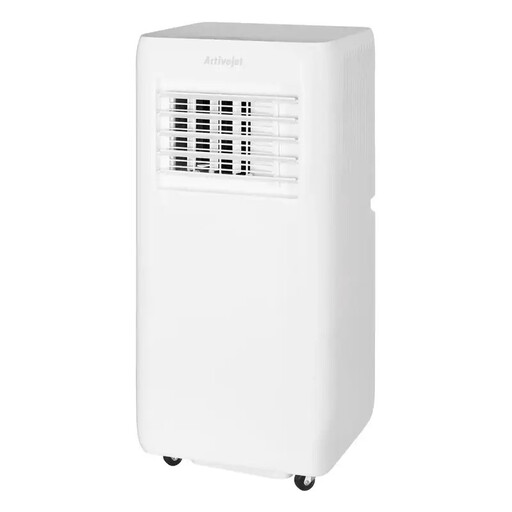
Why this product suits the profile: According to the product specifications, this compact appliance offers cooling, dehumidification and ventilation for rooms of up to 25 m², as well as Wi-Fi and remote control.
The technical specifications clearly state the cooling capacity, maximum noise level, airflow rate and power supply. This makes it easier to compare the appliance with your room requirements.
7000 BTU, energy efficiency class A, 24-hour timer and washable filter.
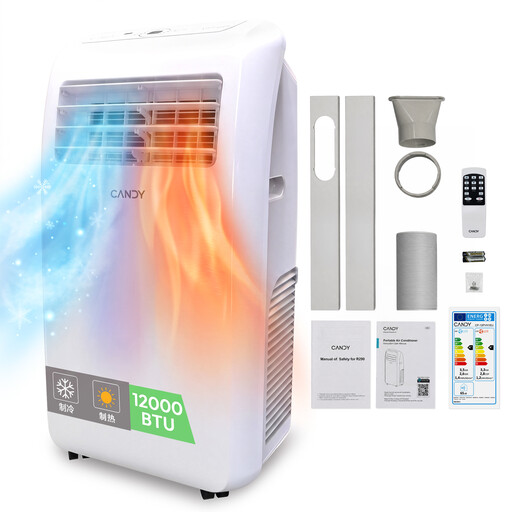
Why this product suits the profile: According to the manufacturer, this 4-in-1 appliance combines cooling, dehumidification, ventilation and heating, and is suitable for rooms of up to 35 m².
Cooling and heating capacity, energy efficiency, dimensions and weight are listed separately. The window kit is also included in the contents supplied.
12000 BTU, energy efficiency class A+, 24-hour timer and window kit for vertical and horizontal sliding windows, according to the product description.
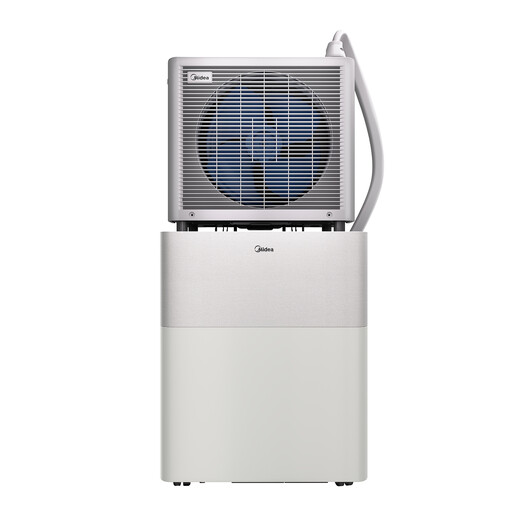
Why this product suits the profile: The portable mini-split design is appealing to users looking for 12000 BTU, cooling and heating, as well as a stated noise level of 39 dB(A).
The design separates the indoor and outdoor units. Before buying, check the weight of 45.5 kg, the space required and the specific installation method.
12000 BTU, energy efficiency class A++, heating and cooling function, plus R32 refrigerant according to the product specifications.
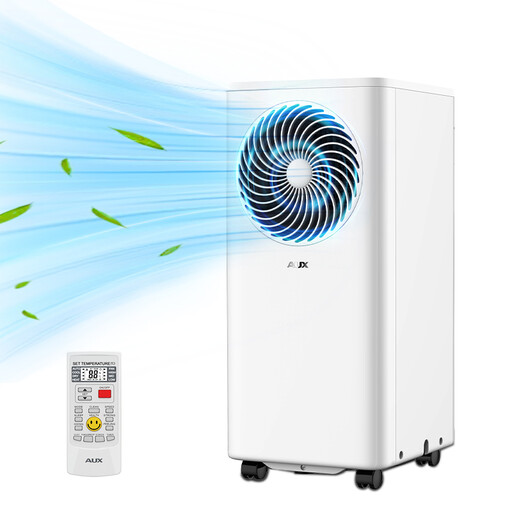
Why this product suits the profile: With castors, carrying handles, Wi-Fi, remote control and three operating modes, this model is designed for use in changing locations such as bedrooms, living rooms and home offices.
The technical data states a cooling capacity of 2600 W, rated power consumption of 1000 W, an airflow rate of 330 m³/h and a weight of 23.5 kg. This makes it easier to compare room and electricity requirements.
3-in-1 function, Wi-Fi control, 24-hour timer, washable filter and supplied window kit, according to the product description.
We have put together a complete, regularly updated list of products that fully meet these strict selection criteria and the safety regulations applicable in the EU.
Place the appliance on a level, stable surface and observe the minimum clearance from walls and furniture specified in the instructions. The exhaust hose should be routed outside as straight and as short as possible, without tight bends. Keep the windows and doors of the room being cooled closed while the appliance is operating.
Clean the washable filter regularly and only refit it once it is completely dry. In high humidity or dehumidification mode, condensate may still collect despite the self-evaporation function. Depending on the model, an indicator or automatic switch-off will signal that the water tank is full.
The exhaust hose is usually routed outside through a window kit or window seal. Check that the accessory is suitable for your window design. Casement or tilt-and-turn windows may require a flexible sealing strip, while sliding windows often use adjustable panels.
The service life depends on operating hours, filter maintenance, transport and storage. Regular cleaning, unobstructed air inlets and outlets, and proper storage outside the heating or cooling season can help ensure trouble-free operation. The relevant manufacturer’s specifications and applicable warranty terms are authoritative.
The cost depends on power consumption, operating time and your electricity tariff. An appliance with a power consumption of 1.0 kW uses 1 kWh during one hour of operation. Timers, choosing the right capacity, closed windows and an airtight window seal can help avoid unnecessary operating time.