
Lieferung heute & morgen

Qualitätsgarantie

Willkommens-Angebote freischalten: KOSTENLOSE Lieferung | Bis zu 80 % RABATT | Kostenlose 30-Tage-JoyPlus-Testphase
App herunterladen
By Joybuy, your Product Recommendation OfficerDate: July 22, 2026
The search for a flexible solution to maintain comfortable indoor temperatures is more relevant than ever. Rising summer temperatures and unpredictable transitional seasons challenge many apartment and homeowners to ensure year-round comfort without installing a permanent air conditioner. A portable air conditioner offers a practical alternative.
This article serves as your guide. Instead of bombarding you with marketing promises, we focus on objective criteria and present a selection of units that meet different needs. The goal is to provide you with the information you need to make an informed decision.
Before you decide on a model, there are a few technical aspects to consider. These three points will help you evaluate a unit's performance and suitability for your needs.
Cooling capacity is measured in British Thermal Units (BTU) per hour. A higher BTU value means greater cooling power. Choosing the right value is crucial for effectively cooling a room without wasting energy. As a rule of thumb for rooms with standard ceiling heights (approx. 2.40 m / 8 ft), you can use the following values as a guide:
Factors such as large windows with direct sunlight, poor insulation, or the number of people in the room may require a higher capacity.
Checking the EU energy label is essential. The energy efficiency class, which ranges from G (least efficient) to A+++ (most efficient), indicates how economical a unit is to operate. A model with an A++ energy efficiency rating consumes significantly less electricity than a Class A unit, which makes a noticeable difference in operating costs over the years. Modern units also use more eco-friendly refrigerants like R290 or R32, which offer high efficiency.
Modern units are often more than just simple coolers. A portable air conditioner with a heating function can also serve as a supplementary heater in the cold season, making it a practical 4-in-1 cooling and heating unit. Other useful functions include:
Based on the criteria above, we have compiled a selection of units that stand out for their functionality and technical features.
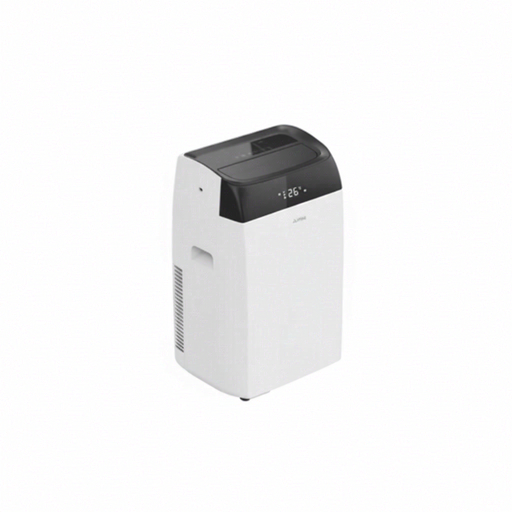
Why it stands out: The Daitsu APD 12FCX is designed as a 4-in-1 cooling and heating unit. With its integrated heat pump technology, it not only provides cooling in the summer but also efficient heating performance in the winter. Wi-Fi control makes it a modern and flexible solution.
Advantages:
Who is it for? For users looking for a single, flexible solution for the entire year who appreciate the convenience of app control. Ideal for rooms up to approx. 35 m? (375 sq ft).
View the Daitsu APD 12FCX on Joybuy.de
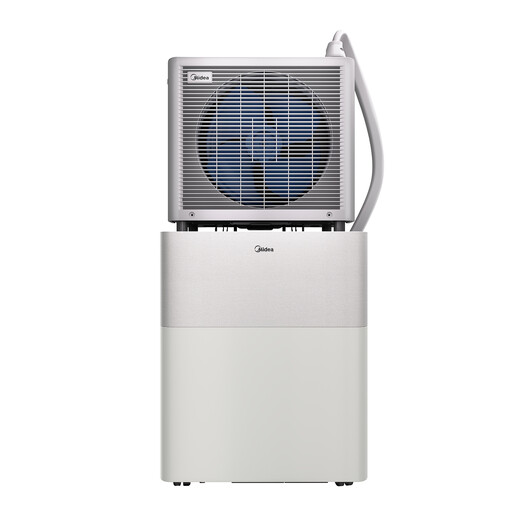
Why it stands out: The Midea PortaSplit-E 12K stands out with its exceptional A++ energy efficiency rating. As a portable mini-split unit, it combines the flexibility of a mobile device with the efficiency of a split system. With 12,000 BTU, it is also designed for larger rooms up to 105 m? (approx. 40 m? / 430 sq ft).
Advantages:
Who is it for? For users who place the highest value on energy efficiency and quiet operation and need a powerful solution for larger rooms.
View the Midea PortaSplit-E 12K on Joybuy.de
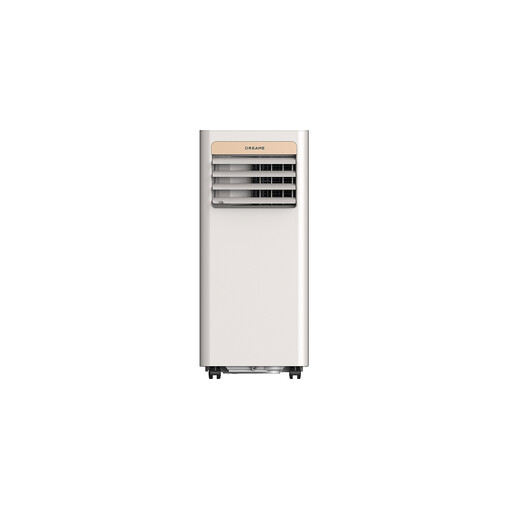
Why it stands out: With its slim design and compact dimensions, the Dreame P-Wind 10 is ideal for smaller rooms like bedrooms or home offices up to 25 m? (270 sq ft). It combines three control options—a touch display, remote control, and an air conditioner with app control—for maximum flexibility.
Advantages:
Who is it for? For users looking for a smart, space-saving solution for rooms up to 25 m? (270 sq ft) who value flexible control options and quiet nighttime operation.
View the Dreame P-Wind 10 on Joybuy.de
The models featured use an exhaust hose for effective cooling. If this is not ideal for your living situation or if you are specifically looking for an air conditioner without an exhaust hose, there are other technologies and devices to discover.
Discover More Air Conditioners on Joybuy.de
1. Does every portable air conditioner need an exhaust hose? Most portable air conditioners that operate on the compressor principle require an exhaust hose. This hose vents the warm air extracted from the room to the outside. Without this process, the heat would build up in the room, making cooling impossible. Devices advertised as "air conditioners without an exhaust hose" are typically air coolers (evaporative coolers). They cool the air through the evaporation of water, which can only lower the room temperature by a few degrees and simultaneously increases humidity.
2. How loud is a portable air conditioner really? The noise level is specified in decibels (dB(A)). A typical portable air conditioner has a sound power level between 60 and 65 dB(A), which is equivalent to a loud conversation during operation. The sound pressure level, measured at a distance from the unit, is lower, often between 50 and 55 dB(A). Models considered particularly quiet can achieve values below 50 dB(A), which is comparable to the noise of a refrigerator.