
Lieferung heute & morgen

Qualitätsgarantie

Willkommens-Angebote freischalten: KOSTENLOSE Lieferung | Bis zu 80 % RABATT | Kostenlose 30-Tage-JoyPlus-Testphase
App herunterladen
Rising summer temperatures are making effective room cooling a necessity in many households. At the same time, transitional seasons often require a flexible heating solution. A portable air conditioner offers a versatile answer to both, without the need for complex and permanent installation. Whether for the bedroom, home office, or even a camping trip, the selection of available units is vast.
This article serves as your guide. We will introduce various models and explain the key technical features you should consider to make an informed decision that meets your specific needs.
Choosing the right unit depends on several factors. The following points will help you understand the technical specifications and define your requirements.
The capacity of an air conditioner is often specified in BTU (British Thermal Unit) per hour. A higher BTU number means greater cooling power, which is necessary for larger rooms. As a rule of thumb:
Many modern units are designed as a portable air conditioner for cooling and heating. These models often use a heat pump function to generate warmth efficiently during cooler months, making them a year-round solution. Look for the separate heating capacity specification in Watts or BTU.
An energy-efficient air conditioner not only protects the environment but also your wallet. The energy efficiency class, indicated on the EU energy label, provides this information (with A being a good efficiency rating). Another important aspect is the refrigerant used. The natural refrigerant R290 (Propane) has a very low global warming potential and is considered an eco-friendly alternative to older refrigerants.
Modern units often offer air conditioning with app control via Wi-Fi. This allows you to turn the device on or off remotely, create schedules, or adjust the temperature.
The noise level, measured in decibels (dB), is a crucial factor, especially in bedrooms or offices. A quiet portable air conditioner operates at under 50 dB, which is comparable to the sound of a quiet conversation. Many models feature a special sleep mode that reduces the fan speed and, consequently, the noise.
While most portable air conditioners are designed for use in living spaces, there are special models for on-the-go use. An air conditioner with a battery for camping or an air conditioner for an RV is characterized by its compact dimensions, low weight, and alternative power options (e.g., battery operation, 12V connection).
Here, we present three models that cover different needs—from flexible outdoor use to powerful climate control for living spaces.
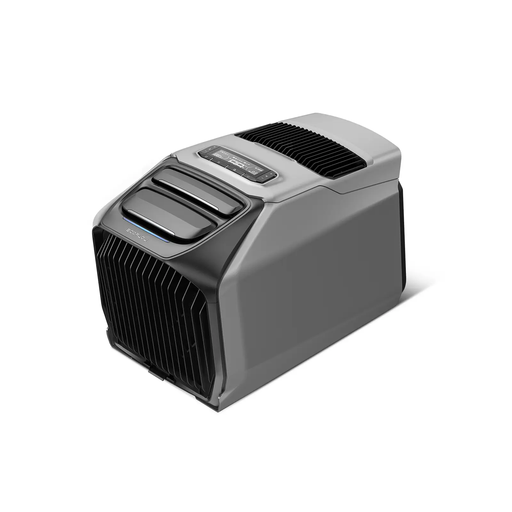
Why it stands out: The EcoFlow WAVE 3 is specifically designed for mobile use. Its standout feature is the option for battery operation, making it independent of the power grid. With a cooling capacity of 1800W and a heating capacity of 2000W, it is a powerful companion for camping, van life, or as an emergency backup.
Pros:
Who is it for? This unit is the ideal choice for outdoor enthusiasts, RV owners, and anyone looking for a truly portable and off-grid climate control solution.
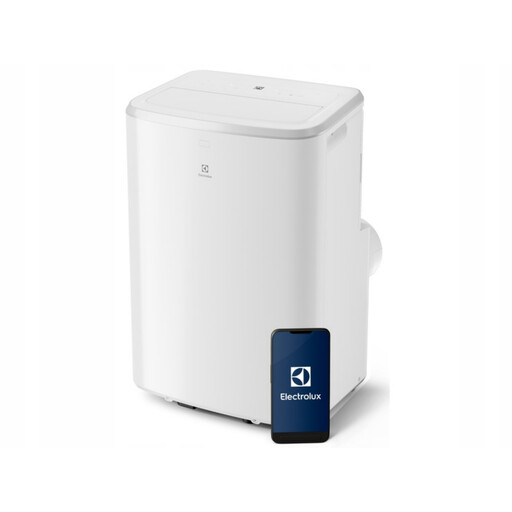
Why it stands out: The Electrolux Comfort 600 is a versatile 3-in-1 unit for home use, combining cooling, heating, and dehumidifying in one device. With 9000 BTU of cooling power, it is well-suited for medium-sized rooms. Control via a smartphone app and its Class A energy efficiency rating make it a modern and economical choice.
Pros:
Who is it for? Ideal for apartment and homeowners who want a flexible, year-round solution for individual rooms like the living room or bedroom and value smart controls.
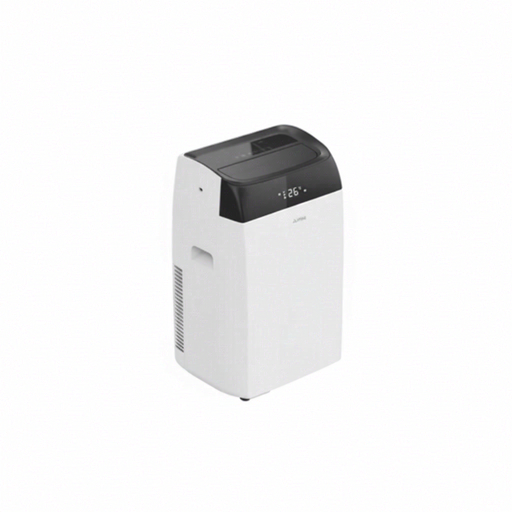
Why it stands out: The Daitsu APD 12FCX impresses with a high capacity of 12000 BTU and efficient heat pump technology for heating. It is designed for larger rooms and offers excellent convenience with integrated Wi-Fi and compatibility with the Smart Life app. Its energy efficiency classes A (Cooling) and A+ (Heating) highlight its economical operation.
Pros:
Who is it for? A great choice for users who want to effectively climatize larger rooms up to approx. 40 m? (430 sq ft) and are looking for a powerful, energy-efficient solution for year-round use.
Haven't found the right model for your needs yet? There is a wide variety of other units with different features and for various applications.
? Discover more products in the Cooling & Freezing category here.
1. Does a portable air conditioner always need an exhaust hose? Yes, portable monoblock air conditioners require an exhaust hose to vent the warm air from the room to the outside. The hose is typically routed through a tilted window or a special window sealing kit. Without this heat exhaust, the room cannot be cooled effectively.
2. How loud is a quiet portable air conditioner? Units are considered quiet if their operating noise is below 55 dB during normal operation and below 50 dB in a special sleep or quiet mode. The exact values are listed in the manufacturer's technical specifications. A value around 44 dB, which some models achieve in sleep mode, is comparable to the noise level in a quiet library.