
Lieferung heute & morgen

Qualitätsgarantie

Willkommens-Angebote freischalten: KOSTENLOSE Lieferung | Bis zu 80 % RABATT | Kostenlose 30-Tage-JoyPlus-Testphase
App herunterladen
Rising summer temperatures are making it increasingly difficult to keep cool at home. Especially in urban apartments without central air conditioning, attic spaces, living rooms, or home offices can quickly become uncomfortably hot. A portable air conditioner offers a flexible and effective solution for cooling individual rooms as needed.
This article serves as your guide. It explains the most important criteria to consider when buying and presents a selection of units with different features to help make your decision easier.
Choosing the right unit depends on several factors. Three aspects are particularly crucial: cooling capacity, energy efficiency, and feature set.
Cooling capacity is measured in British Thermal Units (BTU) per hour. This value describes how much heat energy a unit can remove from a room within one hour. A higher BTU number means greater cooling power. For effective cooling, the capacity should match the room size. As a rule of thumb:
Factors like ceiling height, sun exposure, and the number of people in the room can also affect cooling requirements.
Running a portable AC unit will impact your electricity bill. The EU Energy Label provides information about a device's efficiency. The scale ranges from G (least efficient) to A (most efficient). Models with an energy efficiency class of A or higher, such as A+ or A++, consume significantly less power during operation. A higher initial investment in a more efficient unit can pay for itself over the years through lower operating costs.
The operating noise level, measured in decibels (dB), is a key comfort factor, especially in a bedroom or office. For many users, finding a quiet portable air conditioner is a top priority. Pay attention to the manufacturer's specifications for the sound power level. Values below 55 dB are generally considered relatively quiet for monobloc units.
Modern units also offer useful additional features:
Here is a selection of units that cover a range of needs—from smart controls to high efficiency.
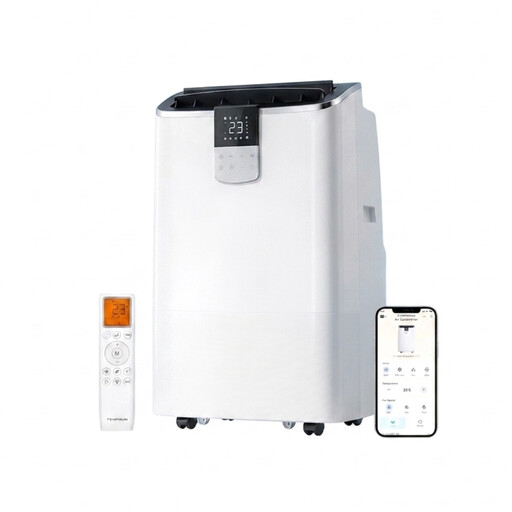
Why It Stands Out: This model combines powerful cooling with modern smart home features. Its 4-in-1 functionality makes it a versatile companion for the entire year.
Pros:
Who It's For: Users looking for a powerful and smart all-in-one solution for medium-sized living rooms or bedrooms who value the convenience of remote control.
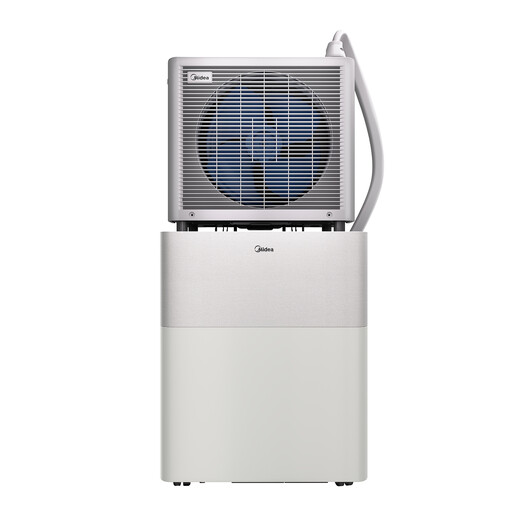
Why It Stands Out: As a portable split air conditioner, it separates the noisy compressor unit (outdoor unit) from the indoor unit. This allows for significantly quieter operation indoors. Its high energy efficiency and heating function complete the package.
Pros:
Who It's For: Users who demand the quietest possible operation (e.g., for a bedroom) and want an energy-efficient solution for year-round use.
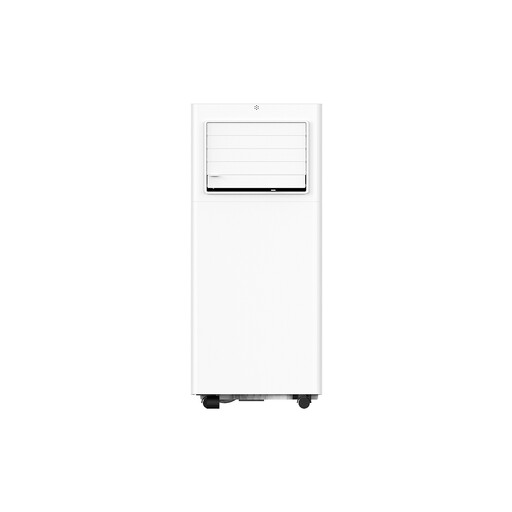
Why It Stands Out: This model is a compact and straightforward portable air conditioner that focuses on essential functions. It's a practical choice for smaller spaces.
Pros:
Who It's For: Individuals looking for a functional and easy-to-use solution for smaller spaces like a home office, guest room, or small bedroom.
The units featured here already cover a broad spectrum. However, if you have different requirements for performance, design, or features, it's worth exploring other options.
Discover Our Selection of Portable Air Conditioners for Your Home
Monobloc portable air conditioners draw in warm room air, cool it using a refrigerant, and release the cooled air back into the room. The heat generated in this process is expelled outside through a flexible exhaust hose, typically routed through a partially open window or a special window sealing kit. This heat removal is essential for effective cooling.
The noise level varies by model and design. Monobloc units, which contain the entire cooling circuit in one housing, tend to be louder than split units. Manufacturers specify the sound power level in decibels (dB). Levels around 50-55 dB are often acceptable for living areas, while quieter models below 50 dB or portable split units are recommended for bedrooms.
Yes, every true portable air conditioner that actively cools requires a way to dissipate heat. This is typically done via an exhaust hose. Devices without an exhaust hose are not air conditioners but air coolers (also known as evaporative coolers). They cool the air through the evaporation of water, which only slightly lowers the room temperature while increasing humidity. For a noticeable and effective reduction in room temperature, a unit with an exhaust hose is necessary.