
Lieferung heute & morgen

Qualitätsgarantie

Willkommens-Angebote freischalten: KOSTENLOSE Lieferung | Bis zu 80 % RABATT | Kostenlose 30-Tage-JoyPlus-Testphase
App herunterladen
With rising summer temperatures, effective room cooling has become essential for many. Installing a permanent air conditioner is often not an option, especially in rental apartments or for individual rooms. A portable air conditioner offers a flexible and straightforward solution. However, the market is vast, and technical specifications can be overwhelming.
This article serves as your guide. We'll explain the most important criteria to consider when making your choice and present a selection of units for various applications—from an air conditioner for your home to a self-sufficient air conditioner for camping. Our goal is to provide you with a solid foundation for an informed decision.
To find the right unit for your needs, several technical aspects are crucial. The following points will help you objectively evaluate the performance and suitability of a portable air conditioner.
Cooling capacity is typically measured in BTU (British Thermal Unit) per hour. This value describes how much heat energy a unit can remove from the room's air per hour. As a rule of thumb for rooms with a standard ceiling height (approx. 2.40 m) and average sun exposure, you can use the following guidelines:
Factors such as large windows with direct sunlight, a top-floor or attic location, or the presence of many electronic devices may require a higher cooling capacity.
A portable air conditioner often runs for several hours a day, so running costs play a significant role. The energy efficiency class, indicated on the EU energy label, provides information about power consumption. Units rated Class A or higher are particularly energy-efficient.
Also, pay attention to the refrigerant used. Modern units often use R290 (propane). This refrigerant has a very low Global Warming Potential (GWP) and is considered a more environmentally friendly alternative compared to older agents.
Modern air conditioners often offer more than just cooling. For example, an air conditioner with a heating function can also be useful during transitional seasons or as a supplementary heater in winter. Other practical features include:
For off-grid use, such as camping, a battery-powered air conditioner or compatibility with external power sources is a crucial feature.
Based on the criteria above, we have selected three models for different needs.
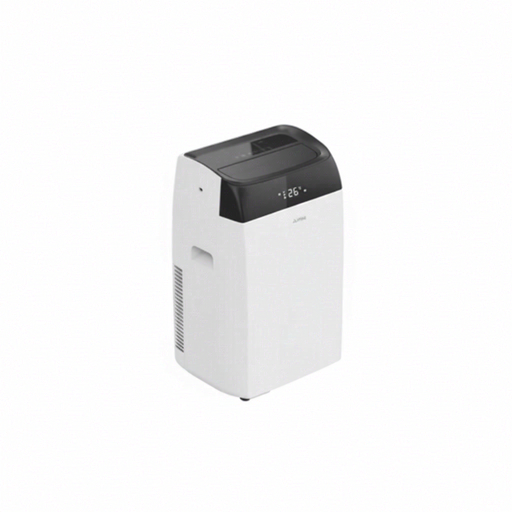
Why it stands out: This unit is a year-round solution. Thanks to its integrated heat pump technology, it can not only cool but also heat efficiently.
Pros:
Who is it for? Ideal for users looking for a flexible solution for their apartment or house who want to use a single device for cooling and heating a room throughout the year.
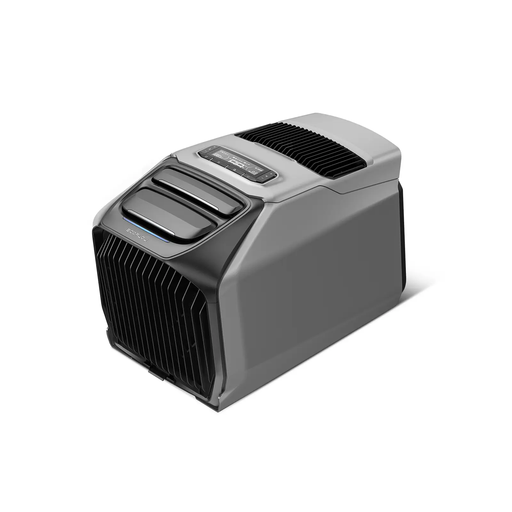
Why it stands out: The EcoFlow WAVE 3 is designed for maximum portability and off-grid operation. With the optional add-on battery, it becomes the perfect companion for outdoor adventures.
Pros:
Who is it for? The top choice for campers, RV owners, and van-lifers. This battery-powered air conditioner is designed for anyone who needs a powerful and portable air conditioner for use on the go.
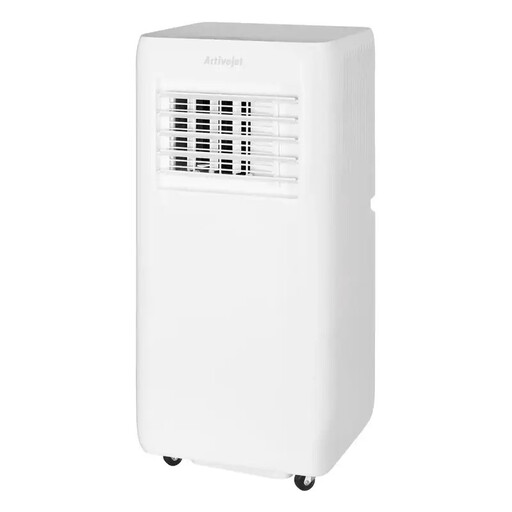
Why it stands out: A compact and attractively priced model that focuses on core functions while still offering smart control options.
Pros:
Who is it for? A great choice for budget-conscious users seeking a reliable cooling solution for small to medium-sized rooms like bedrooms or home offices (up to 25 m?) and who value an air conditioner with app control.
The models presented here cover common use cases. If you haven't found the right unit for your specific needs—for example, if you prefer a solution without an exhaust hose—it's worth exploring other alternatives.
? Discover our wider selection of portable ductless air conditioners to find the perfect model for you.
1. How does a portable air conditioner with an exhaust hose work? A portable monobloc air conditioner draws in warm room air. Inside, the air is cooled using a refrigerant. The cooled air is then blown back into the room, while the heat and moisture removed from the room must be vented outside through a flexible exhaust hose. This hose is typically routed through a partially opened window or a special window sealing kit.
2. How loud is a portable air conditioner? The noise level is measured in decibels (dB) and is listed on the energy label. Most units operate in the 45 to 60 dB range. This is comparable to a normal conversation (approx. 50 dB) or a quiet radio. Models advertised as quiet or that feature a special sleep mode reduce fan speed and compressor activity to lower the noise level, often below 50 dB.