
Lieferung heute & morgen

Qualitätsgarantie

Willkommens-Angebote freischalten: KOSTENLOSE Lieferung | Bis zu 80 % RABATT | Kostenlose 30-Tage-JoyPlus-Testphase
App herunterladen
A portable air conditioner can be used without permanent installation, making it an appealing option for rented flats, home offices, bedrooms, living rooms and campervans. The range extends from compact 7,000-BTU units to more powerful models with 12,000 BTU, Wi-Fi and an additional heating function.
However, product claims do not always lead to the right buying decision. Three common pitfalls are particularly relevant:
For smaller rooms such as a bedroom or home office, 7,000 to 9,000 BTU is often suitable. Product specifications may state coverage of up to 25, 28 or 30 m², for example. These figures should be treated as a guide and depend on ceiling height, insulation, window area and sunlight exposure.
For larger living spaces, a 12,000-BTU portable air conditioner may be more suitable. Here too, the manufacturer's stated figure should not be considered in isolation. A large unit can reach the desired temperature more quickly in a small room, but is often heavier and requires more floor space. You should therefore also check:
A conventional portable air conditioner generally operates with an exhaust hose. This must be routed outside through a window, patio door or another suitable opening. An air conditioner with a window kit helps reduce the inflow of warm outdoor air.
The hose should be as short and straight as possible, and the unit should stand on a stable, level surface. Sharp bends can restrict airflow. Before buying, compare the width of your window and the design of the kit with your installation situation. Certain window types may require an additional window sealing strip.
When positioning the unit, follow the instructions in the relevant operating manual. The air outlet must not be blocked. The unit should be connected directly to a suitable earthed socket. The product information provided expressly does not allow for extension leads or multi-socket adapters.
A quiet portable air conditioner should be assessed based on its specific decibel rating and operating setting. For the available models, stated values range from under 49 dB in sleep mode to 64 dB, for example. For a bedroom, a timer, a reduced fan setting and easy-to-use controls are also important.
The energy efficiency class provides an initial indication. However, power consumption, daily operating time and the local electricity tariff are also more informative when estimating running costs. An energy-efficient air conditioner should be operated only for as long and at as low a setting as necessary.
A 3-in-1 air conditioner typically combines cooling, dehumidifying and fan functions. In dehumidifying mode, the water tank may fill more quickly depending on the humidity level. Self-evaporation reduces the need for manual emptying, but does not replace checking the indicator and cleaning the unit.
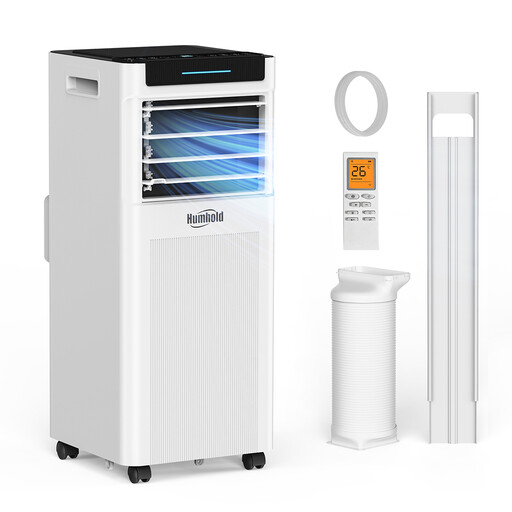
Why this product suits the profile: Its stated cooling capacity of 2.6 kW is designed for rooms of up to 30 m². Cooling, dehumidifying and fan modes cover typical uses in bedrooms, home offices and smaller living areas.
According to the contents, a window kit, exhaust hose, remote control and drainage accessories are included. The stated sleep mode operates below 51 dB.
24-hour timer, three operating modes, castors and washable filter.
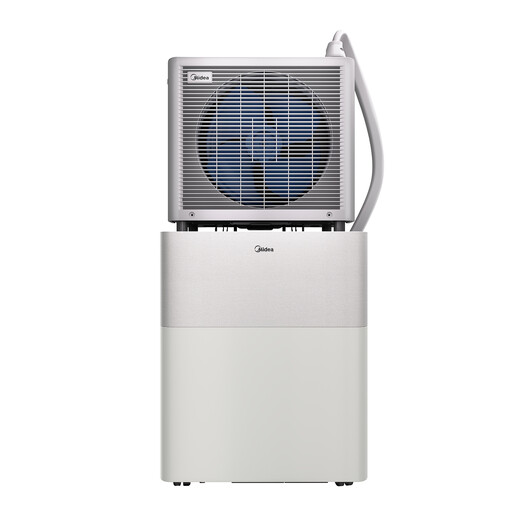
Why this product suits the profile: Its stated capacity of 12,000 BTU and A++ energy efficiency class will appeal to users who want to cool a larger living space flexibly and compare technical specifications.
The product specifications list cooling, dehumidifying and ventilation functions, as well as 220–240 V at 50 Hz. Before buying, take account of the 45.5 kg weight and the required placement arrangement.
A++ rating, cooling and heating functions, plus a design intended for larger rooms.
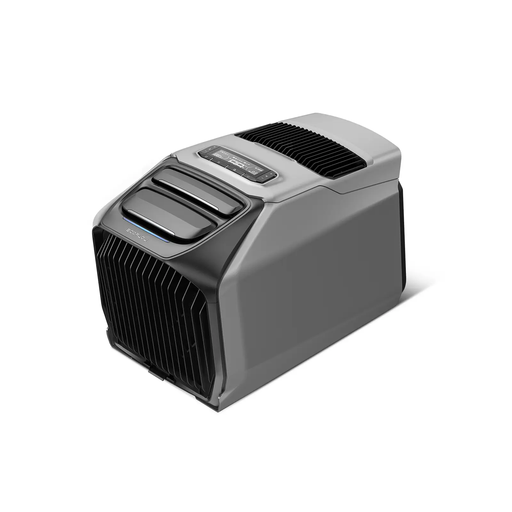
Why this product suits the profile: This unit is designed for camping, motorhomes, SUVs and van life. Optional battery operation and app control set it apart from conventional portable air conditioners for the home.
The specifications state 44–58 dB, a cooling capacity of 1,800 W and the need to vent exhaust air outside. It is not intended for use while travelling.
App control, 2,000 W heating capacity and optional battery operation for mobile use.
We have put together a complete, regularly updated list of products that fully meet these strict selection criteria and the safety regulations applicable in the EU.
Electricity costs depend on power consumption, operating time and the electricity price. A timer can help prevent unnecessary operating hours. Doors and windows should remain closed while cooling, with the exhaust air correctly vented outside.
Clean the filter in accordance with the operating manual. Regular cleaning, approximately every two weeks, is recommended for several models. Before carrying out maintenance, cleaning or moving the unit, switch it off and disconnect it from the mains. Refrigerant circuits must not be damaged; details such as R290 or R32 should be identifiable in the manual and on the rating plate.
The exhaust hose is attached to the unit and connected to the window kit. The window kit or seal keeps the opening as closed as possible. Check beforehand whether the accessories are suitable for a tilt-and-turn or sliding window.
This depends on the model and operating mode. Product specifications range from under 49 dB in sleep mode to over 60 dB, for example. You should therefore compare the specific rating and, where available, use the timer and sleep mode.
It is not possible to give a fixed lifespan in general terms. It is affected by operating hours, filter maintenance, proper positioning and how the hose and refrigerant circuit are handled. Dry storage and following the manufacturer's instructions can help maintain proper operation.