
Lieferung heute & morgen

Qualitätsgarantie

Willkommens-Angebote freischalten: KOSTENLOSE Lieferung | Bis zu 80 % RABATT | Kostenlose 30-Tage-JoyPlus-Testphase
App herunterladen
By the Joybuy Product Recommendation OfficerUpdated August 28, 2026
The search for a flexible solution to manage indoor climate leads many to a portable air conditioner. When this type of unit can not only cool in the summer but also heat during the transitional seasons, it seems like the ideal year-round solution. However, the market is flooded with devices whose marketing promises often don't hold up in practice. Before you make a decision, it's crucial to understand the most common pitfalls that lead to dissatisfaction and unexpected costs.
This guide focuses on the objective criteria that will help you find a suitable unit for your needs and avoid a bad purchase.
To make an informed decision, you should focus on verifiable technical data. These three parameters are crucial for the performance and efficiency of a portable air conditioner with a heating function.
Cooling capacity is specified in BTU (British Thermal Unit) per hour. As a rule of thumb for averagely insulated rooms in the UK and Europe, you need about 60 to 100 watts of cooling power per square meter (m?).
The heating capacity is stated directly in watts (W) or kilowatts (kW). Pay attention to the COP (Coefficient of Performance) here. A COP of 2.75 means the unit generates 2.75 kWh of heat from 1 kWh of electricity.
The energy efficiency is indicated on the EU Energy Label and is decisive for operating costs. For a portable air conditioner with a heating function, you should aim for at least A+ energy efficiency.
A Class A+ unit is significantly more economical to run than a Class A unit or lower, which adds up over the years.
A versatile device offers more than just cooling. A typical 4-in-1 air conditioner combines the following functions:
This combination turns the device into a year-round home appliance.
Based on the objective criteria mentioned above, we have identified products that are particularly well-suited for specific user profiles in Europe.
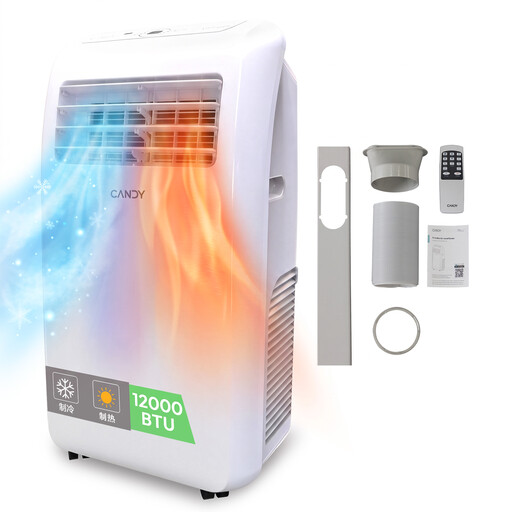
Why This Fits Their Persona: Ideal for apartment renters seeking a flexible, year-round solution without permanent installation. The unit covers standard room sizes up to 35 m? and can be easily moved between the living room and bedroom thanks to its casters.
With 12000 BTU for rooms up to 35 m?, it offers a realistic performance claim. Its A+ energy efficiency rating for both cooling and heating protects against unexpectedly high electricity bills.
A true 4-in-1 unit (cools, heats, dehumidifies, ventilates) for year-round utility. A window installation kit is already included in the box.
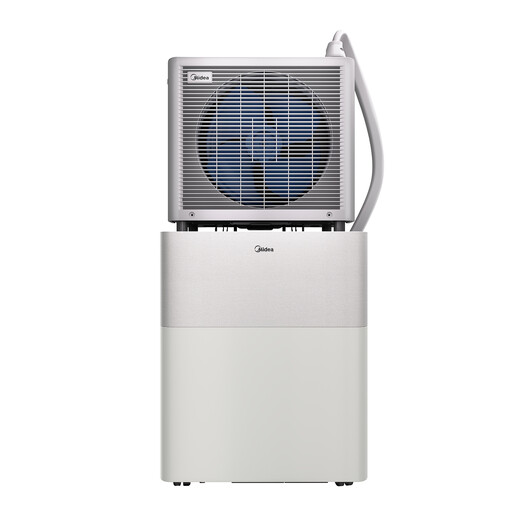
Why This Fits Their Persona: For users who prioritise maximum efficiency and quiet indoor operation. The split design places the noisy compressor outside, significantly reducing the in-room noise level—ideal for bedrooms or home offices.
The A++ energy efficiency class minimises running costs, exceeding the A+ standard. Its split technology bypasses the typical noise disadvantage of monobloc units.
Significantly quieter indoor operation (39 dB(A) according to the manufacturer). Higher energy efficiency (A++) compared to most mobile monobloc units.
We have compiled a complete, up-to-date list of products that fully meet these strict selection criteria and European safety regulations.
The cost depends on the unit's power, energy efficiency class, and usage duration. For example: the Candy air conditioner with A+ energy efficiency consumes approx. 1.4 kWh per hour in cooling mode and 1.2 kWh in heating mode, according to the manufacturer. Assuming an electricity price of 35 cents/kWh, this results in costs of about 49 cents/hour (cooling) or 42 cents/hour (heating). A unit with lower efficiency can easily cost 20-30% more to run.
No. A device that cools effectively must transport heat out of the room. Units without an exhaust hose are typically air coolers (evaporative coolers). They only lower the temperature minimally and increase humidity, which can feel uncomfortable in muggy weather. For noticeable and effective room cooling, a portable air conditioner with an exhaust hose is the only technically sound solution.
Most units come with a window installation kit. This usually consists of an adjustable slider that is fitted into the gap of a partially opened sliding or sash window. The hose is then connected to an opening in this slider. For tilt-and-turn windows, which are common in Europe, there are special window seals (often sold as a separate accessory). These are attached to the frame with hook-and-loop fasteners and have a zipper opening for the hose. A good seal is crucial to prevent warm air from outside from flowing back into the room.