
Lieferung heute & morgen

Qualitätsgarantie

Willkommens-Angebote freischalten: KOSTENLOSE Lieferung | Bis zu 80 % RABATT | Kostenlose 30-Tage-JoyPlus-Testphase
App herunterladen
For many, the search for a flexible solution for year-round home comfort ends with a portable air conditioner with a heating function. Faced with unpredictable heatwaves in the summer and chilly transitional seasons in spring and autumn, such a device offers a practical alternative to permanently installed air conditioning. It allows you to cool and heat individual rooms as needed, without requiring extensive structural modifications.
This article serves as a guide. We will outline the objective criteria relevant for selecting the right unit and present a selection of models with various features to help you make an informed decision.
Before making a decision, several technical aspects should be considered. These parameters will help you find a unit that fits the specific conditions of your home and your personal requirements.
The performance of an air conditioner is often specified in BTU (British Thermal Unit) per hour. A higher BTU number means more power. To ensure efficient climate control, it is crucial to match the unit's capacity to the size of the room.
Also, pay attention to the energy efficiency class. An energy-saving A++ rated air conditioner consumes significantly less electricity than a B-rated unit, which is reflected in long-term operating costs. Most modern devices also use more eco-friendly refrigerants like R290 or R32.
Modern units are often multifunctional. A 4-in-1 air conditioner typically combines four main functions:
An air conditioner with app control offers additional convenience. Via Wi-Fi, the unit can be controlled remotely, allowing you to ensure a comfortable room temperature before you even arrive home.
Especially in a bedroom or living room, the noise level is a crucial factor. This is specified in decibels (dB). A quiet portable air conditioner has a sound pressure level below 50 dB in its quiet or night mode, which is roughly equivalent to a quiet conversation. Models with levels above 60 dB can be perceived as disruptive.
Every portable air conditioner requires an exhaust hose to vent the hot air (when cooling) or cold air (when heating) outside. Installation is straightforward and usually only requires a window sealing kit, which is often included. This makes them an ideal solution for an air conditioner for an apartment, especially in rental properties.
Here, we present three models that are suited for different applications due to their specific features and functions.
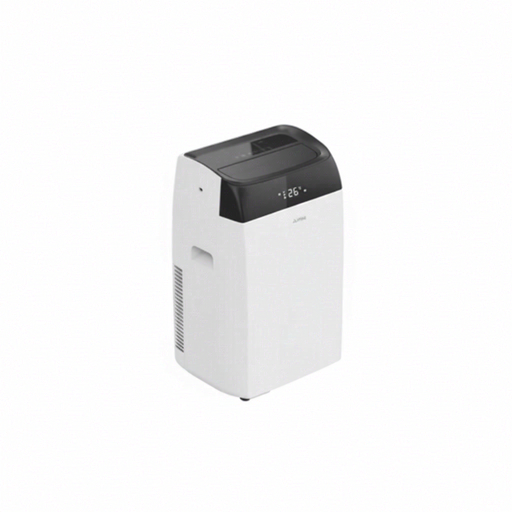
Why it stands out: The Daitsu APD 12FCX is a versatile 4-in-1 unit that combines cooling, heating, dehumidifying, and ventilation in a compact design. With 12,000 BTU, it is suitable for medium-sized rooms. The integrated Wi-Fi function allows for convenient control via the "Smart Life" app.
Pros:
Who is it for? This model is ideal for users looking for a flexible and smart all-in-one solution for rooms up to approx. 35 m? (~375 sq ft) who value the convenience of app control.
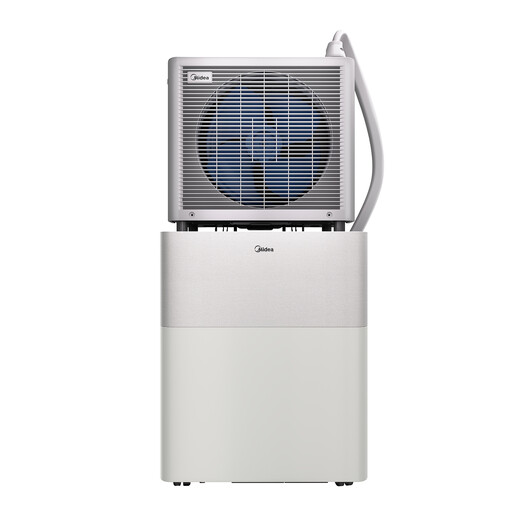
Why it stands out: The Midea PortaSplit-E 12K is distinguished by its high energy efficiency and quiet operation. With an A++ energy efficiency rating, it is one of the most economical units in its class. The sound pressure level of just 39 dB(A) makes it an excellent choice for noise-sensitive areas like bedrooms or home offices.
Pros:
Who is it for? Perfect for cost- and eco-conscious users who need an exceptionally quiet yet powerful unit for medium-sized living rooms or bedrooms.
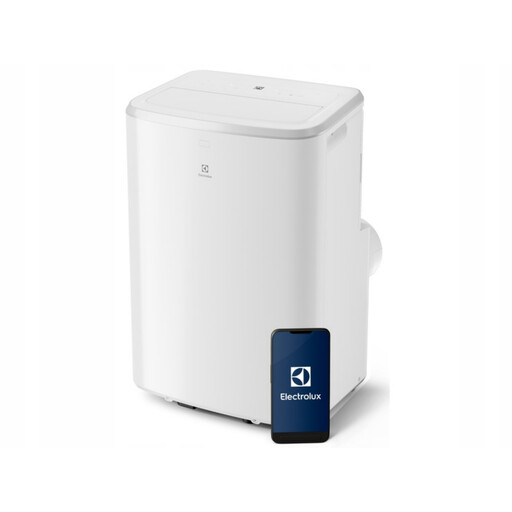
Why it stands out: The Electrolux Comfort 600 offers a comprehensive feature set with five operating modes, including heating and dehumidifying. With 9,000 BTU, it is designed for small to medium-sized rooms. It can also be conveniently controlled via Wi-Fi and a smartphone app, allowing for flexible scheduling and remote adjustments.
Pros:
Who is it for? A great choice for users looking for a reliable brand-name unit for rooms up to approx. 25 m? (~270 sq ft) who appreciate the flexibility of app control and various operating modes.
The models featured here already cover a wide range of needs. If you haven't found the perfect unit for your specific requirements, it's worth exploring a broader product range.
For a larger selection of units covering different room sizes and feature preferences, discover our full category: Best Indoor Air Conditioner.
1. How does a portable air conditioner with a heating function work? Most of these units use the principle of a heat pump. In cooling mode, the unit extracts heat from the indoor air and vents it outside through the exhaust hose. In heating mode, this process is reversed: the unit extracts heat from the outside air (even at cool temperatures) and releases it into the room. This is a more energy-efficient heating method than that of purely electric space heaters.
2. Does every portable air conditioner need an exhaust hose? Yes, an exhaust hose is essential for operation. Both cooling and heating with a heat pump involve a thermal exchange where unwanted hot or cold air must be expelled. Without this hose, the unit would blow the exhausted air directly back into the room, rendering it ineffective.
3. How loud is a "quiet portable air conditioner" really? Noise level is subjective, but decibel ratings provide a good guideline. A unit under 50 dB is comparable to the sound of a refrigerator or quiet radio music and is generally not considered disruptive. Models between 55-60 dB are clearly audible, similar to a normal conversation. Look for units with a special sleep or quiet mode, which reduces the fan speed and, consequently, the noise level.