
Lieferung heute & morgen

Qualitätsgarantie

Willkommens-Angebote freischalten: KOSTENLOSE Lieferung | Bis zu 80 % RABATT | Kostenlose 30-Tage-JoyPlus-Testphase
App herunterladen
A portable air pump can save space when you are out and about and prove useful when tyre pressure is too low, while camping or by the water. However, electric and manual models differ considerably in terms of pressure, power supply and intended use. If you only focus on specifications such as “150 PSI” or “230 l/min”, you could end up buying a device that is unsuitable for the job.
The stated maximum pressure simply describes the pressure a device can reach under certain conditions. For a car tyre, air volume, hose diameter, motor power and duty cycle are also important. A compact electric air pump may be sufficient for bicycle tyres or balls, but it can take considerably longer to fully inflate a car tyre.
A car tyre pump generally needs a connector for Schrader valves. Bicycles, on the other hand, may use a Presta valve. Air mattresses, balls and inflatable boats usually require additional tapered adapters. Before buying, check that the hose, valve head and nozzles are compatible with your equipment.
A battery-powered air pump does not depend on a mains socket or a 12-V connection. However, its operating time depends on battery capacity, outdoor temperature, tyre size and initial pressure. When inflating several vehicle tyres, a corded mini compressor or a 12-V tyre pump may be more practical. Automatic shut-off also does not protect against excessively long operating intervals: the instruction manual remains the definitive guide.
The required pressure for vehicle tyres is generally given in bar. Some devices also display PSI or kPa. When choosing an air pump with a pressure gauge, check that the display is easy to read and that you can select your preferred unit.
Also bear in mind that some manufacturers use different measurement conditions for their specifications. A high PSI figure alone does not provide a reliable comparison of inflation speed.
Corded pumps are powered via the vehicle’s 12-V socket. Check whether the socket supports the required current draw and whether the cable can reach all the tyres. Battery-powered devices should be fully charged before longer journeys. If used infrequently, check the charge level regularly, as lithium batteries lose energy even when not in use.
A jump starter with compressor combines a jump-start function with a tyre compressor. This may appeal to drivers who want to combine several emergency functions in one device. However, these products are generally heavier than a dedicated portable air pump.
Every additional gram counts on cycling or hiking trips. The Baseus PocketGo Portable Air Pump Stellar White is specified as weighing approximately 130 g and, according to the product description, operates at 5 V/1 A, with an inflation speed of 230 l/min and an air pressure of 3,5 kPa. These figures suggest that it is more suitable for lightweight inflatables or smaller applications; for car tyres, check its suitability against the complete technical specifications.
With manual pumps, a stable base, flexible hose and suitable adapters are essential. Practical features on electric devices include a display, preset pressure values and automatic shut-off. However, these functions do not replace checking tyre pressure with a suitable measuring device.
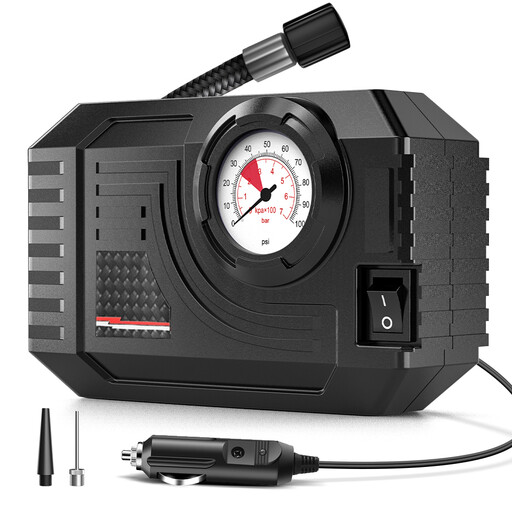
Why this product suits this profile: This corded compressor is designed for car, motorcycle and bicycle tyres, making it suitable for shoppers who do not want to maintain a battery.
The corded design removes battery charge level as a potential source of failure. You should still check the cable length and vehicle connection before buying.
Specified for several tyre types; portable design and simple operation according to the product description.
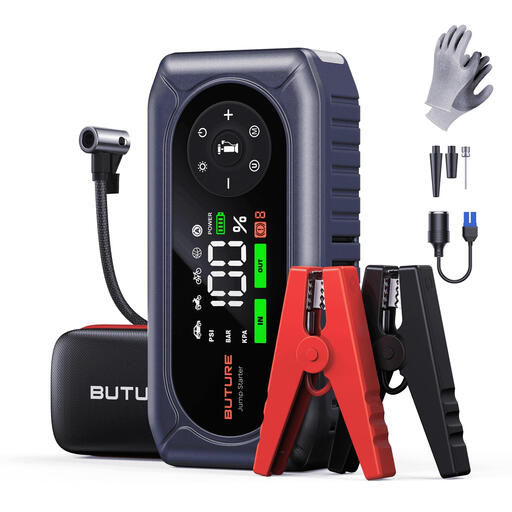
Why this product suits this profile: For drivers who want to combine a tyre pump, jump starter, LED light and power bank in one device with an LCD display.
The preset modes and automatic shut-off reduce the risk of exceeding the target value while inflating. The stated operating limit of 10 minutes must be observed.
Specifications include up to 150 PSI, five inflation modes, three pressure units, four nozzles and a 12-V jump-start function.
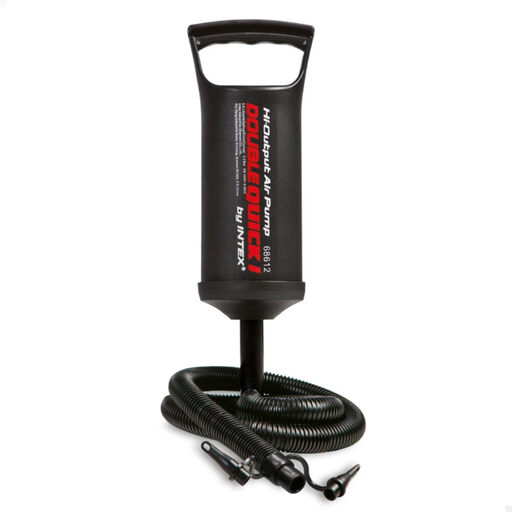
Why this product suits this profile: For camping, air mattresses, inflatable boats and other large-volume inflatables without access to a power connection.
The hand pump requires neither a battery nor a power socket. Three valve adapters help with different inflatables; however, you should still observe the product’s recommended pressure.
Both pumping directions deliver air; specifications include 0,9 litres per stroke, a flexible hose and three adapters.
We have compiled a complete, regularly updated list of products that fully meet these strict selection criteria and the safety regulations applicable in the EU.
For car tyres, the main options are a 12-V tyre pump, a suitable battery-powered compressor or a jump starter with compressor. Key factors include the Schrader connection, an easy-to-read pressure gauge, sufficient cable length or battery capacity, and the pressure setting specified by the vehicle manufacturer. A small bicycle pump is not automatically suitable for car tyres.
Its service life depends on the battery chemistry, charging cycles, storage conditions and temperature. Store the device in a dry place and avoid prolonged exposure to heat inside the vehicle. If it is not used for an extended period, check the charge level in accordance with the instruction manual. For frequent use with several tyres, a corded model may be less dependent on battery capacity.
Energy consumption depends on power and operating time. Inflating a ball or bicycle tyre generally requires less energy than inflating a car tyre. With a battery-powered air pump, consumption is limited by the integrated battery; with a 12-V tyre pump, power comes from the vehicle battery. The pump should run only for as long as necessary to reach the target value and should be allowed to cool down during longer operations in accordance with the manufacturer’s instructions.