
Lieferung heute & morgen

Qualitätsgarantie

Willkommens-Angebote freischalten: KOSTENLOSE Lieferung | Bis zu 80 % RABATT | Kostenlose 30-Tage-JoyPlus-Testphase
App herunterladen
A portable air pump can come in handy in your boot, bike bag or camping kit. However, models vary considerably in their power source, airflow, pressure range and accessories. If you focus only on claims such as “150 PSI” or “fast inflation”, you could end up buying a pump that isn’t right for the job.
A high maximum pressure doesn’t automatically mean a tyre will inflate quickly. In practice, airflow, cylinder size and motor power matter too. For example, a compact portable compressor may reach a high pressure, but take considerably longer to inflate a completely flat car tyre than to top one up.
An electric air pump for car tyres works at high pressure, while a pump for air mattresses needs to move a large volume of air. A small tyre pump may not be suitable for inflatables that need a lot of air. Conversely, a hand pump for air mattresses may not be the right choice for a car tyre.
When choosing a rechargeable air pump, check the charging time, run time and charging port. Actual run time depends on tyre size, starting pressure, target pressure and ambient temperature. If you need to inflate tyres on several vehicles in a row, a corded 12V air pump may be more practical, as there’s no need to charge a battery beforehand.
The pressure you need depends on what you’ll be using the pump for:
A digital display, preset modes and automatic shut-off can make a pump easier to use. However, the display should never replace the vehicle manufacturer’s recommended pressure. For safety-critical uses, check the pressure with a separate, suitable tyre pressure gauge.
Airflow is often measured in litres per minute. A higher figure can mean faster inflation, but it only tells you so much when considered alongside the pressure range. The maximum continuous operating time matters too. Some mini compressors need to cool down after running for several minutes.
If you choose a corded model, make sure the cable can reach all your tyres. A 12V car air pump is usually powered from the vehicle’s socket. Follow the instructions to check whether the engine should be running, so you don’t put unnecessary strain on the starter battery.
Ideally, the package should include:
Size and weight matter too. A device weighing 130 to 500 grams is easy to carry in a bike bag or rucksack. More powerful models may weigh over a kilogram and take up more space in your vehicle.
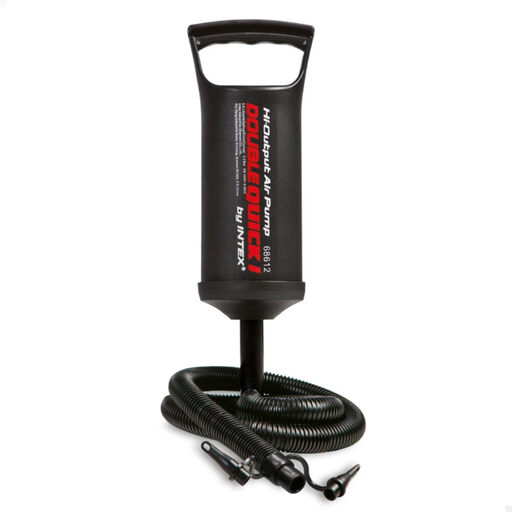
Why this product suits this profile: This hand pump is suitable for camping, air mattresses, boats and other inflatables when there’s no power source available.
The clearly stated air volume of 0.9 litres per stroke and three valve adaptors make it easier to judge what the pump is suitable for. No battery is needed.
Double-action function, 29 cm height, flexible hose and three adaptors. TÜV-tested, according to the product information.
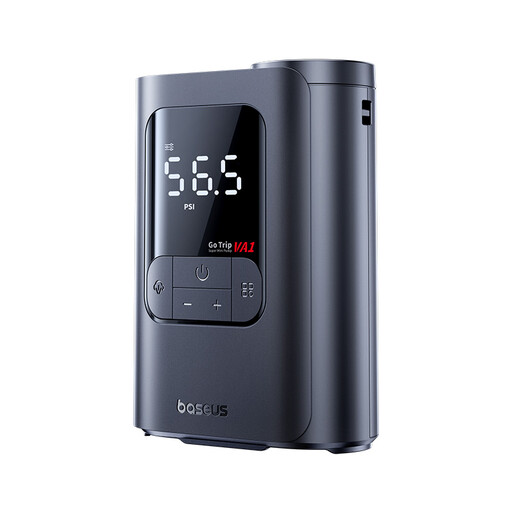
Why this product suits this profile: This cordless mini compressor is designed for cars, SUVs, light commercial vehicles, motorbikes, bikes, balls and other inflatables.
Five preset modes and a stated pressure accuracy of ±0,05 BAR make it easier to understand what the pump is designed for. According to the product information, it isn’t intended for heavy goods vehicle tyres.
2500-mAh battery, USB-C input, three nozzles and automatic shut-off when the target pressure is reached.
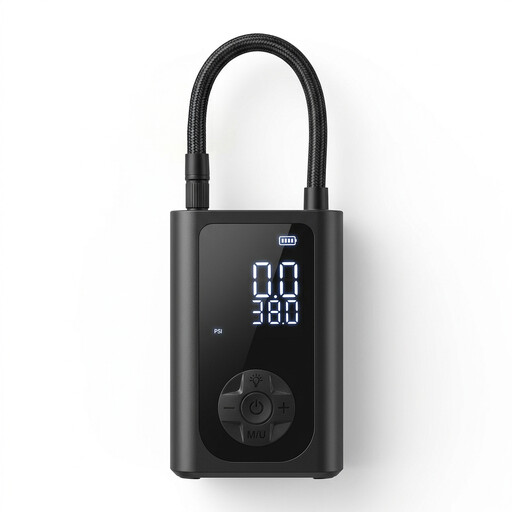
Why this product suits this profile: For drivers and travellers who want to keep a battery-powered compressor with several preset modes in their vehicle.
As well as a maximum pressure of 150 PSI, the product description states an airflow of 26 L/min, around 7.5 minutes to inflate a flat tyre and roughly 30 seconds for top-ups.
4000-mAh battery, five modes, Type-C port, power bank function and LED light with steady and SOS modes.
We’ve put together a complete, regularly updated list of products that meet these strict selection criteria and fully comply with the safety regulations in force in the EU.
Before inflating, secure the right adaptor firmly to the valve. Check car tyre pressure when the tyres are cold, if possible. Once the target pressure is reached, carefully remove the hose to minimise air loss.
For a longer service life:
For occasional top-ups, battery-powered models with a digital display, preset pressure and the right car valve connector are a good choice. If you use a pump frequently or need to inflate several tyres in a row, a 12V air pump that doesn’t rely on a battery may be more suitable. Key things to consider are airflow, pressure range, cable length or battery capacity, and the maximum operating time.
Run time depends on the starting pressure, tyre type, target pressure and pump model. Always consider product claims in the context of specific usage figures. If a pump is rated for 25 minutes of operation, the number of times you can inflate a tyre will vary depending on the tyre.
Only if it has a suitable high-volume mode and a large nozzle. A standard tyre pump is designed for high pressure and smaller volumes of air. For air mattresses, inflatable boats and camping gear, a hand pump designed to move a large volume of air is often a better fit.