
Lieferung heute & morgen

Qualitätsgarantie

Willkommens-Angebote freischalten: KOSTENLOSE Lieferung | Bis zu 80 % RABATT | Kostenlose 30-Tage-JoyPlus-Testphase
App herunterladen
A portable Bluetooth speaker should play music reliably, be easy to carry and withstand rain or dust without failing straight away. In practice, however, some marketing claims can lead to the wrong purchase. A high wattage, for example, does not automatically mean balanced sound. Likewise, a label such as “waterproof” does not protect every model from every type of contact with water.
The output power in watts mainly describes how much electrical power a speaker can handle. On its own, it says little about sound tuning, distortion or bass reproduction. For a small backpack speaker, 5 to 10 W may be sufficient, while a party speaker for larger groups needs more power and a bigger enclosure.
Also look for:
According to its rating, a Bluetooth speaker with IP67 is dust-tight and protected against temporary immersion. The “6” indicates complete protection against dust, while the “7” indicates temporary immersion under defined laboratory conditions. This does not mean that the device can be used permanently underwater.
With an IPX7 speaker, on the other hand, there is no tested dust-protection rating. IPX6 describes protection against powerful water jets, not automatic protection against immersion. The USB-C port must be completely dry before charging. Salt water and chlorinated water can place additional strain on materials.
“Up to 12 hours” is usually measured at a particular volume and under specific lighting conditions. High volume, bass boost and RGB lighting reduce battery life. With a Bluetooth speaker with long battery life, you should therefore check whether the figure applies with the LEDs switched off or at a reduced volume.
For hiking and camping, charging time, a USB-C port and, where applicable, a power bank function are also relevant. A heavy model with a high capacity is not always the most practical solution for a daypack.
For the beach, garden, cycling trips and changeable weather, a waterproof Bluetooth speaker with IPX7 or a dust- and water-protected model with IP67 may be suitable, depending on how you plan to use it. IPX6 may be sufficient for use in the rain alone. Also check whether the charging ports have protective covers and whether the manufacturer provides guidance on salt water, impacts and temperature ranges.
A mini Bluetooth speaker weighing around 200 to 300 g can be easily attached to a rucksack or bicycle. For longer hikes, a carrying loop, clip or carabiner attachment is more useful than a large enclosure. Larger devices often deliver more volume, but they weigh considerably more and require more storage space in a vehicle or when camping.
Bluetooth 5.3 can provide a modern connection with compatible devices. However, the actual range depends on obstacles, your smartphone and the surrounding environment. To connect multiple speakers, you need a system supported by the manufacturer, such as TWS, PartyBoost or PartyAdd.
If you hike, cycle or ski in a group, you may wish to consider a Bluetooth speaker with a walkie-talkie function. Key factors include whether communication works without Wi-Fi or mobile reception, how many devices can be connected and whether speech remains clear in windy conditions.
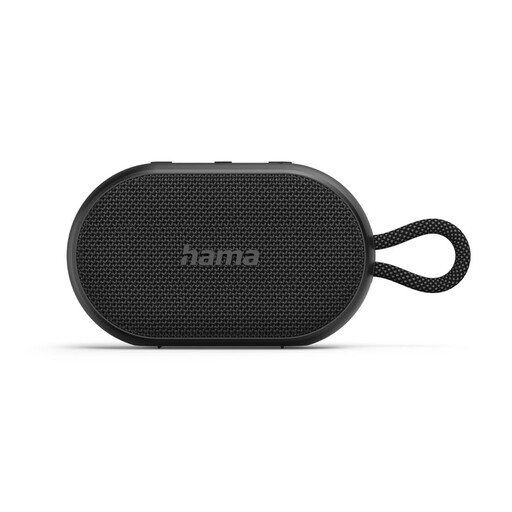
Why this product suits this profile: According to the product details, this compact 6 W model weighs 206 g and offers Bluetooth 5.3, a carrying loop and up to 12 hours of playback. It is suitable for balconies, the shower, day trips and smaller gatherings.
The IPX7 rating is clearly distinguished from dust protection. Battery life and the charging time of around three hours are also considered together, rather than promoting the maximum playback time alone.
206 g weight, USB-C charging, TWS function and built-in microphone for hands-free calls.
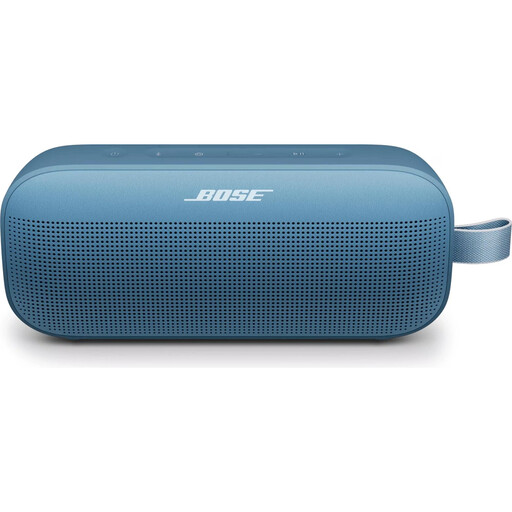
Why this product suits this profile: This model features IP67, Bluetooth 5.3 with Multipoint, a built-in microphone and up to 12 hours of battery life according to the supplier. PositionIQ takes the speaker’s orientation into account.
The protection rating specifies both dust and water resistance. The stated Bluetooth range of up to 9 m shows that range claims should always be considered in the context of how the product is used.
IP67, Multipoint connectivity, app support and carrying loop for use on the go.
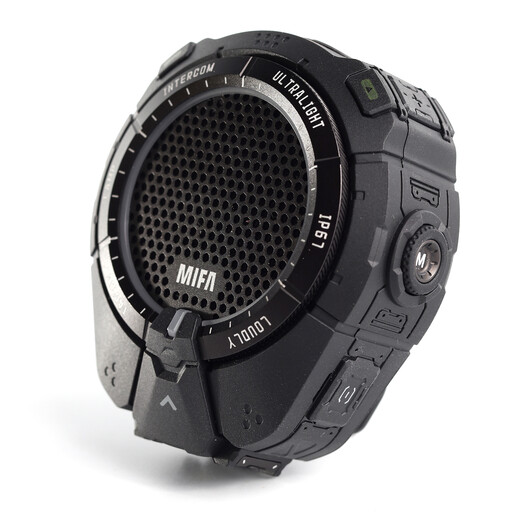
Why this product suits this profile: Weighing just 85 g, this device combines a speaker with group communication. According to the product details, up to six people can be connected through the intercom system without Wi-Fi or mobile reception.
The range is not presented as a replacement for mobile reception. IPX7 indicates water protection, while dust protection must be assessed separately. Battery life of up to 10 hours also depends on how the speaker is used.
Bluetooth 5.3, intercom for up to six people, 80-lumen LED light and magnetic clip.
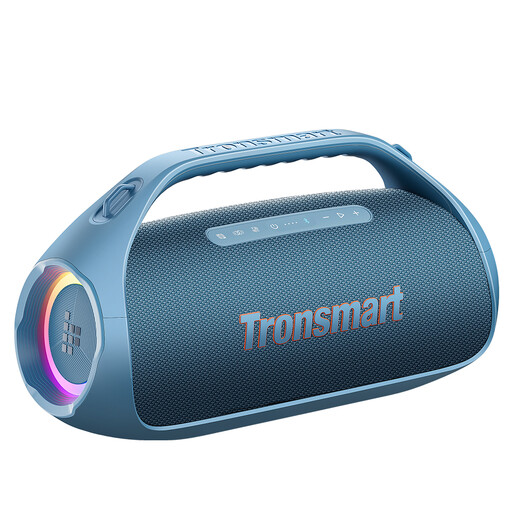
Why this product suits this profile: This larger model is designed for events with several people. According to the product details, it offers 90 W of output power, IPX6 protection, RGB lighting, TWS and up to 26 hours of playback at 50 per cent volume with the LED lighting switched off.
The long battery life is stated together with clear conditions. IPX6 protects against water jets, not immersion. For poolside or water-sports areas, a different protection rating is therefore advisable.
90 W, two speakers connectable via TWS, app EQ, LED effects and USB-C charging function.
We have put together a complete, regularly updated list of products that fully meet these strict selection criteria and the safety regulations applicable in the EU.
The range depends on the Bluetooth version, smartphone, walls and other wireless sources. Manufacturer claims such as “up to 9 m”, “18 m” or “30 m” usually refer to open areas. Indoors or in woodland, the actual distance may be shorter.
IP67 also offers certified dust-tightness, making it a more clearly specified choice for sand, dust and dry hiking trails. IPX7 describes water protection but says nothing about dust resistance. For camping and the beach, you should consider both requirements separately.
Actual battery life depends on volume, bass mode, lighting, temperature and battery age. Figures such as “up to 12 hours” are maximum values measured under defined conditions. For regular use, USB-C charging, a realistic charging time and an easily visible battery-level indicator are practical criteria.