
Lieferung heute & morgen

Qualitätsgarantie

Willkommens-Angebote freischalten: KOSTENLOSE Lieferung | Bis zu 80 % RABATT | Kostenlose 30-Tage-JoyPlus-Testphase
App herunterladen
A portable Bluetooth speaker should be easy to use on the go, sound good and withstand the conditions of its intended environment. In practice, however, some advertising claims can lead to disappointing purchases: a high wattage alone says little about sound quality, an IP rating is often misunderstood, and the stated battery life usually applies only under specific conditions.
This buying guide explains which technical specifications really matter and which wireless speaker is best suited to the garden, travel, home, beach or a party.
The power rating in watts does not, on its own, indicate how loud or balanced a Bluetooth speaker will sound. The design, drivers, frequency range and tuning are also important. A model with a high maximum output may sound less balanced at lower volumes than a compact speaker with a well-tuned two-way system.
That’s why you should look for specific details such as:
A waterproof Bluetooth speaker is not automatically suitable for every type of contact with water. The IP rating indicates how well the casing is protected against dust and water. With IPX6, the “6” indicates protection against powerful water jets. The device must not simply be submerged.
According to the relevant product specifications, IPX7 permits temporary submersion to a specified depth. IP67 additionally provides complete protection against dust. Charging ports must be dry before charging, and salt water or chlorinated water should be rinsed off with clean water after use, where recommended by the manufacturer.
“Up to 12” or “up to 25 hours” normally means the maximum runtime at moderate volume. High volume, bass boost, LED lighting and frequent Bluetooth connections reduce operating time. For longer trips, charging time, the USB-C port and, where applicable, a power bank function are also important.
For a desk, bedroom or kitchen, a compact mono or stereo speaker is often sufficient. In the garden or at a party, a higher power reserve is useful. A party speaker with larger drivers and passive bass radiators can produce greater sound pressure, but is usually heavier.
A two-way system with a tweeter and woofer can reproduce voices and high frequencies with greater clarity. To achieve a genuine left- and right-channel stereo effect, you need either an integrated stereo system or two compatible speakers with TWS functionality.
For speakers for use on the go, weight, a carrying handle, strap and dimensions all matter. A 2.3 kg device is easier to transport than a large party speaker weighing almost 10 kg, but it is less convenient to carry in a rucksack than a model weighing around 200 to 650 g.
You should also check:
Bluetooth 5.0, 5.2, 5.3 or 5.4 can provide a stable connection, but does not by itself indicate the range or sound quality. The supported profiles, surroundings and source device are also important.
Useful features include:
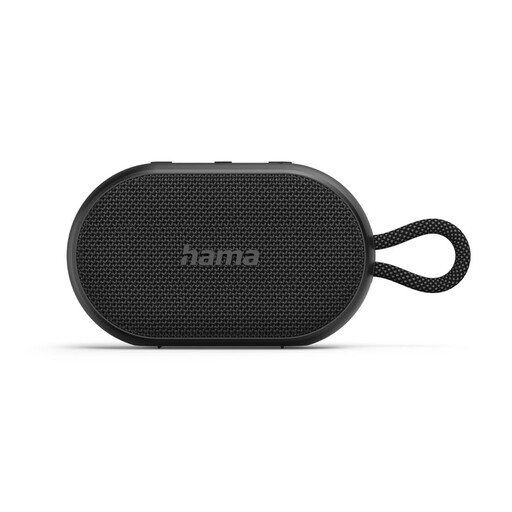
Why this product suits this profile: This compact model weighs 206 g, offers up to 12 hours of playback and can be attached to a bag or rucksack using its strap.
The IPX7 rating is more specific than a general “water-resistant” claim: according to the product specifications, temporary submersion to 1 m is possible. The actual usage limits should be observed.
6 W output power, Bluetooth 5.3, USB-C, TWS functionality and an integrated hands-free system.
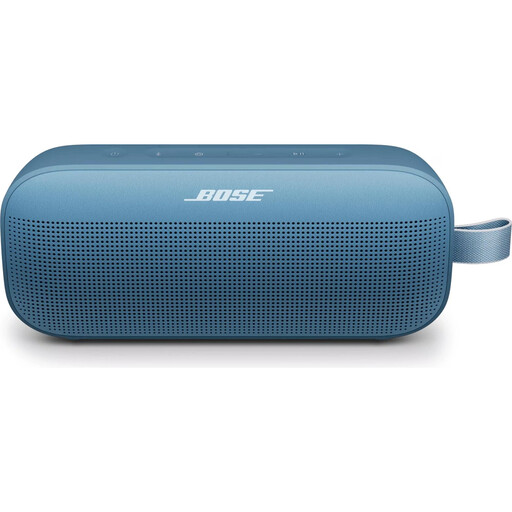
Why this product suits this profile: With IP67, Bluetooth 5.3, Multipoint, app support and a weight of 590 g, this speaker is ideal for users who want to combine portability with controllable features.
The IP67 rating defines water and dust protection more clearly than broad outdoor-use claims. The stated battery life of up to 12 hours remains a guideline.
According to the product description, PositionIQ adjusts playback to the speaker’s orientation; stereo and party modes are possible with compatible Bose speakers.
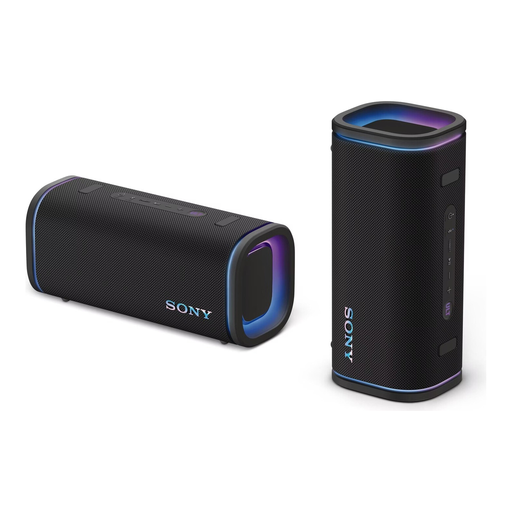
Why this product suits this profile: For garden parties and extended outdoor use, the model combines up to 25 hours of battery life, IP67, a detachable shoulder strap and several playback modes, according to the product specifications.
The protection rating, charging function and battery specification are clearly stated. LED lighting and bass modes can increase energy consumption.
Bluetooth 5.3, USB-C, 360-degree lighting, Party Connect and a smartphone charging function.
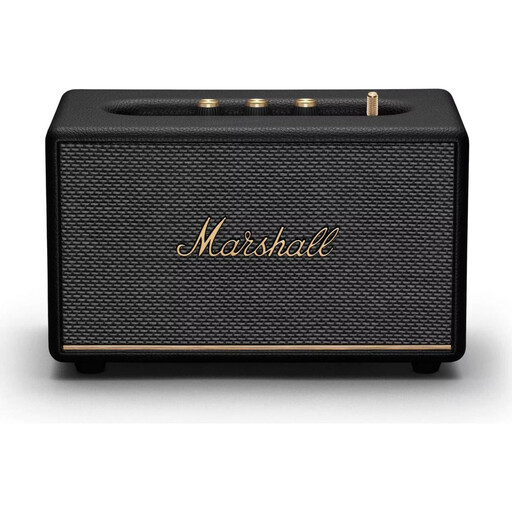
Why this product suits this profile: Weighing 2.85 kg, this mains-powered model is suitable for moving between rooms, but is not designed as a conventional battery-powered speaker.
The power supply via the mains adapter is clearly stated. This avoids creating the false expectation that the device can be used at the beach or in the rain.
60 W rated power, two-way system, Bluetooth 5.2 and 3.5 mm AUX input for indoor use.
We have put together a complete, regularly updated list of products that fully meet these strict selection criteria and the safety regulations applicable in the EU.
Switch on the speaker and activate Bluetooth on your smartphone. Open the list of available devices and select the product name displayed. If the speaker has been connected before, pairing will often happen automatically. For TWS or stereo sound, you will usually need to connect two compatible speakers using a button or the manufacturer’s app.
Battery life depends on charging cycles, temperature, volume and storage conditions. The advertised playback time is a guideline and may decrease at high volume, with bass boost or when the lighting is switched on. Charge the battery-powered speaker with a suitable cable and avoid intense heat or storing it for extended periods with a completely flat battery.
This depends on the stated IP rating. IPX4 is designed to protect against splashes, IPX6 against water jets, and IPX7 or IP67, according to the product specifications, also against temporary submersion. Charging ports must be closed and completely dry before charging. No IP rating automatically permits use underwater.