Patient onion cooks
If you cook onions slowly over a low heat and want to adjust the temperature as you go, prioritise how easy the low settings are to control rather than the maximum power.


A portable hob is usually enough for one extra pan. A built-in hob is a better fit if you regularly cook several dishes at once and are planning an installation. With induction, the pan base needs to be suitable and magnetic. Radiant and cast-iron hobs may work with other compatible pans, but retain heat themselves. Before buying, check the low heat setting, pan size, available space, cut-out dimensions and connection requirements.
If you cook onions slowly over a low heat and want to adjust the temperature as you go, prioritise how easy the low settings are to control rather than the maximum power.
Before buying, check whether your pan base is suitable for induction. If it isn’t, a radiant or cast-iron hob may be an alternative, as long as the pan and cooking zone are compatible.
If you prepare several dishes at once after a trip to the market, weigh up a portable extra hob against a permanently installed hob with several zones.
Start with your pan and how many cooking zones you want to use at the same time. For slow cooking, Good Food’s recipe steps recommend 30–40 minutes over a low heat, with occasional stirring.
| What matters | What to check before buying | Who is it most relevant to? |
|---|---|---|
| Low heat | Check how the specific model is controlled and what its low settings are like. Power levels alone don’t guarantee even browning. | If I want to make fine adjustments while the pan is cooking slowly, I look for easy control at low heat. This is the main concern for around 29% of consumers. |
| Pan you already own | Check that the pan is suitable for induction and has a magnetic base. Also check the appliance’s permitted pan-base diameter. | If I want to keep using my existing pan, I first check its base and whether it suits the cooking zone. Pan compatibility is the deciding factor for around 24% of consumers. |
| Space and installation | For a portable hob, consider the space available and the pan handle. For a built-in model, compare the cut-out dimensions and connection requirements. | If my worktop space is limited or I need the hob to fit an existing cut-out, I measure the available space first. This is the main concern for around 18% of consumers. |
| Cooking several dishes at once | Check that the number and layout of independently usable cooking zones meet your actual needs. | If I want to leave the onions cooking while other pans are on the hob, the number of cooking zones I can use at once matters. This is the main concern for around 17% of consumers. |
| Overall cost and effort | Consider the heating type, any pan requirements and, for built-in appliances, the connection. | If I’m weighing up the purchase, any changes that might be needed and running costs, I want to know all the cost factors before deciding. Overall cost and effort are the main concern for around 12% of consumers. |
The German Environment Agency says the efficiency difference between induction, radiant-heated ceramic glass and cast iron is most significant during heating; it becomes smaller when food is kept warm for longer. So the heating type alone doesn’t tell you what the overall cost will be for the way you cook.
Ceramic glass describes the surface, not necessarily the heating technology underneath. According to the manufacturer, the Rommelsbacher CT 2200/E is a radiant hob.
Check the stated heating type, then make sure your pan is suitable for the cooking zone.
When slowly browning onions, you need to keep the heat low and watch the pan. A wattage rating doesn’t tell you how the low setting will perform with your pan.
Compare the controls and low settings on the specific model, and stir occasionally while cooking.
The Bosch and Siemens built-in models covered in the manufacturers’ specifications have different cut-out dimensions and are supplied without a plug, for connection by a qualified electrician.
Before ordering, compare the model dimensions with your existing cut-out and check what connection is required.
According to the German Environment Agency, the efficiency difference between heating types is greatest while heating and becomes smaller when food is kept warm for longer.
Consider the heating type in relation to how long you actually cook, and factor in pan compatibility and any installation work that may be needed.
The product ranges mentioned include portable induction and radiant hobs for adding an extra cooking zone.
The portable hobs mentioned are an option for kitchens where you don’t want to install a new hob.
The product ranges mentioned include portable and built-in induction hobs.
The model considered here is a multi-zone built-in induction hob for a permanent cooking area.
The models mentioned include built-in hobs with induction or radiant heating; the type affects which one is right for you.
Here you’ll find portable induction hobs for an extra cooking zone, as well as a two-zone built-in induction hob for cooking several dishes at once.
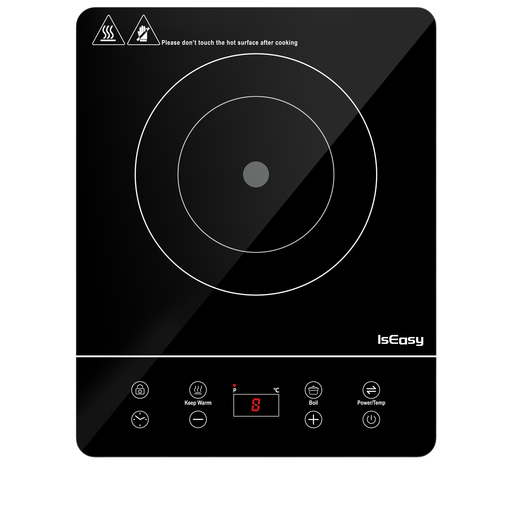 No image available
Described as a portable single-zone hob for an extra cooking area. Its settings may be useful for slow cooking, but don’t guarantee a particular browning result.
Nine power levels and nine temperature settings; timer up to 8 hours. According to the product details, it’s suitable for magnetic cookware with a base diameter of 12–26 cm. Rated voltage: 220–240V.
 No image available
Designed for two cooking zones; the product details list slow cooking over a low heat as one possible use.
Two independently controlled zones rated at 1500W and 1000W; five temperature settings.
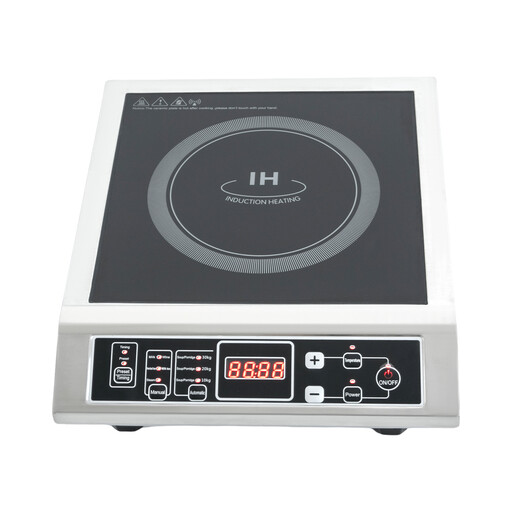 No image available
Described as a portable extra cooking zone. The stated settings alone don’t tell you how evenly it will brown food over a low heat.
Ten power and temperature settings, as well as timer and pre-set functions. The product description also lists overheat and voltage cut-offs.
 No image available
Described as a portable induction hob for an extra cooking zone. Check how its low heat settings work before choosing it.
The product description lists 2100W, a ceramic glass surface and touch controls.
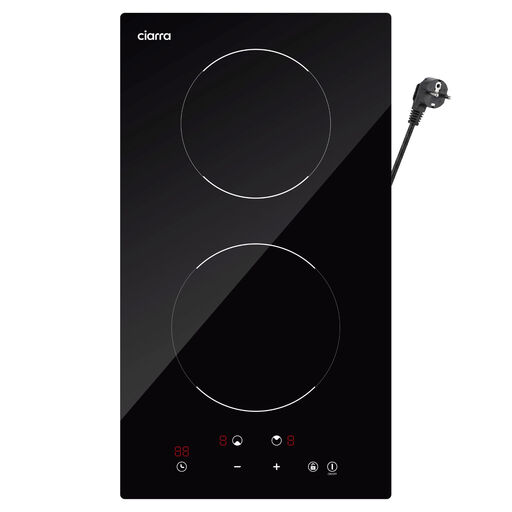 No image available
For a built-in installation where you want to use two cooking zones at once. Check the cut-out and connection requirements before buying.
Nine power levels, individual timers and a cut-out size of 270 × 490 mm, according to the product details.
Only if your current pan isn’t suitable for induction or its base doesn’t fit the cooking zone. Check the markings and manufacturer’s information; induction requires a suitable magnetic base.
A high rated power doesn’t guarantee a better result or tell you how precisely you can control low heat with your pan. Good Food recommends cooking caramelised onions slowly over a low heat for 30–40 minutes, stirring occasionally.
For the Bosch and Siemens built-in models mentioned, the manufacturers specify that connection should be carried out by a qualified electrician. For electrical installation work, § 13 NAV states that it may generally only be carried out by the network operator or an installation company listed in its installer register. The exception set out there for certain maintenance work still applies.
Follow the instructions for your specific appliance and let the hob cool sufficiently before cleaning or putting it away. Remember that radiant-heated ceramic glass and cast iron retain heat; according to the manufacturer, the Rommelsbacher CT 2200/E has a residual heat indicator.
No. The Verbraucherzentrale explains that a cooker’s energy label applies to the oven, not the hob. So don’t assume the oven’s energy rating also applies to the hob.