For making caramel sauce
If you’re making a single sauce, you’ll want to be able to control the heat as the sugar melts and the sauce simmers afterwards. The LECKER recipe describes these two steps.


For a single batch of caramel sauce, a portable induction hob may be all you need, provided the flat base of your induction-compatible pan matches the stated cookware range and you can turn the heat down easily. If you need to cook several dishes at the same time as the sauce, a built-in hob offers more cooking zones, but it must fit your kitchen and be connected by a qualified professional. The number of settings or the presence of a frying sensor alone does not prove that sugar won’t burn in your particular pan.
If you’re making a single sauce, you’ll want to be able to control the heat as the sugar melts and the sauce simmers afterwards. The LECKER recipe describes these two steps.
If you need to cook other dishes while making the sauce, you’ll need several cooking zones that can be used at the same time. TÜV SÜD describes built-in hobs as an option offering more capacity for cooking multiple dishes at once.
If you want to keep using your existing pan, check before buying that its base is suitable for induction and that its size is compatible with the specific hob. The Federal Office for Radiation Protection highlights the importance of the material, a flat base and the right size.
A good fit if: you mainly need an extra cooking zone for your saucepan and want the flexibility to position the appliance wherever you like.
The trade-off: A single hob has one cooking zone; the settings listed for an appliance don’t tell you the temperature of the caramel.
A good fit if: you want to cook several dishes at the same time as the sauce and your kitchen and electrical connection are suitable.
The trade-off: More cooking zones require suitable installation dimensions and a professional connection; Siemens requires the EX975LXC1E to be connected by a qualified electrician.
For both options, compare the flat base of your pan with the cookware range specified by the manufacturer for the particular appliance. The following considerations can help you narrow down your options.
| What you need | What to check when buying | Who it matters most to |
|---|---|---|
| Control the heat when making caramel | Check how easy it is to select lower settings and how the controls work; keep an eye on the sauce while it cooks. | If I melt the sugar first and then simmer the sauce with cream, I want to be able to turn the heat down easily. Around 36 % of consumers put heat control first. |
| Use an existing pan | Check that it’s suitable for induction and compare the diameter of its flat base with the size range for the specific model. | If I want to keep my small saucepan, its base needs to match the hob. Around 29 % of consumers prioritise pan compatibility. |
| Use the appliance and handle caramel safely | Check the safety features and that the appliance is stable; add the cream carefully and never leave the hot pan unattended. | When making hot caramel, I take care when adding the cream. Around 21 % of consumers prioritise safety. |
| Cook several dishes at once | Check how many zones you need to use at the same time, as well as the installation dimensions and connection type. | If I want to cook the sauce and a family meal at the same time, I need enough usable zones. Around 14 % of consumers prioritise extra cooking capacity. |
A test of the Silvercrest SIKP 2200 B1, reported by F.A.Z. Kaufkompass, covers things such as how quickly it heats water, not how it performs when making caramel. Power or temperature settings describe the appliance’s controls; they don’t prove the temperature of the sugar.
Choose an appliance that suits your pan and lets you turn down the heat easily, rather than focusing on maximum power alone.
The material and a flat pan base matter too. A matching outer diameter won’t make unsuitable cookware compatible with induction.
Check that your pan is suitable for induction and compare the diameter of its base with the specifications for the particular model.
If none of your existing pans fit, you may need to buy an additional induction-compatible pan.
For the Siemens EX975LXC1E, the manufacturer specifies that it must be connected without a plug by a qualified electrician. This is different from work on a fixed electrical installation, as set out in § 13 of the Low Voltage Connection Ordinance.
Have the installation requirements and connection checked before choosing a model; a portable hob may also be an option if you only need one extra cooking zone.
A built-in hob may require professional connection and, in some cases, alterations to your kitchen.
Hot caramel can splatter when you add cream, whatever type of hob you use. A hob may also remain hot after cooking.
Add the cream carefully, keep children at a safe distance and be mindful of residual heat from the hob.
These examples relate to specific product lines and models; they aren’t a general assessment of entire brands.
Portable single hobs; the S-Line 2100 is an example of an additional cooking zone with several settings.
The CT 2020/IN is an example of a portable single hob you can assess in terms of pan size, controls and safety features.
The Kult X Mono is a portable single hob with programmes for cooking and warming.
A built-in hob may be a good option if you want to cook other dishes at the same time as your sauce. The EX975LXC1E is a specific example with five zones.
The portable SIKP 2200 B1 is a specific example of an additional cooking zone.
The induction hobs below include portable options and models with multiple cooking zones for making sauces and family meals.
 No image available
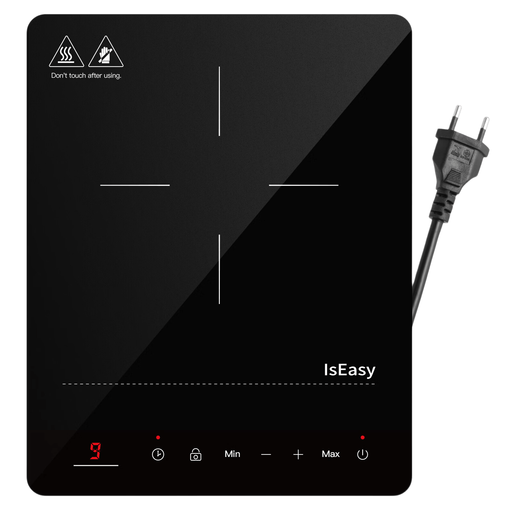
For making a single sauce on a portable hob; the product description also lists simmering sauces as a suitable use.
Nine heat settings, a child lock and overheat protection; the description also lists a 120 W keep-warm setting. Use only with induction-compatible cookware and check that your pan fits.
 No image available
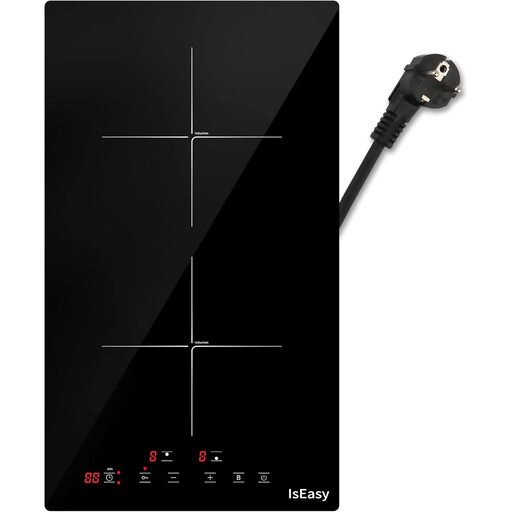
For cooking a sauce and another dish when you need both zones at the same time.
Two cooking zones, nine heat settings and a programmable timer; a child lock and residual heat indicator are also listed. The product title describes it as a built-in appliance with a plug-in design. Cookware must be suitable for induction.
 No image available
For cooking on two zones at the same time; the product description also lists simmering and keeping food warm as possible uses.
The description lists independently controlled zones rated at 1500 W and 1000 W. Use only with induction-compatible cookware and check the pan base against the appliance.
 No image available
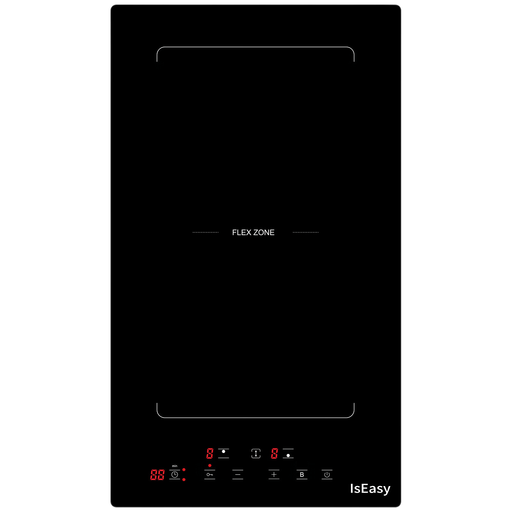
For cooking on two zones at the same time and using cookware in different sizes.
The product description lists two cooking zones, a flexible zone for pots and pans measuring 12–28 cm and a maximum power of 3400 W. It also lists a booster function, child lock and residual heat indicator. Check pan compatibility for induction before buying.
 No image available
For a portable cooking zone when you’re making a single sauce and want the flexibility to move the appliance elsewhere when needed.
The product title lists ten temperature settings; the description lists a timer of up to three hours, automatic shut-off, overheat protection and overvoltage protection. Check that your cookware is suitable for the specific appliance and the right size.
Only if its base is suitable for induction and the size matches the specific hob. For example, CASO lists 12–24 cm for the S-Line 2100; this range doesn’t apply to other models as a rule.
No. An adjustable setting describes the appliance’s controls; it doesn’t mean the temperature of the sugar in the pan has been measured. In the LECKER recipe, the sugar is melted first and the sauce is then simmered after the cream is added.
A built-in hob may be a better option if you want to cook several dishes at the same time as your sauce and your kitchen and electrical connection are suitable. A portable hob may be enough if you only need one extra cooking zone, provided your pan is compatible with the model.
Work on a fixed electrical installation isn’t the same as connecting a portable hob with a plug. § 13 of the Low Voltage Connection Ordinance generally limits this type of work to the network operator or an installation company listed in the register of installers; Siemens explicitly requires the EX975LXC1E to be connected without a plug by a qualified electrician.
Add the cream carefully, as hot caramel can splatter, and keep children at a safe distance. After cooking, be mindful of residual heat from the hob and let it cool before cleaning.