What should you look for when buying?
For a shared dinner, three questions can help you choose: will you cook with several pots at once, where will the appliance go, and is your existing soup pot suitable for the cooking zone?
| What you need |
What to check before buying |
Who should pay particular attention? |
| Cooking soup and side dishes at the same time |
Number of independently controlled zones and room for the pots side by side. |
If I’m cooking soup and side dishes at the same time, I need independently usable zones; around 33% of consumers make cooking several dishes at once their top priority. |
| A cooking spot that doesn’t take up permanent space |
Space for use and storage, number of zones and the appliance’s specified power supply. |
If you only use a cooking spot when needed or want to put it away after the meal, a portable design is worth considering; around 27% of consumers prioritise saving space and easy storage. |
| Keeping the soup at a controlled simmer after bringing it to the boil |
How you can adjust the power, what the timer switches off and what a sensor function is designed to do. |
If I want to keep cooking the soup after bringing it to the boil, controllable heat matters more to me than a boost function; around 20% of consumers prioritise simmering. |
| Continuing to use your existing pots |
Whether the base is suitable for induction and how its contact area compares with the cooking zone. |
If you want to keep your existing soup pot, first check its base and size against the appliance specifications; around 20% of consumers make continuing to use their pots their top priority. |
The percentages refer to consumers choosing an induction hob for this shared dinner, and show each person’s most important buying priority.
Joybuy products for cooking with several pots or adding a portable cooking spot
This selection includes built-in hobs for cooking with several pots and two-zone induction hobs, including a portable double hob for an extra cooking spot.
 No image available
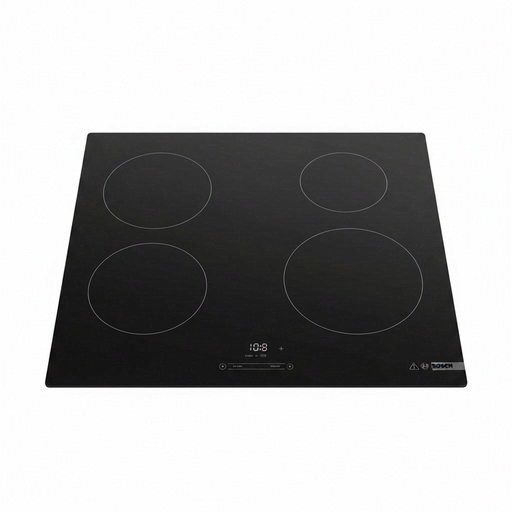
Bosch PIE61RBB5E Series 4 built-in induction hob
With four cooking zones, this model is a good option if you want to use several pots on the hob for a shared meal.
This model is listed as having four cooking zones, 17 power levels and a timer with automatic switch-off. The cut-out and electrical connection must suit your kitchen; the product description says that connection by a qualified electrician is required.
View at Joybuy
 No image available
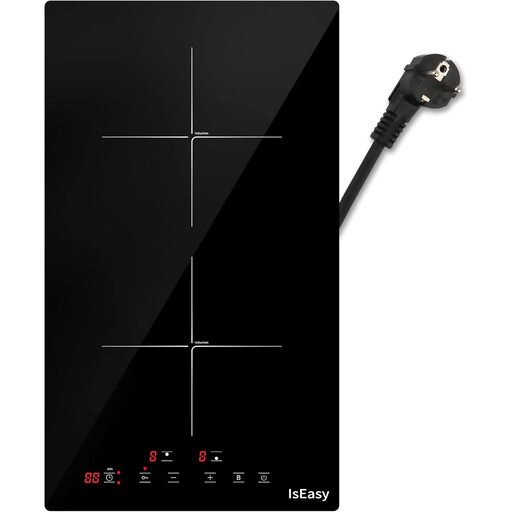
IsEasy Domino induction hob with two zones
Two cooking zones are a good option if you want to prepare soup and another dish at the same time.
The product name lists 3400 W, 29.5 cm, nine power levels, a timer, child lock, booster function and 220–240 V. It describes the appliance as a built-in hob with a plug; before choosing it, check that its design and connection suit your kitchen.
View at Joybuy
 No image available
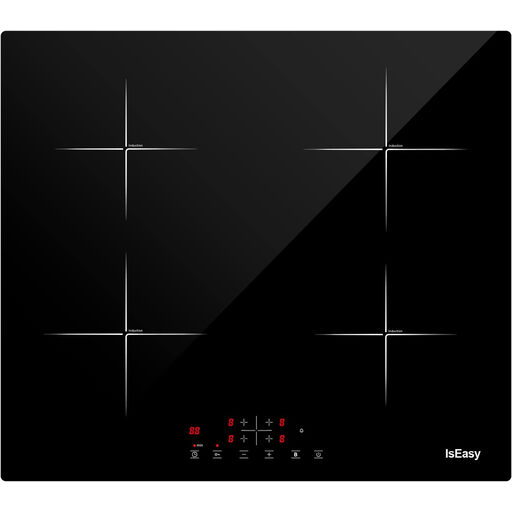
IsEasy four-zone built-in induction hob, 60 cm
Four cooking zones are useful if you want to cook with several pots at the same time for a shared dinner.
The product name lists 60 cm, 6800 W, nine power levels and a boost function. The product description also specifies a 1–99-minute timer with automatic switch-off.
View at Joybuy
 No image available
Induction hob with two zones and five temperature settings
This portable double hob could be a good fit if you want to cook soup and a side dish at the same time, but don’t want a permanent built-in solution.
The product name lists two cooking zones and five temperature settings, including options for simmering and keeping food warm. The description says the appliance is portable and the zones can be controlled independently.
View at Joybuy
 No image available
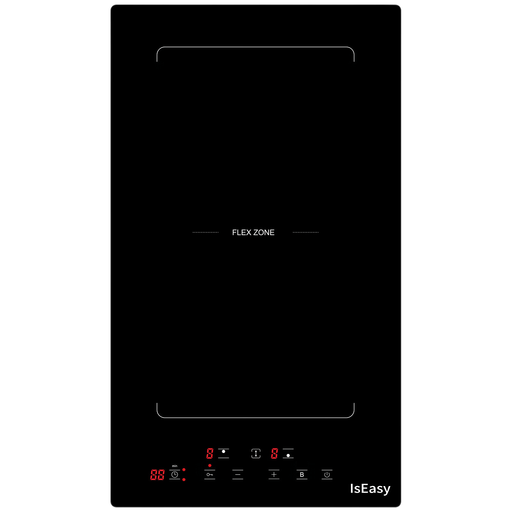
Induction hob with flexible zones
The two cooking zones described could be useful for preparing soup and another dish at the same time.
The product description lists a flexible zone for cookware measuring 12 to 28 cm in diameter. Check that the size and shape of your pot’s base are suitable.
View at Joybuy
Frequently asked questions
Can I use my existing soup pot on an induction hob?
Only if the pot has an induction-compatible base and is suitable for the cooking zone. The German Federal Office for Radiation Protection lists suitable materials, an appropriate size and fully covering active cooking zones as ways to reduce magnetic fields near the hob.
Does a boost function mean the hob will simmer soup well?
No. A boost specification only confirms that the hob has a function for heating. For cooking at a lower temperature afterwards, check how the power can be adjusted and what the timer switches off. The manufacturer’s specifications for other cooking tasks don’t automatically show that the hob is suitable for soup.
Can I plug a built-in hob into a socket myself?
That depends on the specific appliance. For the Bosch PIE611BB5E, the manufacturer explicitly states that it must be connected by a qualified electrician. Check the connection requirements for your chosen model, and don’t confuse a built-in appliance that needs a fixed connection with a portable plug-in model.
Can I plug a portable double induction hob into a multi-socket extension lead?
There’s no general yes or no. Rommelsbacher warns that high-powered double hobs can exceed the limited capacity of these extension leads; follow the instructions for the specific appliance and check the permitted load for the electrical circuit.
What should I know if I have a pacemaker or another electronic implant?
The German Federal Office for Radiation Protection notes that electric and magnetic fields can affect electronic implants, and that your individual risk should be assessed by a doctor. Without information about the implant, it isn’t possible to make a general statement about suitability or recommend a standard safety distance.


