
Lieferung heute & morgen

Qualitätsgarantie

Willkommens-Angebote freischalten: KOSTENLOSE Lieferung | Bis zu 80 % RABATT | Kostenlose 30-Tage-JoyPlus-Testphase
App herunterladen
A portable camping lantern needs to do more than just shine brightly. When you’re camping, on the balcony, in the garden or during a power cut, the right power supply, sufficient battery life and a housing suited to where you’ll use it all matter. If you only focus on a high lumen count or an attractive design, you often miss important details.
An LED camping lantern with high light output can illuminate a campsite or a path well. At the same time, full brightness usually increases energy consumption. That’s why it’s crucial to check whether there are multiple brightness levels and how long the lantern can run on the setting you need. A battery life figure should always be considered alongside the mode it refers to.
The IP44 rating describes protection against solid foreign objects and splashing water from any direction. A lantern with this waterproof rating is suitable for damp conditions and light rain, but not for submersion or heavy, persistent rain. If you want to use an outdoor lantern by the lake, on a boat or in changeable weather, you should check the specific IP rating and the manufacturer’s instructions.
A rechargeable camping lantern with a USB port is handy when you have a power bank, a car or a mains adapter available. For longer stays without a power source, a solar-powered camping lantern can be more sensible. A battery-operated lantern or a dynamo torch, on the other hand, offers advantages as an emergency light because it doesn’t necessarily rely on a charged power storage device.
First, think about where the lantern will be used:
For built-in lithium-ion batteries, the storage instructions are important. If a lantern won’t be used for a long time, the battery shouldn’t be left completely discharged.
The unit lumens (lm) describes the total light output. A directional torch can reach a greater distance with fewer lumens, while a 360-degree lantern distributes light more evenly in a tent, on a table or in a living area.
Useful features include:
For a camping light for a tent and garden, a diffuse 360-degree illumination is often more pleasant than a narrow beam. For paths, repairs or searching in the car, a focusable light can be more practical.
ABS plastic is lightweight and is often used in portable lights. Aluminium can provide a robust housing and good heat dissipation in torches. For transport, also consider weight, handle, base and a hook for hanging.
Check whether the lantern stands steadily on a table. A cordless table lamp for the patio or balcony should not only be portable but also be placed securely. With IP44 models, charging ports and covers must be protected from moisture and be dry before charging.
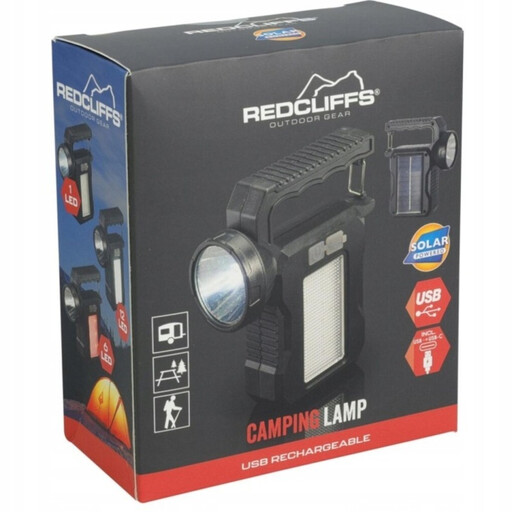
Why this product suits the profile: The combination of solar charging and USB-C makes it ideal for camping, hiking, the garden and as a backup light around the home.
The power supply isn’t limited to a single source. The IP44 rating is classed as splash-proof, not as permission to submerge the lantern.
150-lumen front light, 80-lumen side light, red LED, integrated hook and, according to the product information, around three hours charging time via USB-C.

Why this product suits the profile: This compact table lamp is designed for even illumination on the patio, balcony, dining table, bedroom or campsite.
Four brightness levels help you adjust light intensity and energy consumption to the situation. IP44 means splash-proof, not fully waterproof.
4000 mAh battery, touch control, 360-degree light distribution and, according to the product description, up to 80 hours of battery life at the lowest brightness setting.
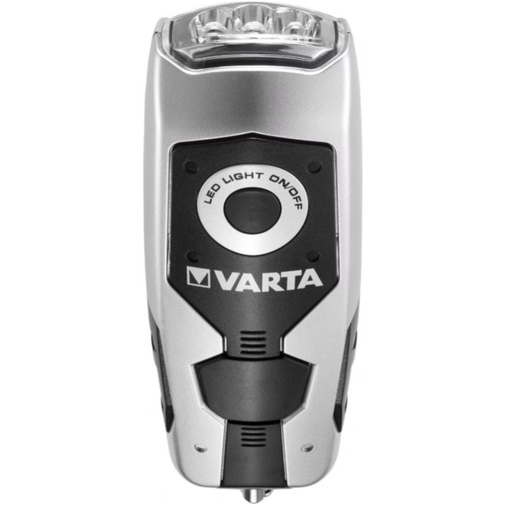
Why this product suits the profile: For the car, garage, workshop, motorhome and emergencies, a hand-crank power supply is independent of batteries and mains sockets.
According to the product information, the lantern requires no batteries. The housing is described as shock-resistant and splash-proof; prolonged moisture and extreme temperatures should be avoided.
Integrated hand crank, LED light source, compact housing and, according to the product description, up to 30 minutes of light after one minute of cranking.
We’ve put together a complete, regularly updated list of products that fully meet these strict selection criteria and the safety regulations in force in the EU.
Before buying a portable camping lantern, you should check these points:
For a tent or a table, a moderate light output with diffuse distribution is often sufficient. For paths and repairs, a directional light with greater reach is more practical. More lumens aren’t automatically more useful in every situation if there’s no lower setting available.
The battery life depends on the battery capacity, LED power and the brightness level selected. Figures like “up to” usually refer to the lowest light setting. For realistic planning, you should allow for a reserve and fully charge the lantern before every trip.
With a rechargeable LED camping lantern, the main costs are the electricity for recharging. These are usually low for small batteries. A solar-powered camping lantern can reduce the need for mains charging, while a dynamo torch works without batteries or mains power. What matters is whether the charging method you choose is reliably available in everyday use.