
Lieferung heute & morgen

Qualitätsgarantie

Willkommens-Angebote freischalten: KOSTENLOSE Lieferung | Bis zu 80 % RABATT | Kostenlose 30-Tage-JoyPlus-Testphase
App herunterladen
A flat battery always seems to happen at the worst possible moment: on the commuter car park, before a camping trip, or during a long drive. A portable car jump starter can be a practical alternative to jump leads and relying on someone else for help. But to avoid disappointment with your purchase, you need to look beyond the printed amperage figure.
Many products boast a high peak current, which is the maximum current available in a short burst. This figure alone doesn't tell you whether the device is suitable for your vehicle. What also matters is the stated starting current, engine size, engine type, and battery condition.
A 12V jump starter for a small car has different requirements to a booster for an SUV, van, or diesel engine. Always check the maximum engine capacity figures separately for petrol and diesel engines.
A power bank for the car, an LED light, or a jump starter with a compressor can be a lifesaver in an emergency. However, they don't replace the need to carefully examine the technical specifications. With an integrated compressor, for example, you need to consider maximum pressure, airflow, display units, and automatic shut-off.
Battery capacity in mAh is not directly equivalent to starting capability. It mainly describes the stored energy for charging and extra functions. For jump-starting a vehicle, starting current and vehicle compatibility remain the key criteria.
A booster that sits uncharged in the boot for months won't be ready when you need it. Lithium batteries lose energy during long-term storage. Depending on the product, a refresh charge is recommended every three, six, or twelve months.
High temperatures inside a parked car and extreme cold can also affect battery performance. A car emergency kit should therefore be stored in a dry, protected place, following the manufacturer's instructions.
Start by checking:
Look for reverse polarity protection, short-circuit protection, overcurrent protection, overcharge protection, and overheat protection. Smart clamps can indicate a faulty connection with LEDs or audible signals. Even so, you must still connect the red and black clamps correctly.
For practical use, also consider sufficiently long cables, insulated grips, clear displays, and a sturdy casing. Check whether a carry case, USB charging cable, or mains adapter is included.
If you're looking for a jump starter with a compressor, pay attention to:
The power bank function should be compatible with your devices. USB-A works for many smartphones and small gadgets, while USB-C can support faster charging profiles depending on the model. An LED light with constant, flashing, and SOS modes can help when working in the dark, but it's not a substitute for a warning triangle or proper breakdown signage.
The following models are categorised according to published product specifications, based on vehicle size, extra features, and intended use.
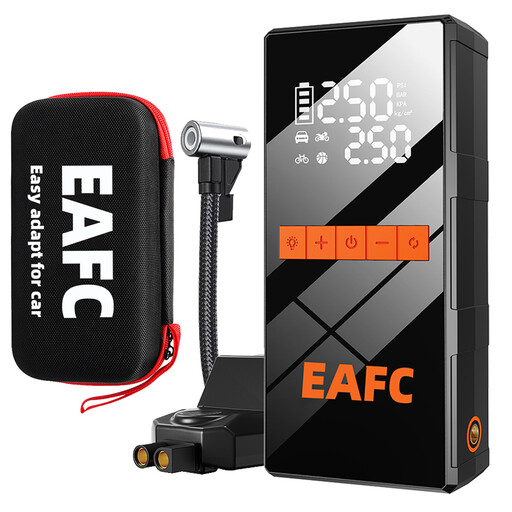
Why this product fits the profile: According to the specifications, this device combines 1200 A peak current with approval for up to 4.0 L petrol and 2.0 L diesel engines. That covers many cars and smaller SUVs.
The product description states engine limits, charging time, and the need for regular recharging. This makes it easier to assess suitability than relying on the amperage alone.
4-in-1 design with 8000 mAh, LED light, and compressor up to 150 PSI; compact size of approximately 190 × 87 × 42 mm.
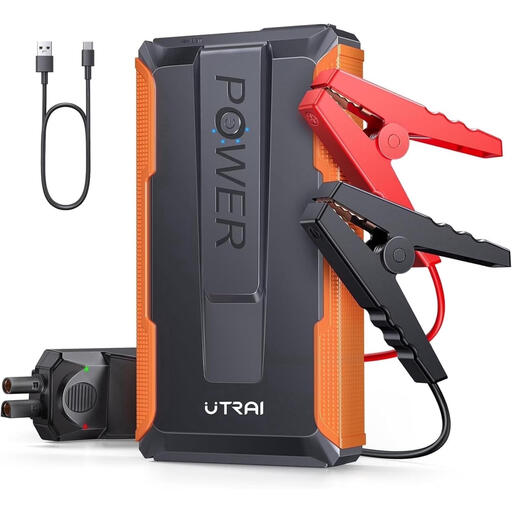
Why this product fits the profile: According to the product description, this model is designed for up to 7.5 L petrol and 5.5 L diesel engines. It is therefore aimed at drivers of larger cars, SUVs, and vans with a 12V system.
The stated safety features include reverse polarity, short-circuit, overheat, and spark protection. The clamps reportedly indicate connection errors.
13200 mAh power bank with USB Quick Charge 3.0, three LED modes, and a stated operating range of -20 °C to +60 °C.
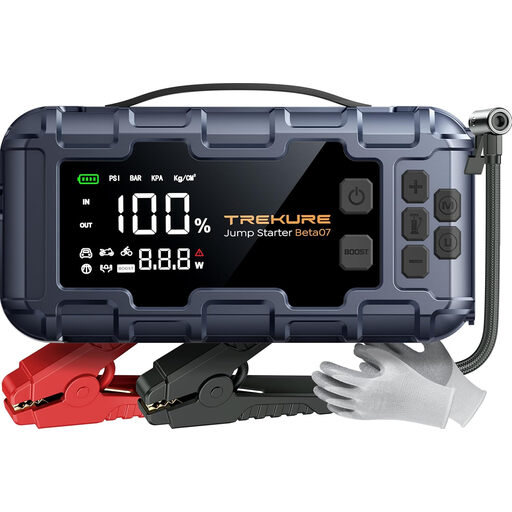
Why this product fits the profile: The published specifications mention up to 6000 A peak current, support for 12V petrol and diesel vehicles, and an integrated compressor. This makes it interesting for frequent driving, camping, and larger vehicles.
The pressure gauge and automatic shut-off address the risk of inflating tyres without control. The description also mentions several electronic safety features.
45 W USB-C PD, two USB-A ports, 600-lumen LED, display, and five pressure presets; insulated gloves are included according to the package contents.
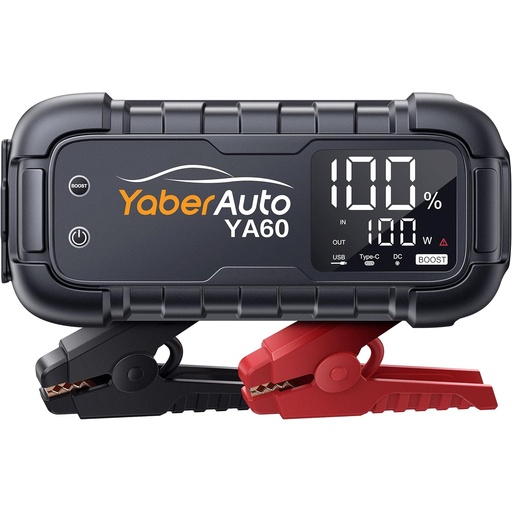
Why this product fits the profile: According to the specifications, this device is intended for 12V petrol and diesel engines up to 12.0 L. Buyers should still cross-check this high rating with their specific vehicle handbook.
The product description mentions 10 safety features, a BOOST mode for very weak batteries, and clear guidelines for charging intervals and starting attempts.
26800 mAh, 65 W USB-C, two USB-A outputs, and 150 W DC output; plus a 600-lumen LED with three modes.
We've put together a full, regularly updated list of products that fully meet these strict selection criteria and the safety regulations in force in the EU.
Do not attempt to jump-start a damaged, leaking, or frozen battery. If you're unsure, calling for breakdown assistance is the safer option.
The lifespan depends on battery quality, usage, charge cycles, and storage conditions. Regular recharging prevents deep discharge. Figures like "up to 30 starts" or long standby times are manufacturer values and may be lower in cold conditions or with a heavily discharged battery.
Yes, provided the model is explicitly approved for diesel engines and the vehicle's engine capacity. Diesel SUVs, vans, and larger engines often need higher starting reserves than comparable petrol engines. The product's limit should not just barely exceed your engine's actual capacity.
In normal use, the main cost is the electricity for regular charging. Additional costs may arise if a suitable USB-C or mains adapter is not included. For devices with a compressor, power consumption is higher when inflating tyres frequently compared to using the jump-start function alone.