
Lieferung heute & morgen

Qualitätsgarantie

Willkommens-Angebote freischalten: KOSTENLOSE Lieferung | Bis zu 80 % RABATT | Kostenlose 30-Tage-JoyPlus-Testphase
App herunterladen
A portable car refrigerator can be considerably more practical than a conventional cooler with ice packs on long journeys, while camping or in a motorhome. However, models differ significantly in cooling technology, power consumption, capacity and portability. A compact cooling and warming box for the passenger seat serves a different purpose than a 50-litre compressor cooler with a freezer function.
This buying guide from the Joybuy Product Recommendation Officer explains what motorists, campers, truck drivers, boat owners, anglers and families should consider before making a purchase.
A 12V car cooler can use either thermoelectric technology or a compressor. Thermoelectric models are often compact, lightweight and comparatively simple in design. However, their actual cooling performance depends more heavily on the ambient temperature. The stated target temperature should therefore not be interpreted as a consistently maintained refrigerator temperature.
A compressor cooler works differently. Depending on the model, it can reach significantly lower temperatures and is better suited to freezing. In return, it is generally heavier, more expensive to purchase and louder in operation.
The litre specification describes the interior capacity, not the amount of space required in the vehicle. A 40- or 50-litre unit may be too large for a small car, while a 5- to 9-litre cooler can fit on the passenger seat. Before buying, measure the boot, seat width and the position of the ventilation openings.
A cooler with app control can make temperature monitoring easier. For use in a vehicle, however, other factors are more important: 12/24V compatibility, adequate ventilation, adjustable battery protection and a suitable connection cable. An app does not automatically prevent a vehicle battery from being drained during a long stop.
For drinks, snacks and prepared meals, a thermoelectric portable cooler is sufficient for many everyday situations. Models with an additional heating function can, according to the manufacturer, keep food warm. Actual performance depends on the ambient temperature, loading, seal and ventilation.
If you want to store or freeze food for several days, look specifically for a car cooler with freezer function. Compressor models with a temperature range of around -20 °C to +20 °C are designed for this type of use. The target temperature should be reached before loading the cooler, as warm food increases energy consumption.
For cars, motorhomes, caravans and trucks, 12V 24V cooler is an important search criterion. A 12V connection is typically suitable for passenger cars, while 24V is relevant to many truck systems. For stationary use, the unit should have a 100–240V or 230V AC connection.
Multi-stage battery protection with low, medium and high settings can reduce the risk of significantly draining the vehicle battery. Nevertheless, the cooler should not be left running continuously from the starter battery during extended stops. A power station or suitable auxiliary battery may be a better solution for camping and vanlife.
Specifications such as 40 dB to below 45 dB provide an initial indication of operating noise. If the unit will be used beside a bed or inside a tent, its placement should also be considered carefully. Air inlets and outlets must remain unobstructed, while direct sunlight can reduce cooling performance.
Wheels, telescopic handles, carrying straps and low weight make transportation easier. With larger units, external dimensions, net weight and stability on uneven ground are more important than additional convenience features.
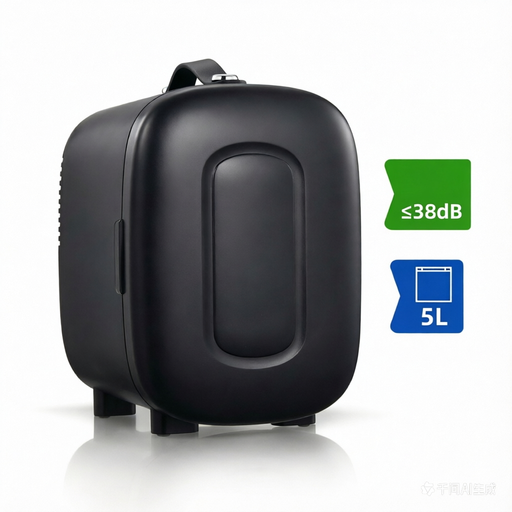
Why it is a good fit: Its compact size is ideal for individual drinks, snacks or cosmetics in the car, bedroom or office.
AC and 9–12V DC connections, together with a removable compartment, support flexible use. The cooling and warming functions should be assessed in relation to the ambient temperature.
5-litre interior, magnetic door and operation via 240V AC or 9–12V DC.
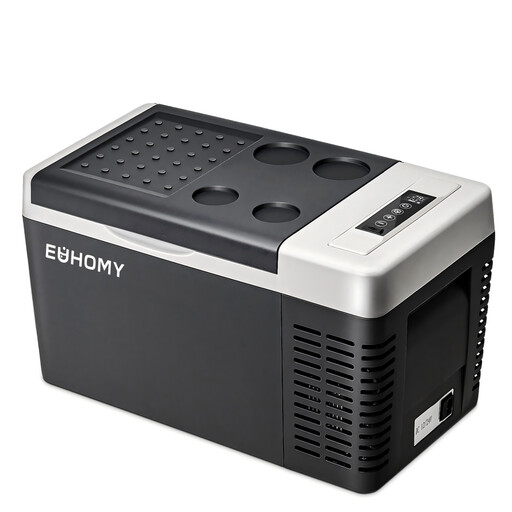
Why it is a good fit: For camping, travel, fishing and boating, this unit offers more storage than a mini cooler while remaining relatively compact.
According to the manufacturer, the compressor supports a range from -20 °C to +20 °C. Three battery-protection levels help adapt the unit to different vehicle batteries.
18-litre capacity, 12/24V DC and 100–240V AC connections, app or Bluetooth control, and a stated noise level of 42 dB.
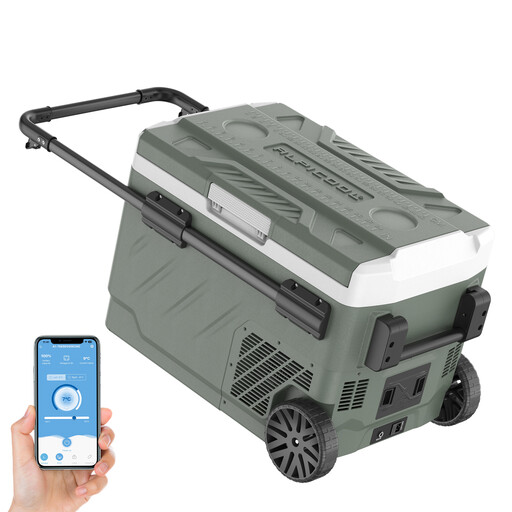
Why it is a good fit: Two independently controllable zones and wheels make it suitable for families, motorhomes and multi-day journeys.
The 12/24V and 100–240V power options cover both vehicle and household use. Three battery-protection levels address a common concern: protecting the vehicle battery.
40 litres, dual-zone cooling, -20 °C to +20 °C, app control, wheels and a stated noise level below 45 dB.
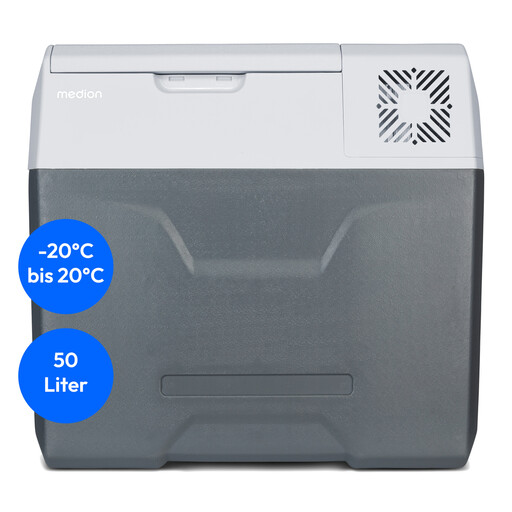
Why it is a good fit: Its generous format is designed for motorhomes, trucks, boats, festivals and extended stays with several people.
The 230V, 12V and 24V connections are designed for different locations and applications. Despite the spacious interior, ventilation must remain unobstructed.
50 litres, or 47 litres of usable capacity, a temperature range of -20 °C to +20 °C and a USB connection.
The complete category features a regularly updated selection of appliances for camping, vehicles and outdoor use. Always check the connection specifications, dimensions and manufacturer information before buying.
This depends on power consumption, battery protection, outside temperature and the vehicle battery. There is no reliable one-size-fits-all runtime. When the engine is off, a 12V refrigerator in the car should therefore only be operated with monitoring or a suitable auxiliary power source.
A thermoelectric cooling and warming box is usually more compact and suitable for drinks and short trips. A compressor cooler can reach lower temperatures and is better suited to freezing, longer journeys and larger quantities. It generally requires more space and weighs more, however.
The manufacturers’ specifications for the models mentioned range from approximately 38 dB to below 45 dB. The perceived noise level depends on the surface, distance and operating mode. For sleeping in a vehicle, position the unit as far from the sleeping area as possible and place it on a surface that minimises vibration.