
Lieferung heute & morgen

Qualitätsgarantie

Willkommens-Angebote freischalten: KOSTENLOSE Lieferung | Bis zu 80 % RABATT | Kostenlose 30-Tage-JoyPlus-Testphase
App herunterladen
A portable carpet cleaner is a useful option for households that need to tackle sofa stains, drinks spilled on carpets or pet accidents in the car quickly. Unlike a standard dry vacuum cleaner, these machines usually spray, brush and suction. This applies cleaning solution to the fabric and then lifts it back up along with the loosened dirt.
However, your choice shouldn’t be based on wattage or marketing claims alone. For use in homes in Germany, the tank design, reach, material compatibility and maintenance requirements all matter.
A powerful motor doesn’t automatically mean a more thorough clean. What matters is how well the spray system, brush head, suction power and liquid recovery work together. A 1,300- or 1,700-watt machine may use more energy without necessarily delivering better results on every fabric.
So, also check:
With a simple single-tank design, clean water mixes with the dirty water that has been collected. A dual-tank system keeps the two separate, making it easier to refill and empty the machine. Choose a tank size to suit the job: smaller tanks save space, but may need refilling or emptying more often when cleaning larger carpeted areas.
A carpet cleaner that uses water shouldn’t be put away as soon as you switch it off. If water, cleaning solution or dirt is left in the hose and attachment, it can cause unpleasant smells. Make a habit of emptying and rinsing the removable parts after every use, then letting them dry completely.
The kPa figure describes the vacuum pressure generated during suction. It’s a useful point of comparison, but doesn’t tell you everything about a machine’s performance. A carpet cleaner should recover liquid in a controlled way after spraying, so that upholstery and carpets don’t become unnecessarily wet.
A spot cleaner with a narrow attachment is ideal for localised spills and stains. If you regularly clean larger sofa areas, stairs or several car seats, look for a hose and power cable that are long enough for the job.
Look for:
A capacity of, for example, 1,400 ml for clean water and 1,200 ml for dirty water is practical for individual pieces of furniture and smaller areas. Cleaning an entire carpet may require larger tanks or several passes.
A portable carpet cleaner should be easy to carry to stairs, furniture and your vehicle. A long cable is useful for extended cleaning sessions with a mains-powered machine. The hose should give you enough freedom of movement without requiring you to drag or tip the main unit across the carpet.
It’s also worth considering storage before you buy. Compact machines are more likely to fit in smaller homes, but may not have the same tank capacity or range of accessories as larger models.
The products below vary in suction power, tank capacity, ease of use and extra features. The technical details are based on the information provided for each product.
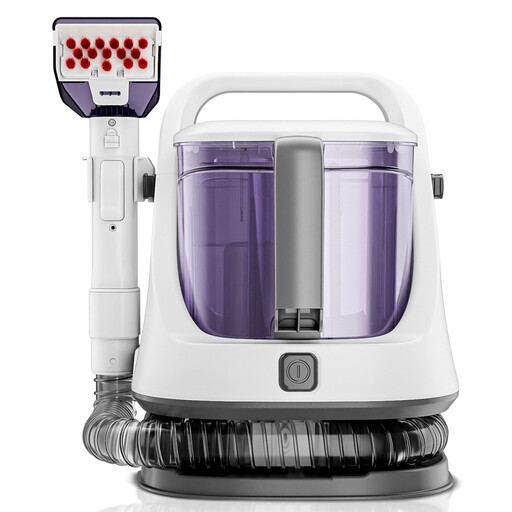
Why this product suits this profile: This compact machine combines 650 watts of power and 12 kPa suction with a 1,400 ml clean-water tank and a 1,200 ml dirty-water tank. It’s designed for sofas, stairs and car seats.
Separate tanks mean you don’t have to use a shared water container. The 3 m cable and 1.1 m hose extend your working reach.
Compact design, spray and suction functions, and removable tanks for easy cleaning.
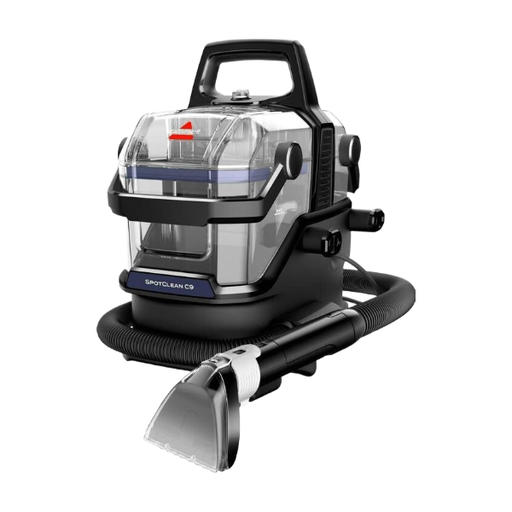
Why this product suits this profile: This model has a 1.9-litre clean-water tank and a 1.4-litre dirty-water tank, making it a good fit for regular spot cleaning on carpets and upholstery.
The relatively large, separate tanks help reduce interruptions when cleaning several upholstered areas.
400-watt motor, compact design and accessories for carpets and upholstery.
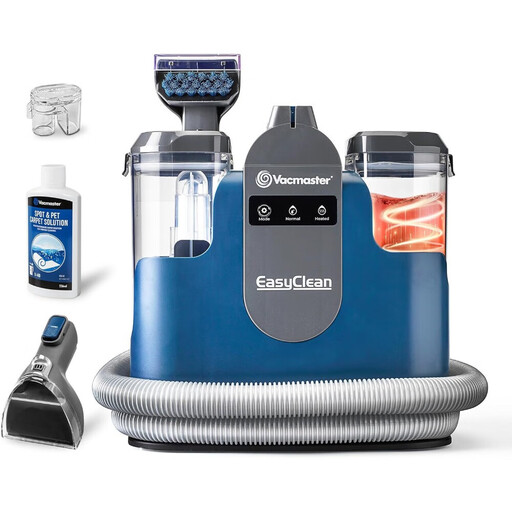
Why this product suits this profile: This machine has a 1.6-litre clean-water tank, a 0.95-litre dirty-water tank, 500 watts of power and a heated cleaning mode for different types of fabric.
The option to switch between standard and heated cleaning means you don’t have to rely on a single cleaning mode for every fabric.
A 1.8 m hose and self-cleaning attachment for sofas, carpets, stairs and car seats.

Why this product suits this profile: With 600 watts of power, a stated suction rating of 17 kPa and a dual-tank system, this model is designed for spot cleaning upholstery, carpets, pet areas and car seats.
The specifications give a specific suction rating and confirm that the tanks are separate, rather than relying on motor power as the only selling point.
Spray, brush and suction functions, plus a flexible hose for cleaning different fabric surfaces.
We’ve put together a complete, regularly updated list of products that meet these strict selection criteria and fully comply with the safety regulations in force in the EU.
Before using it for the first time, test for colourfastness on an inconspicuous area. Not every material is suitable for wet cleaning. Take extra care with delicate natural fibres, coated surfaces and upholstery that isn’t water-resistant.
When using the cleaner:
Yes, as long as the upholstery is suitable for wet cleaning. A narrow brush attachment, flexible hose and sufficiently long cable make it easier to clean inside a vehicle. Keep water away from electrical components.
Its lifespan depends on how you use, store and maintain it. Rinsing the tanks regularly, removing fibres from the attachment and storing the machine somewhere dry all help to keep it in good condition. Refer to the relevant manufacturer’s documentation for technical details and spare parts.
Running costs mainly come from electricity, water and, where applicable, cleaning solution. For a rough estimate with mains-powered machines, you can use the power consumption in watts as a guide. Getting the cleaning solution dosage right is often more important than electricity consumption, as using too much can leave residue on fabrics.