
Lieferung heute & morgen

Qualitätsgarantie

Willkommens-Angebote freischalten: KOSTENLOSE Lieferung | Bis zu 80 % RABATT | Kostenlose 30-Tage-JoyPlus-Testphase
App herunterladen
A portable carpet cleaner can target spilled drinks, pet hair, food residue and dirt on sofas, carpets and car seats. Unlike a dry vacuum cleaner, a wet-and-dry cleaner generally works with a combination of spraying, brushing and suction. This applies cleaning solution to the fabric surface and then lifts it away together with the loosened dirt.
To ensure your purchase remains useful in everyday life, you should not focus solely on wattage or advertising claims. Tank design, reach, suction power and subsequent maintenance are all crucial.
Motor power in watts primarily describes electrical consumption or rated input power. On its own, it does not indicate how much dirty water is actually collected. For practical use, details such as vacuum pressure in kPa, airflow, spray volume and nozzle design are also relevant.
A 600-watt appliance is therefore not automatically more suitable than a 400- or 500-watt model. Compare the technical specifications in context, and also take weight and ease of use into account.
A compact spot cleaner is easy to store, but may require frequent refilling when cleaning larger areas. It is important to consider the capacities of the clean-water and dirty-water tanks separately. A two-tank system keeps clean water separate from collected dirty water.
Smaller tanks are often sufficient for treating individual stains. If you regularly want to clean sofas, stairs, carpets and car seats, larger containers can be beneficial. At the same time, the weight during operation generally increases with the tank capacity.
After every wet-cleaning session, the dirty-water tank, hose, nozzle and filter should be emptied, rinsed and allowed to dry completely. If damp residue remains inside the appliance, unpleasant odours can develop. A self-cleaning hose attachment can make maintenance easier, but it does not replace emptying and drying the removable parts.
A wet-and-dry cleaner with spray and suction functions should apply the cleaning solution in a controlled manner and collect the dirty liquid again. A brush helps loosen both surface dirt and more stubborn grime. Move the nozzle slowly, then make several suction-only passes without spraying any more solution. This helps remove more moisture from the fabric.
Specifications such as 12 kPa, 15 kPa or 17 kPa describe the stated vacuum pressure. This is a useful technical comparison point, but it is not the sole indicator of cleaning performance. The nozzle, hose diameter and airflow also affect how the appliance performs.
For furniture, stairs and car seats, a hose length of around 1.1 to 1.8 metres is practical. A longer cable or battery operation increases the reach. Also check whether the appliance comes with a suitable upholstery nozzle or a narrow spot-cleaning nozzle.
Not every textile is suitable for wet cleaning. First test colourfastness in an inconspicuous area and follow the manufacturer's care instructions. Sensitive natural fibres, coated surfaces and water-soluble adhesives can be damaged by moisture.
Electrical appliances must not be immersed in water. Only use suitable, low-foaming cleaning solutions as specified by the manufacturer. For appliances with heating or steam functions, the permitted water temperatures must be observed. Unplug the appliance before carrying out maintenance, emptying the tanks or changing attachments. Children and pets should keep away from the appliance while it is operating.
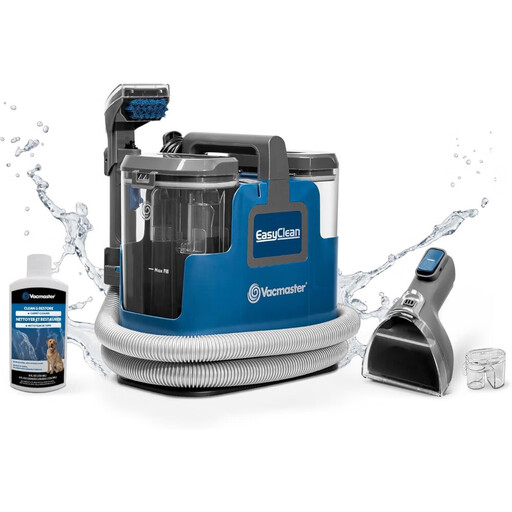
Why this product suits this profile: This corded upholstery cleaner is designed for individual stains, sofas, stairs and car seats. Its weight of 3.4 kg and 1.8 m hose support portable use around the home.
The separate tank system prevents you from continuing to work with dirty water that has already been collected. The relevant containers are removable, making them easier to empty.
500 W motor, two water tanks and cleaning solution included for stains and pet-related areas.
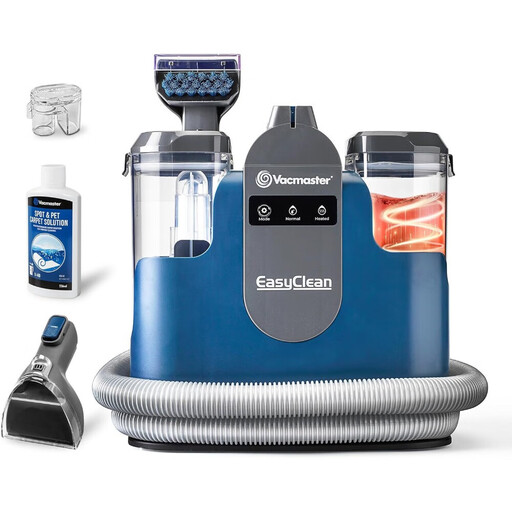
Why this product suits this profile: This model offers a standard mode and a heated mode. The 1.6-litre clean-water tank, 0.95-litre dirty-water tank and 1.8 m hose make it suitable for recurring cleaning tasks.
The product specifications explicitly provide for switching between two cleaning modes. The separate tanks reduce unnecessary mixing of clean and dirty water.
500 W motor, heating function and self-cleaning hose attachment.

Why this product suits this profile: This cordless carpet cleaner is designed for cars, stairs and hard-to-reach areas. Its stated runtime of up to 55 minutes can make it easier to work without having to search for a socket.
Its reach does not depend on having a long mains cable. However, the 24 V battery must be charged before use; for longer jobs, the stated runtime is an important factor when planning your work.
Stated suction power of 15 kPa, 1.6-litre clean-water tank and self-cleaning hose attachment.
We have put together a complete, regularly updated list of products that fully meet these strict selection criteria and the safety regulations applicable in the EU.
Before wet cleaning, remove loose crumbs, dust and coarse pet hair with a dry vacuum cleaner. Fill the clean-water tank only up to the marked line and use the cleaning solution at the recommended dosage. Too much solution can increase foaming and make collection more difficult.
Running costs mainly consist of electricity, water, cleaning solution and, where applicable, replacement filters. A corded model operates continuously during use, while a battery-powered appliance requires you to factor in charging times and battery ageing. After every use, you should:
The appliance sprays water or cleaning solution onto a suitable textile surface. A brush loosens dirt, after which the appliance vacuums the liquid and loosened dirt into the dirty-water tank. The fabric remains damp and requires sufficient drying time.
Many models are intended for sofas, upholstery, stairs and car seats, according to their product specifications. However, check the material's care label beforehand and test colourfastness in a concealed area. Electrical components in the vehicle must not come into contact with water.
Its service life depends on how often it is used, filter maintenance, proper storage and the availability of spare parts. Regular rinsing, thorough drying and the use of suitable cleaning solutions can help maintain the appliance. For battery-powered models, you should also care for the lithium-ion battery according to the manufacturer's instructions.