
Lieferung heute & morgen

Qualitätsgarantie

Willkommens-Angebote freischalten: KOSTENLOSE Lieferung | Bis zu 80 % RABATT | Kostenlose 30-Tage-JoyPlus-Testphase
App herunterladen
A portable carpet cleaner can tackle spilt drinks, pet stains and dirt on sofas, stairs and car seats. Unlike a dry carpet vacuum, a wet-and-dry carpet cleaner sprays water or cleaning solution onto the textile surface, then extracts the dirty liquid.
To ensure your purchase remains practical for the long term in a British household, you should not focus solely on a high wattage or kPa figure. Tank configuration, reach, post-use cleaning and suitability for the material in question are equally important.
A figure such as 12 kPa, 15 kPa or 17 kPa suction power describes the negative pressure under specific conditions. On its own, it does not indicate how quickly a surface will dry or how effectively a stain will disappear. Spray volume, nozzle design, brush mechanism, airflow and the type of textile also play a part.
A carpet cleaner with 12 kPa suction power may be sufficient for spot cleaning. For heavily soaked upholstery or frequent use, a suitable nozzle and an easily accessible dirty-water tank are also important.
With a wet-and-dry vacuum with a water tank, it should be clear how large the clean-water and dirty-water tanks are individually. A combined total figure can make the cleaner less practical if the individual clean-water tank is small.
Separate containers prevent extracted dirty water from being used for cleaning again. After every use, both tanks must be emptied, rinsed and dried completely.
A short cable or rigid hose can make cleaning car seats, stairs and large sofas awkward. At the same time, filters, nozzles and sections of hose that are difficult to access can develop odours after several uses.
So look for cable length, hose length, removable tanks and an easy-to-clean brush. A self-cleaning function can make maintenance easier, but it does not replace rinsing and drying the removable components.
Motor output in watts should not be confused with actual suction performance. A 400-watt appliance may be designed differently from a 650-watt model. It is sensible to consider motor output, stated suction power and the cleaning method together.
For spot cleaning, three stages are particularly useful: spraying, brushing and extraction. When dealing with pet stains, first remove any solid residue, treat the area according to the instructions and extract the liquid slowly. Using too much cleaning solution can leave residue in the fabric.
A clean-water tank of around 0,9 to 1,9 litres is suitable for individual stains or several small areas, depending on the level of soiling. A larger tank reduces the need for refilling, but generally increases the appliance’s weight.
The tanks should have a clearly visible MAX marking. Do not exceed it. Before buying, you should also check whether the manufacturer’s cleaning products are required and what water temperature is permitted.
A fabric or carpet cleaner should only be used on materials suitable for water-based cleaning. Sensitive natural fibres, colourfastness-limited fabrics, coated surfaces and certain mattresses can be damaged by moisture or cleaning products.
Before cleaning a large area, carry out a colour and material test on an inconspicuous section. When cleaning car seats, pay particular attention to electronics, heated seats and delicate edges. Liquid must not penetrate switches, electrical connections or the underlying upholstery structure.
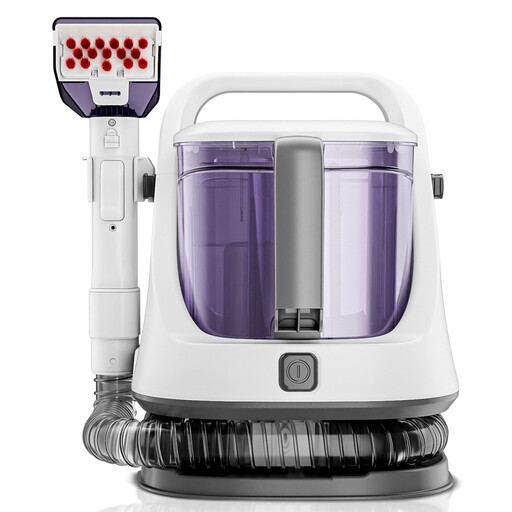
Why this product suits this profile: This compact appliance is designed for spot cleaning carpets, sofas, stairs and car seats. The 3-m lead makes it easier to use in different areas of the home.
The specifications list separate tanks holding 1.400 ml of clean water and 1.200 ml of dirty water, along with 12 kPa suction power.
650-W motor, 1,1-m hose, 3-m cable and removable water tanks.
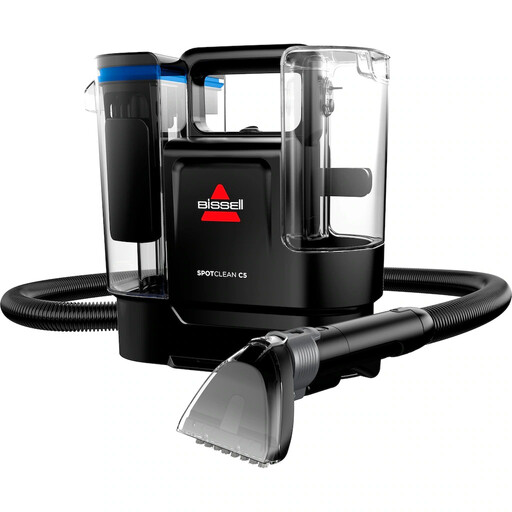
Why this product suits this profile: This model combines spraying, scrubbing and extraction and is designed for carpets, upholstery, stairs and vehicle interiors.
The product data lists suction power of over 15 kPa, separate tanks and a HydroRinse tool for flushing the system.
1,7-m hose, 4,3-m cable, appliance weight of 4 kg, plus 0,9-l and 0,8-l tanks.
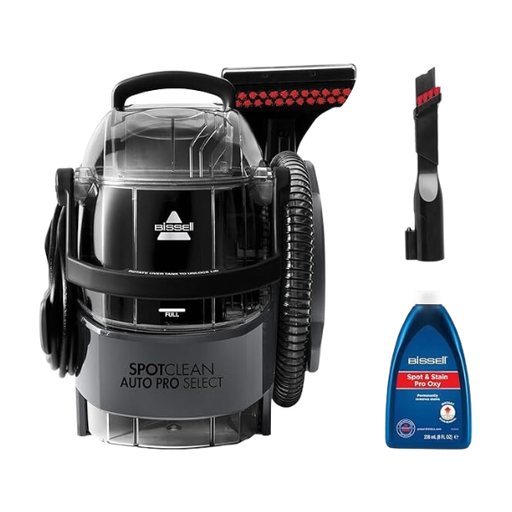
Why this product suits this profile: Its features are designed for larger textile areas and regular cleaning of vehicle interiors. The 15-cm cleaning nozzle can cover larger areas.
The product description specifies separate water tanks, a 1,5-m hose and a 6,7-m mains cable.
750-W motor, stated total tank capacity of 2,8 litres and XL sliding brush for confined areas of the vehicle.

Why this product suits this profile: This appliance is specified for carpets, sofas, car seats and pet areas. It is therefore suitable for households where spot cleaning is needed more frequently.
The specifications list 17 kPa suction power and a dual-tank system. The manufacturer recommends a colour test and water no warmer than 40 °C.
600-W motor, stated suction power of 17 kPa, plus spraying, brushing and extraction functions.
We have put together a complete, regularly updated list of products that fully meet these strict selection criteria and the safety regulations applicable in the EU.
The appliance sprays water or cleaning solution onto the textile surface. A brush loosens dirt, after which the motor extracts the liquid into the separate dirty-water tank. The area should then be allowed to dry completely before being used intensively again.
Yes, provided the seat covering is suitable for water-based cleaning according to the manufacturer. When cleaning car seats, use a small amount of liquid and protect electrical components, control panels and seat edges from moisture. Testing an inconspicuous area is recommended.
Power consumption depends on the motor output and operating time. With a 600-W appliance, 30 minutes of operation uses approximately 0,3 kWh. Water and, where applicable, a suitable cleaning product are additional costs. The current electricity tariff determines the actual cost.