
Lieferung heute & morgen

Qualitätsgarantie

Willkommens-Angebote freischalten: KOSTENLOSE Lieferung | Bis zu 80 % RABATT | Kostenlose 30-Tage-JoyPlus-Testphase
App herunterladen
A portable carpet cleaner can treat spilled drinks, pet hair, road grime or stains on sofas and car seats right where they happen. Unlike a standard vacuum cleaner, a wash-and-vacuum machine sprays cleaning solution or water onto the fabric, loosens the dirt with a brush and then sucks the liquid back up.
To make the purchase practical for your home, you shouldn't just focus on wattage or marketing claims. What really matters is the machine's design, how it operates and whether it's suitable for the surface you're cleaning.
The motor power in watts describes energy consumption or electrical power input. On its own, it doesn't tell you how much liquid is actually picked up. For everyday use, you also need to consider suction power, the nozzle design, the airflow path and the seals.
A machine with 1,300 watts isn't automatically better than a model with 400 or 500 watts. With an upholstery cleaner, you should instead check whether specific details on suction power, tank size and hose length are provided.
A steam cleaner works with heated water or steam. A carpet wash-and-vacuum machine, on the other hand, sprays liquid onto the fabric and then sucks it back in. These two types of machine take very different approaches.
Steam isn't suitable for every material. Delicate synthetic fibres, glued carpet backs, leather or certain upholstery fabrics can be damaged by heat or moisture. Before using any machine, check the care label on the fabric and do a colour and material test on an inconspicuous area.
A stain cleaner isn't automatically maintenance-free after use. If the dirty water tank, nozzle, hose and filters aren't emptied and dried, residue and odours can develop. That's why removable tanks, easily accessible parts and – depending on the model – a tool for flushing the hose are practical features.
A wash-and-vacuum machine for carpets and upholstery should have separate clean and dirty water tanks. This stops the collected liquid from being fed back into the supply. Look for:
A large tank volume reduces interruptions, but it often makes the machine heavier. For a small flat or treating individual stains, a compact model may be more sensible.
The combination of spray, brush and suction functions is especially important for spot-cleaning fabrics. The spray function wets the area, a brush helps loosen the dirt and the suction function picks up the liquid along with the loosened residue.
The nozzle should suit the task. A narrow brush makes it easier to clean stairs, car seats and sofa crevices. A wider nozzle can save time on larger carpeted areas.
Manufacturers sometimes state suction power in kPa. This figure can be helpful for comparison, but it's only meaningful between machines with a similar design. Hose and cable length also matter. A 3-metre cable or a longer hose can save you from having to change plug sockets several times when cleaning the inside of a car.
The noise level should also factor into your decision. The ROUNY model, for example, is rated at 80 dB. In a rented flat or if you plan to use it frequently, this is worth considering.
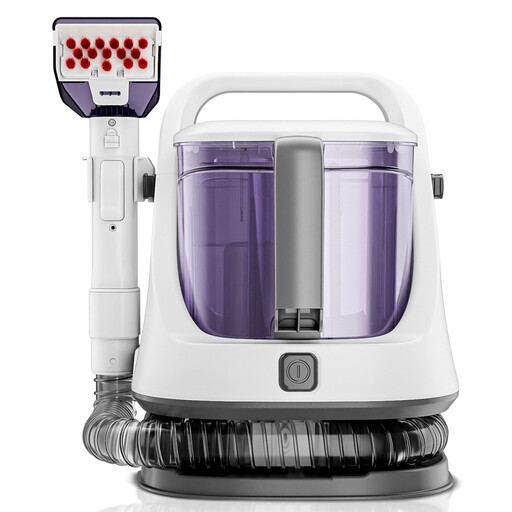
Why this product suits the profile: This model is designed for occasional stains on sofas, carpets, stairs and car seats. It offers 650 W, 12 kPa suction power, a 1,400 ml clean water tank and a 1,200 ml dirty water tank.
The separate tanks prevent clean and dirty water from mixing in the same container. The stated suction power and tank volumes make it easier to make an informed initial choice.
12 kPa suction power, 3 m mains cable and separate tanks for various fabric surfaces.
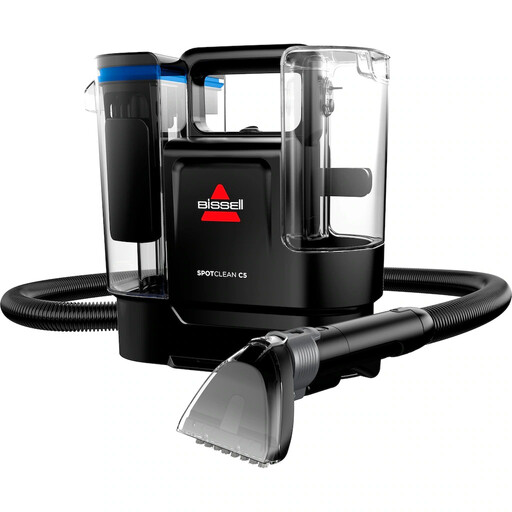
Why this product suits the profile: According to the product specifications, this compact wash-and-vacuum machine for carpets and upholstery combines a suction power of over 15 kPa with a 1.7 m integrated hose and a HydroRinse tool.
The product data clearly states suction power, tank sizes and reach. The separate rinsing tool helps clean the hose after use.
Over 15 kPa suction power, 0.9 l and 0.8 l tanks and a 4.3 m mains cable.
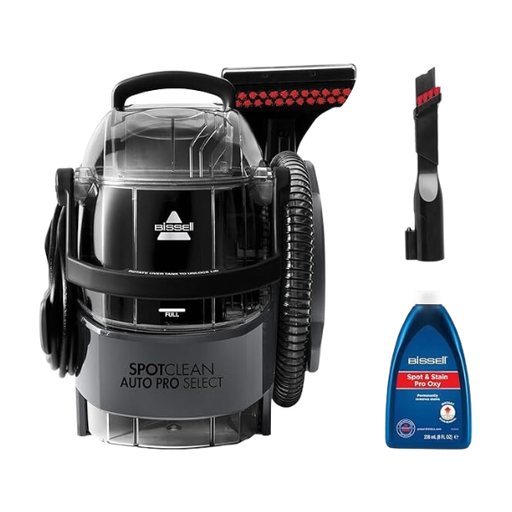
Why this product suits the profile: For drivers and households with frequent use, this model offers a 750 W motor, a 1.5 m hose, a 15 cm cleaning nozzle and a 6.7 m mains cable, according to the product description.
The long power cord reduces the need for extension leads when cleaning the inside of a car. The XL brush is designed for tight spaces in the vehicle.
750 W, 2.8 l total tank capacity and a 15 cm cleaning head.
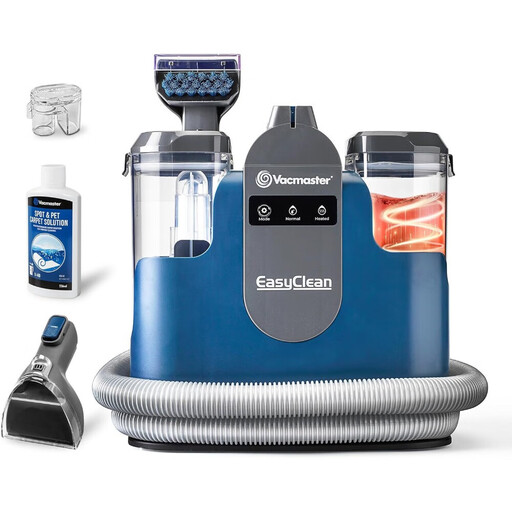
Why this product suits the profile: According to the product specifications, this machine has a 500 W motor, separate tanks with 1.6 l of clean water and 0.95 l of dirty water, and a 1.8 m hose. A heating function can be switched on.
The heating function doesn't replace the need for material testing. However, you can switch between normal and heating modes, so the application can be adapted to the surface you're cleaning.
1.6 l clean water tank, 0.95 l dirty water tank and a self-cleaning attachment for the hose.
We've put together a full, regularly updated list of products that fully meet these strict selection criteria and the safety regulations in force in the EU.
Before using the machine, first vacuum the area dry. Then apply only as much water or cleaning solution as the material can handle. Slow suction movements help to pick up as much liquid as possible. Fully saturating the carpet can extend the drying time.
Ongoing costs include electricity, water, cleaning solution and possibly replacement filters. With corded machines, there's no need to charge a battery, but you do need a plug socket. Only use cleaning solutions that are specified by the manufacturer or expressly suitable, low-foam products.
A portable carpet cleaner should only be used on water-safe fabrics. Items not suitable for cleaning include electrical components, flammable liquids or unknown materials. Always unplug the machine before emptying the tanks, changing accessories or carrying out maintenance.
On stairs, make sure the machine is standing securely. Children and pets should be kept at a distance during operation. After cleaning, the tanks, nozzles and filters must be completely dry before the wet vacuum cleaner is stored away.
That depends on the material, the amount of water, the room temperature and the air circulation. Several slow suction passes, regular airing and using liquid sparingly can reduce the drying time. The fabric should only be used normally again once it is completely dry.
Yes, as long as the seat cover is suitable for wet cleaning. Before you start, check the manufacturer's instructions and test colourfastness and material compatibility on a hidden area. For tight spaces, a narrow nozzle and a sufficient hose and cable length are helpful.
The lifespan depends on how often you use it, how well you look after it and whether you use it correctly. After each use, the dirty water tank, brush, hose and filters should be rinsed and dried. Blocked airways, overfilled tanks and unsuitable cleaning solutions can affect performance.