
Lieferung heute & morgen

Qualitätsgarantie

Willkommens-Angebote freischalten: KOSTENLOSE Lieferung | Bis zu 80 % RABATT | Kostenlose 30-Tage-JoyPlus-Testphase
App herunterladen
A portable charcoal grill promises freedom: spontaneous barbecues in the park, by the lake, or on your own balcony. But the reality is often different. Many models turn out to be flimsy constructions that become useless after just a few uses. Before you make a decision, it's crucial to understand the typical weaknesses often hidden behind appealing product photos.
This guide will help you separate the quality from the junk. We focus on the key features that define a good on-the-go grill and show you how to avoid common purchasing pitfalls.
The selection is vast, but many products fail to meet basic requirements. Pay close attention to these three problem areas to avoid disappointment.
folding grill that sways at the slightest touch is not only annoying but also a safety hazard. Materials less than 0.6 mm thick tend to warp under heat, and low-grade steel will rust after the first season.camping grill needs to be practical. Models with hard-to-reach corners, fixed components, or rough surfaces quickly become a chore. The joy of grilling fades when the cleanup takes longer than the cooking itself.To avoid the pitfalls mentioned above, you should check three core parameters before buying. These largely determine the longevity, safety, and functionality of your grill.
The foundation of any good grill is its material. Look for stainless steel or enamelled steel. These materials are not only more rust-resistant but also store and distribute heat more efficiently. A crucial but often overlooked detail is the material thickness. A thickness of at least 0.8 mm is a good indicator of stability and prevents the body from warping under heat. Also, check the quality of the welds and joints—this is often where the first signs of weakness appear.
A collapsible grill is only as good as its mechanism. It should be intuitive, quick, and operable without tools. Look for sturdy hinges and a secure locking mechanism that keeps the grill stable when assembled. The packed size is just as important. A good picnic grill or small grill for the balcony should be compact when folded and ideally come with a carrying handle to make transport easier.
The size of the grilling area should match your typical use case. A small surface is sufficient for two people, while families or groups will need a larger one. However, more important than the sheer size is the design. A balcony grill with a lid offers more control over the temperature and also allows for indirect grilling. Open designs are often lighter but are more susceptible to wind and offer less heat control. Look for a sturdy grilling grate that can be easily removed for cleaning.
Based on the criteria above, we have identified a few models that are a smart choice for different needs and use cases.
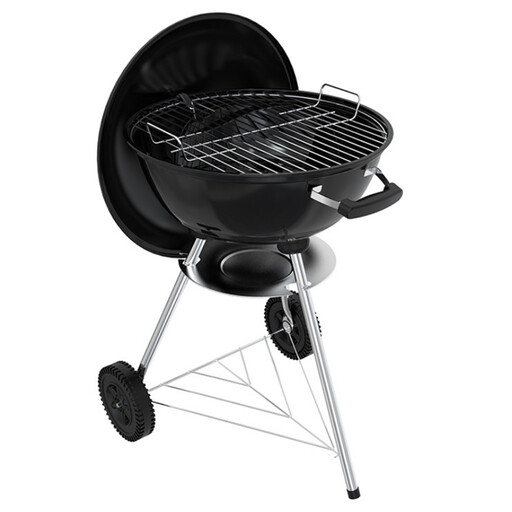
Why it's a good fit: Ideal for quick use in the park or at the beach. Its classic kettle shape and compact size make it a hassle-free companion for one or two people who want to grill without much effort.
The closed kettle design provides better heat retention and distribution than simple, open-top grills, reducing the problem of uneven cooking results.
Very compact packed size and low weight. A proven design for easy handling.
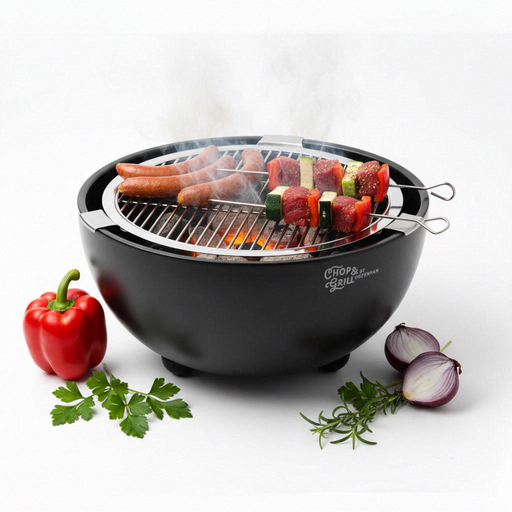
Why it's a good fit: Perfect for use as a balcony grill. Anyone who values quick cleaning, health-conscious materials, and an attractive design will find this a suitable solution. The grilling surface is designed for up to four burgers.
The PFAS-free Thermolon ceramic non-stick coating solves the problem of difficult cleaning. Burnt-on food is effortlessly removed. The solid stainless steel construction prevents instability.
Excellent non-stick properties for effortless cleaning. High-quality and durable materials.

Why it's a good fit: For those who want more from their camping trips or garden parties. With a large grilling surface, practical side shelves, and an integrated rotisserie, this collapsible charcoal grill allows you to cook whole chickens or roasts.
The robust steel construction and foldable legs provide a stable and comfortable working height of 82 cm, avoiding the typical instability and stooping posture required with smaller models.
Integrated rotisserie for versatile grilling options. Large grilling surface (70x35 cm) and side shelves for convenient food prep.
We have compiled a complete, up-to-date list of products that fully meet these strict selection criteria and local safety regulations.
Using a charcoal grill on a balcony is a legal grey area and depends heavily on the building regulations in your tenancy agreement or homeowners' association rules. In many cases, grilling with charcoal is explicitly forbidden due to smoke and fire hazards. Therefore, be sure to check your local rules before buying and using one. Electric or gas grills are often the simpler and safer alternative for balconies.
Efficient cleaning on the go is key. Let the grill cool down completely after use. Remove coarse residue from the grate with a wire brush. The cold ash should be collected in a fireproof container and disposed of properly (never in nature). Then, wipe down the body with a damp cloth. This prepares the grill for transport and its next use.
For good durability and to prevent the metal from warping due to heat, you should look for a material thickness of at least 0.8 mm. Models with 1.0 mm or more offer even greater stability and heat retention but are usually heavier. This thickness is a good compromise between portability and sturdiness.