
Lieferung heute & morgen

Qualitätsgarantie

Willkommens-Angebote freischalten: KOSTENLOSE Lieferung | Bis zu 80 % RABATT | Kostenlose 30-Tage-JoyPlus-Testphase
App herunterladen
A portable DAB+ radio should work reliably when you’re out and about, in the kitchen, in the garden or beside the bed. In practice, however, some typical marketing claims can lead to disappointing purchases. For example, a high number of station presets says little about reception quality. Similarly, a stated battery life usually applies only under certain conditions and does not automatically reflect use at high volume.
This selection by the Joybuy Product Recommendation Officer therefore focuses on clear, verifiable criteria: reception types, power supply, weight, operation, connections and suitability for different everyday needs.
DAB+ uses a digital signal. If the signal is strong enough at your location, playback is generally free from the characteristic hiss associated with analogue stations. However, reception can cut out when the signal is weak. Buildings, basements, densely built-up urban areas and certain rural regions can all affect availability.
A DAB radio with FM is therefore usually the more practical choice in Germany than a model without FM support. FM can serve as a fallback when DAB+ is not available in a particular location.
Manufacturer claims such as ‘up to 12 or 20 hours’ depend on factors including volume, display brightness, reception type and battery condition. Buyers should also distinguish between:
A DAB+ radio with a rechargeable battery is convenient when you’re out and about, while AA batteries can be replaced quickly on longer journeys. A radio with a mains adaptor is particularly suitable for the kitchen or bedroom if it will mainly be used in one place.
A pocket DAB+ radio weighing 65 g is easy to carry, but naturally has a smaller display and more compact buttons. If you want to read station names, the time and alarm functions easily, consider a larger model with an LED display.
Look for the combination of DAB, DAB+ and FM. An automatic station scan makes set-up easier. With the LEMEGA PR1, the supplied wired headphones act as the aerial. Reception performance may therefore be limited if the headphones are not connected.
A telescopic or built-in aerial is practical if you plan to use the radio in different rooms. After buying, it is advisable to run a station scan at the place where you will actually use it, such as the kitchen or bedroom.
Don’t just compare the stated number of hours; also look at the charging or battery solution. A 1,000-mAh battery with a USB-C connection can easily be charged using a mains adaptor, laptop or power bank. If the radio uses AA batteries, check whether they are included. The LEMEGA Class Classic CR9 requires four AA batteries; mains operation with the supplied adaptor is also available.
A lightweight radio for use on the go should not only be compact, but also protected against accidental button presses. A key lock is useful when carrying the radio in a bag or using it while exercising. At the same time, check whether the device is water-resistant. According to the product information, the LEMEGA radios mentioned here are not waterproof and should be protected from moisture.
A 3.5-mm headphone socket enables private listening. Bluetooth is useful if you also want the radio to act as an audio source for a smartphone or compatible speakers. However, bear in mind that not every Bluetooth radio automatically transmits the radio station to wireless headphones.
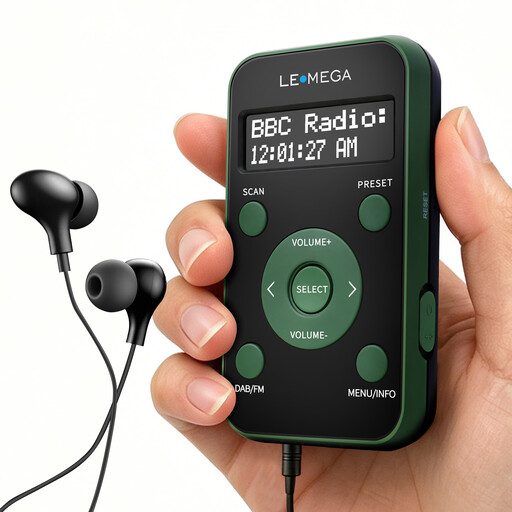
Why this product suits the profile: Measuring 90 × 51 × 16 mm and weighing 65 g, this pocket radio is designed for commutes, walks or sports bags. DAB/DAB+ and FM provide two reception options.
The product information explicitly states that the supplied headphones must be used as the aerial. This makes it easier to set realistic expectations for reception.
Built-in 1,000-mAh battery, USB-C charging, up to 12 hours according to the manufacturer, 40 station presets and a key lock.
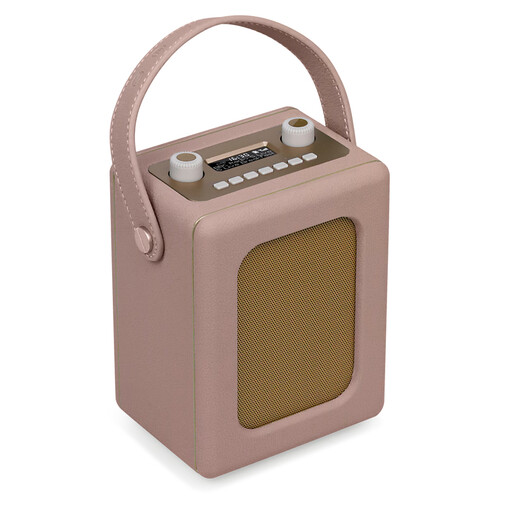
Why this product suits the profile: This larger radio combines DAB+, FM, Bluetooth, a headphone socket and a large LED screen. As a retro DAB+ radio, it fits neatly on a sideboard, in the kitchen or beside the bed.
The power options are clearly separated: mains operation is available, while four AA batteries are required for portable use. No built-in battery is assumed.
Up to 20 hours of battery operation according to the manufacturer, 60 station presets, two alarm times, snooze function and sleep timer.

Why this product suits the profile: For users who want to combine radio, smartphone audio and phone calls, this Bluetooth headset offers both wired and wireless use.
The specifications distinguish between 40 hours of playback with noise cancellation and 55 hours without this function. This avoids presenting battery life as a blanket figure.
Bluetooth, USB-C charging port, 40-mm drivers and stated battery life of 40 or 55 hours.
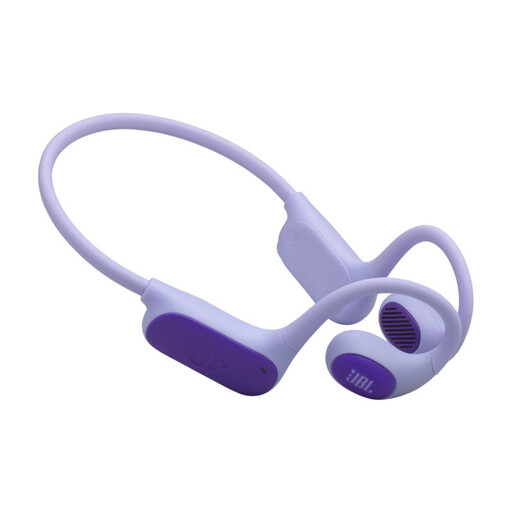
Why this product suits the profile: The open-ear design allows you to remain aware of surrounding sounds, while Bluetooth connects to a compatible device. For children, parental controls are an important consideration.
The manufacturer states that the volume is limited to 85 dB and that the app includes volume, time and PIN settings. Use should still be supervised.
Weight of 23 g, up to 10 hours of battery life according to the manufacturer, USB-C charging and built-in volume and playback controls.
We have put together a complete, regularly updated list of products that fully meet these strict selection criteria and the safety regulations applicable in the EU.
With a model that uses the headphones as an aerial, connect the supplied headphones first. Then start the automatic station scan. Save frequently used stations as presets and repeat the scan if you use the radio in a different location.
This depends on the battery or battery type, volume, display and reception type. The manufacturer’s ‘up to’ figure is a guideline. A built-in battery can be conveniently charged via USB-C, while AA batteries can be replaced immediately when their power starts to run low.
When running on battery power, consumption mainly depends on volume and operating time. In mains mode, the energy requirements of the specific model are what matter. If you want to reduce ongoing battery costs, choose a rechargeable model or suitable rechargeable AA batteries, provided these are permitted according to the instruction manual.