
Lieferung heute & morgen

Qualitätsgarantie

Willkommens-Angebote freischalten: KOSTENLOSE Lieferung | Bis zu 80 % RABATT | Kostenlose 30-Tage-JoyPlus-Testphase
App herunterladen
A portable electric air pump can save you time when you’re out and about – whether you’re topping up your car tyres, out on a bike ride, camping or inflating a ball. However, models vary considerably in their power supply, pressure, ease of use and running time. A compact design alone tells you little about whether a pump is right for your vehicle or leisure equipment.
Before you buy, it’s worth knowing the common marketing pitfalls and checking the technical specifications against what you actually need it for.
A maximum pressure of 150 or 160 PSI, for example, may sound impressive at first. But when it comes to car tyres, maximum pressure isn’t the only thing that matters. Airflow, hose connection and inflation time are important too. Even a mini compressor with a high pressure rating may take several minutes to inflate a completely flat tyre.
A compact model is usually enough for occasional top-ups. If you want to inflate several tyres in a row, you should also check the running time and whether it has overheat protection.
A cordless air pump doesn’t need a socket or cable, but its battery must be charged. If you leave it in your car for a long time, temperature changes and self-discharge can reduce the available capacity. A corded electric tyre inflator with a 12 V connection, on the other hand, can be powered directly from your vehicle.
So consider whether you value maximum flexibility when you’re out and about, or prefer a power source that’s always available.
Car tyres typically use Schrader valves, while bicycles often use Presta or Dunlop valves, depending on the model. Balls and airbeds need their own adapters. A digital air pump without the right adapter is therefore limited in its versatility.
Check how many nozzles are included and what types they are. For an airbed pump, high airflow is more important than very high pressure.
A cordless air pump is suitable for bicycles, motorbikes, camping and minor top-ups to car tyres. For longer jobs, make sure the battery capacity is suitable for the task. A USB-C port makes it easier to recharge in your vehicle, from a power bank or using a mains adaptor.
A 12 V tyre inflator plugs directly into your vehicle’s power socket. This avoids charging breaks, but the cable needs to reach each tyre. Check the cable length, connector type and the load capacity of your vehicle’s socket.
The pressure range should suit the items you plan to inflate. Typical car tyre pressures are often around 29 to 51 PSI, depending on the vehicle and its load. Always follow the tyre pressure recommended by the vehicle manufacturer – not the maximum value shown on the tyre sidewall.
Preset modes for cars, motorbikes, bicycles and balls can be useful. Automatic shut-off reduces the risk of exceeding your target pressure. If the pump has a digital display, choose a unit you’re comfortable with, such as PSI, bar or kPa.
High airflow is important for airbeds, inflatable boats and other large inflatables. An airbed pump therefore works differently from a high-pressure tyre compressor. Check whether the pump is designed to inflate, deflate or do both.
For tyre inflators, details such as airflow rate, inflation time and permitted running time are more useful than vague advertising claims. If necessary, let a portable compressor cool down between tyres, and follow the instructions.
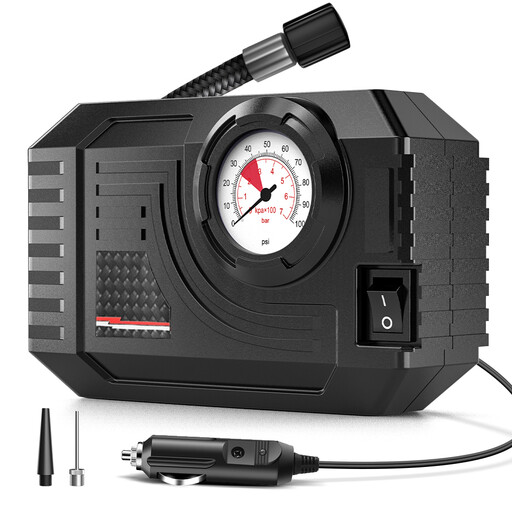
Why this product suits you: Its corded design is intended for car, motorbike and bicycle owners who want a straightforward solution without having to worry about battery charge levels.
Powering it via a cable removes battery charge as a potential problem. Check the cable length before buying.
Portable design, and specified for car, motorbike and bicycle tyres according to the product description.
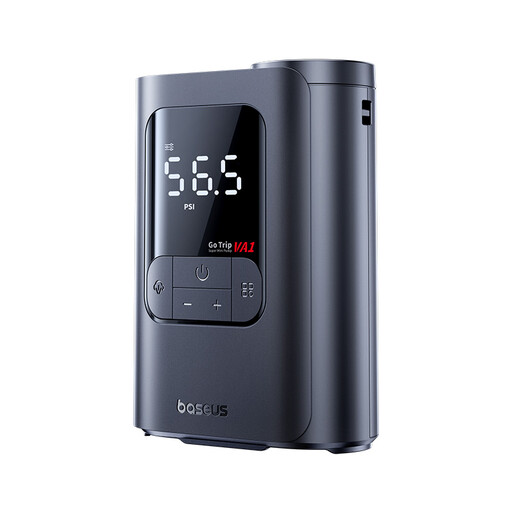
Why this product suits you: This model combines battery power and digital controls with several preset modes for different vehicles and leisure uses.
The five inflation modes and stated pressure accuracy of ±0,05 bar make it easier to choose the right target pressure.
2500 mAh battery, USB-C input, air hose and three nozzles, according to the product specifications.
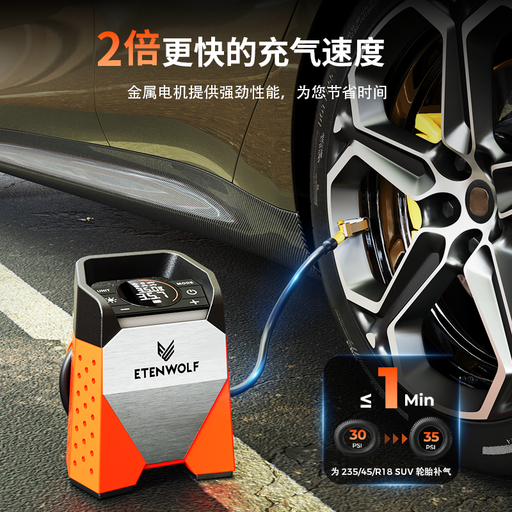
Why this product suits you: This cordless tyre inflator is aimed at users who regularly inflate car, SUV, bicycle or ball tyres.
As well as a maximum pressure of 160 PSI, the product specifications list a battery, air hose and various adapters. Its stated noise level is 78 dB.
Lithium-ion battery, 132 watts of maximum power and accessories for Presta valves and balls, according to the product description.
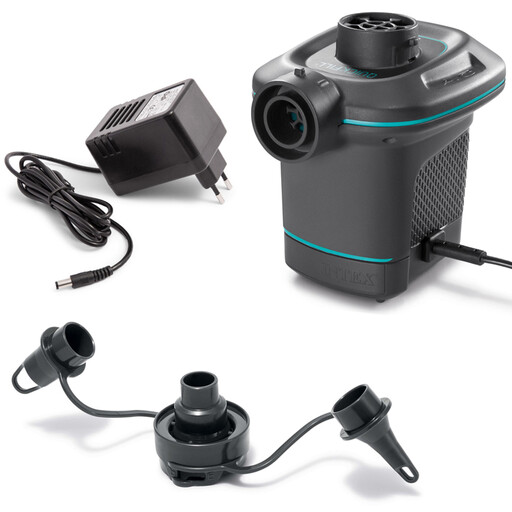
Why this product suits you: For airbeds and other large inflatables when camping or in the garden, high airflow matters more than a tyre-style high-pressure rating.
The stated airflow of at least 420 l/min is suited to its intended use. This pump should not be considered a replacement for a tyre compressor.
Three nozzles, a compact design and operation with six C batteries; batteries are not included, according to the product specifications.
Before inflating, check the recommended pressure for your vehicle, in your bicycle’s manual or on the item itself. For car tyres, it’s generally best to check the pressure when the tyres are cold, as it changes while you drive.
Also check that:
Store your portable electric air pump somewhere dry and clean, away from excessive heat. Stop using it if you notice any damage to the cable, hose or casing.
We’ve put together a complete, regularly updated list of products that meet these strict selection criteria and fully comply with the safety regulations in force in the EU.
For car, motorbike and bicycle tyres, the pump’s pressure range only needs to cover the pressure recommended by the manufacturer. A high maximum pressure isn’t automatically necessary. A clear display and automatic shut-off are more important.
Battery life depends on capacity, tyre pressure, outside temperature and how many times you use the pump. Check the manufacturer’s stated running time and fully charge the pump before longer journeys. If you regularly need to inflate several tyres, a corded 12 V tyre pump may be more practical.
Only models with a suitable nozzle and high airflow are designed for this. A high-pressure mini compressor for tyres may not inflate an airbed efficiently. Conversely, a pump designed solely for airbeds is generally unsuitable for vehicle tyres.