
Lieferung heute & morgen

Qualitätsgarantie

Willkommens-Angebote freischalten: KOSTENLOSE Lieferung | Bis zu 80 % RABATT | Kostenlose 30-Tage-JoyPlus-Testphase
App herunterladen
A portable electric espresso machine can brew fresh espresso on the go without needing a traditional espresso machine or a mains socket. But not every compact device suits every situation. If you only focus on specs like "20 bar" or "22 bar", you often miss important details about the battery, water tank, capsule compatibility and cleaning.
An espresso machine with 20 bar or espresso machine with 22 bar sounds powerful at first. However, pump pressure alone tells you very little about the final result. Water temperature, even extraction, filter design and the amount of coffee used are also crucial. A high bar rating therefore doesn't replace clear information about heating time and operation.
Many manufacturers state the battery capacity in milliampere-hours. What's more important in practice is how many brews you can make with cold water. Heating up requires significantly more energy than brewing with already hot water. Buyers should therefore check whether the stated figure applies to cold water, pre-heated water or mixed use.
"Capsule compatible" doesn't automatically mean every capsule can be used. Some models only accept Nespresso Original capsules. Dolce Gusto capsules or other systems may not fit. If you prefer to stay flexible, you should choose an espresso machine for ground coffee with a suitable filter basket.
For commuters and drivers, USB-C is particularly practical. Check whether a suitable mains adapter, power bank or 12-volt or 24-volt car charger can be used. For devices with an integrated battery, the number of brews per charge should be explicitly stated for your intended use.
A battery-powered espresso machine with self-heating is more independent on the go, but requires more energy. If you fill it with hot water from a thermos flask, the usable time per charge increases significantly.
A self-heating espresso machine with cold water typically takes a few minutes. For morning use in the car or office, a clear indication of heating time is therefore relevant. Equally important is the size of the water tank: 50 to 80 millilitres corresponds more to an espresso than a large cup of coffee.
Look for an easily readable fill mark and check whether the device can also be used with pre-heated water. This can save time and battery power when camping or on longer journeys.
For a travel espresso machine, every extra gram counts. Devices around 670 to 700 grams are relatively easy to carry in a rucksack or work bag. Larger models sometimes offer more convenience, but are less handy for short commutes.
For outdoor use, ratings like IP67 are relevant. This protection rating describes resistance to dust and temporary immersion under the specified test conditions. It does not mean the device can be operated permanently underwater. Electrical components should never be deliberately immersed, in accordance with the instruction manual.
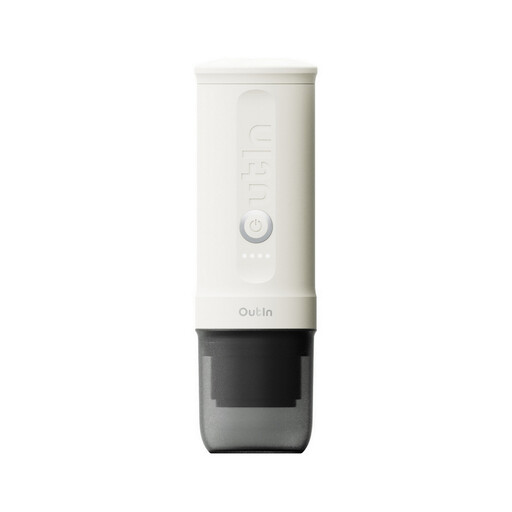
Why this product suits the profile: This compact model combines an integrated battery with the use of ground coffee and Nespresso Original capsules. It's ideal for short trips, the office and occasional outings.
Compatibility is specifically stated for Nespresso Original and ground coffee. The manufacturer also states up to five brews when heating cold water.
20-bar pump, approximately 200 seconds heating time and around 670 grams weight. USB-C charging is supported with suitable chargers from 10 watts.
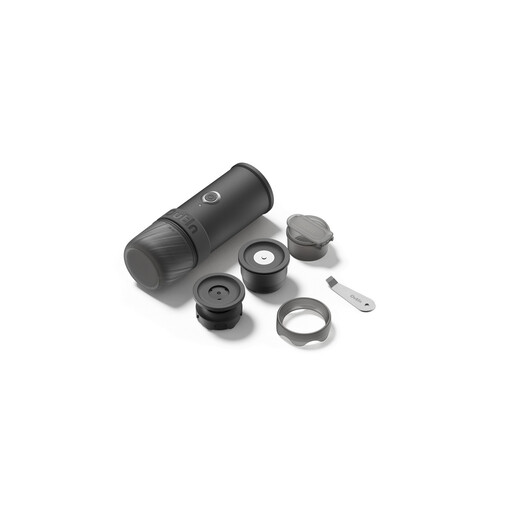
Why this product suits the profile: The Mino is aimed at users who prefer concrete details about temperature control, protection rating and charging time in a portable electric espresso machine.
Alongside the stated up to 22 bar, it specifies 93.3 °C, approximately 149 seconds heating time and PID temperature control. This makes technical assessment easier.
70-millilitre water tank, up to six espresso brews with cold water per charge and IP67 protection rating. The device weighs 685 grams.
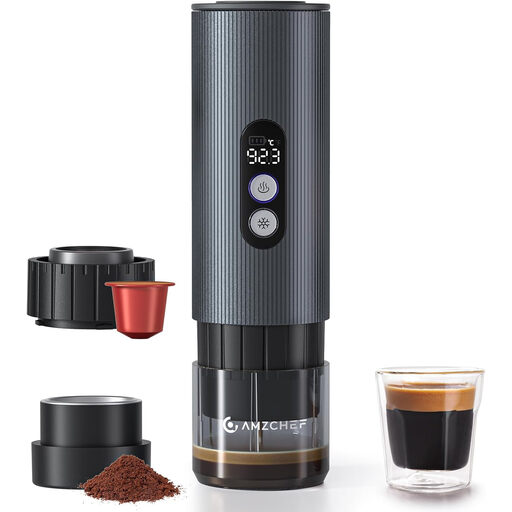
Why this product suits the profile: This model is designed for camping, road trips, the office and motorhomes, offering a larger 9000 mAh battery capacity for multiple brews.
The specifications distinguish between cold and hot water. NS capsules and up to 12 grams of ground coffee are also described as separate options.
20-bar pump, 80-millilitre water tank and touch operation with display. According to product specifications, six to seven espresso brews are possible with cold water.
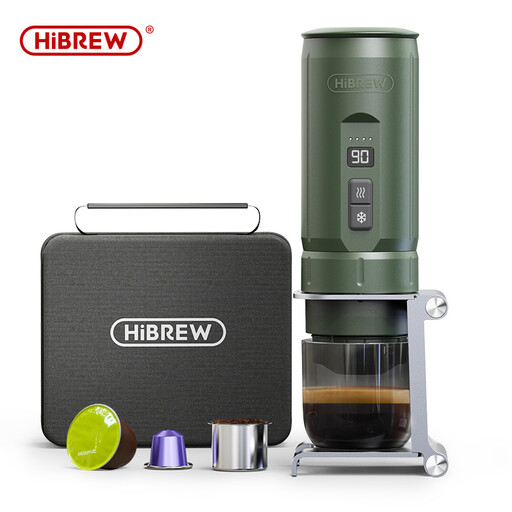
Why this product suits the profile: The H4C is interesting for users who brew regularly on the go and value a removable battery along with multiple fill markings.
The markings for 50, 75 and 100 millilitres help with dosing. According to the product description, the battery is replaceable; only suitable original batteries should be used for this.
20-bar pump, 7500 mAh battery and programmable temperature and brewing functions. At around 1.5 kilograms, the device is heavier than many cylindrical travel models.
We've put together a complete, regularly updated list of products that fully meet these strict selection criteria and the safety regulations in force in the EU.
Before the first brew, fill the water tank to the mark and close the filter correctly. For capsule machines, pay attention to the permitted capsule range. After each use, remove coffee grounds and rinse the water-carrying parts according to the manufacturer's instructions.
Ongoing costs include ground coffee or capsules, water, electricity for charging and, if necessary, replacement filters or a replacement battery. Ground coffee usually offers more choice in terms of roast and dosing. Capsules simplify preparation but can limit your selection to a specific system.
Yes, provided the model is designed for mobile use. Devices with a USB-C port can be charged via a suitable car charger, depending on the manufacturer's instructions. The machine should not be operated while driving. Place it on a stable, level surface for brewing.
The usable time depends on battery capacity, water temperature and the heating process. With cold water, around five to seven espresso brews are stated, depending on the model. With pre-heated water, significantly more brews are possible because the battery has to provide less heating power.
No. Pump pressure is just one technical parameter. Temperature control, coffee amount, filter, water quality and operation also influence the brewing process. Always compare the full data sheet, not just the bar rating.