
Lieferung heute & morgen

Qualitätsgarantie

Willkommens-Angebote freischalten: KOSTENLOSE Lieferung | Bis zu 80 % RABATT | Kostenlose 30-Tage-JoyPlus-Testphase
App herunterladen
When central heating isn't enough, or a single room needs to be warmed up quickly and precisely, a portable electric heater offers a flexible solution. Whether in a home office, bedroom, or workshop, these devices deliver heat exactly where it's needed. But the market is diverse: from quiet oil-filled radiators to fast-heating ceramic fan heaters, there's a model to suit every need.
This guide will help you understand the different technologies and features. We'll present objective criteria relevant to your selection and showcase a range of devices to make your decision easier.
To find the right electric heating device, three aspects are particularly important: the heating technology, the power in relation to energy efficiency, and the safety features.
Portable electric heaters use various technologies to generate heat. Each has specific advantages and disadvantages:
The power of an electric heater is measured in watts (W). As a rule of thumb, you need about 80–100 watts of power per square metre of space to be heated. A device with 1500W is therefore well-suited for rooms up to approx. 15 m², while a model with 2000W can also effectively heat larger rooms up to 20 m².
For an energy-efficient supplemental heater, the following features are crucial:
A safe heater is paramount. Look for certified safety features that should be standard on modern devices:
A heater with a remote control offers additional convenience, allowing for easy operation from your sofa or desk.
Here is a selection of devices that cover a range of needs. The descriptions are based on manufacturer specifications and are intended to provide an objective basis for your decision.
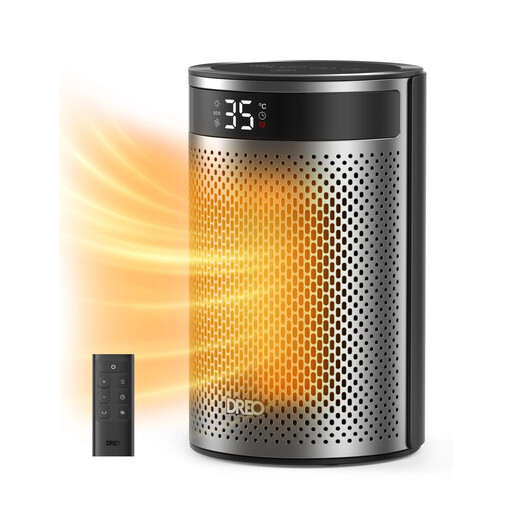
Why it stands out: The DREO Atom 416 is a compact ceramic fan heater that, according to the manufacturer, delivers heat within 2 seconds thanks to its Hyperamics technology. Its brushless DC motor ensures quiet operation, making it particularly appealing for noise-sensitive environments.
Advantages:
Who is it for? Ideal for individuals seeking a fast and quiet heat source for their home office, bedroom, or a small living area. Its compact size and low weight make it highly portable.
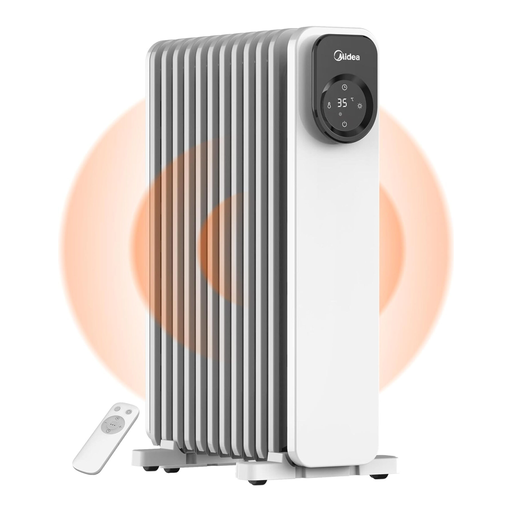
Why it stands out: This oil-filled radiator with a thermostat from Midea delivers constant and long-lasting radiant heat with 2000W of power. It operates completely silently and continues to emit heat even after being turned off. It can be conveniently controlled via an LED touch panel or the included remote control.
Advantages:
Who is it for? A great choice for heating medium-sized electric heaters for living rooms or bedrooms where a silent and steady source of heat is desired over extended periods.
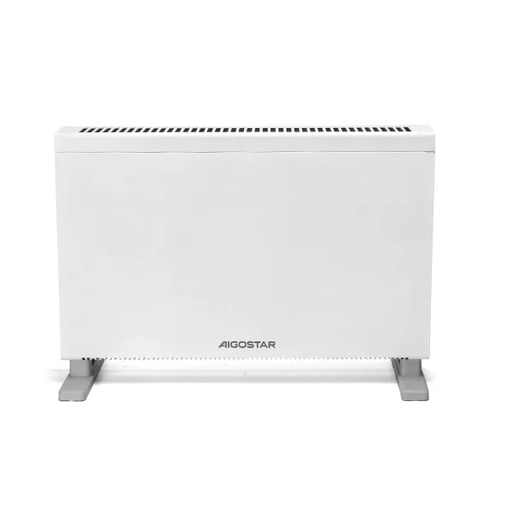
Why it stands out: The Aigostar convector heater uses natural air circulation to quietly and efficiently heat rooms up to 25 m². With two power levels (1250W/2000W), a 24-hour timer, and a remote control, it can be flexibly adapted to individual heating needs.
Advantages:
Who is it for? A versatile device for medium-sized living rooms, offices, or hobby rooms that provides quiet and even heat distribution without fan noise.
The models presented here already cover many use cases. If you haven't found the right device for your specific needs, you may find a suitable alternative in our broader selection.
️ Discover more electric heaters here
Power consumption depends directly on the wattage and the duration of use. A 2000-watt (2 kW) heater running continuously at its highest setting for one hour will use 2 kilowatt-hours (kWh) of electricity. An integrated thermostat significantly reduces consumption, as the device only turns on when the room temperature drops below the desired level.
That depends on the application. A fan heater is ideal if a room needs to be warmed up quickly for a short period. An oil-filled radiator is the better choice for long-lasting, even, and silent heat over several hours, for example, in a bedroom.
Yes, modern devices with reliable safety features like overheat protection, tip-over protection, and a thermostat can generally be operated safely overnight. A timer function offers additional control by automatically switching the device off after a preset time. Always follow the manufacturer's safety instructions in the user manual.