
Lieferung heute & morgen

Qualitätsgarantie

Willkommens-Angebote freischalten: KOSTENLOSE Lieferung | Bis zu 80 % RABATT | Kostenlose 30-Tage-JoyPlus-Testphase
App herunterladen
A portable electric espresso machine should make espresso quickly and simply on the go. In practice, however, models differ significantly in heating time, power supply, water tank, capsule compatibility and cleaning. If you only focus on a high bar rating or a large battery capacity, you could end up buying a device that doesn’t suit your actual use case.
This buying guide from the Joybuy Product Recommendation Officer shows which specifications really matter and which common marketing pitfalls to avoid with a mobile coffee machine.
Figures like 15 bar, 20 bar or 22 bar sound impressive at first. However, pump pressure alone doesn’t determine the result in your cup. Just as important are water temperature, dosage, grind size and the design of the filter. So a 20-bar espresso machine isn’t automatically better suited to every user than a model with a lower rating.
Also, check whether the manufacturer mentions “up to” a certain pressure. This wording describes a maximum value, not necessarily the consistent pressure during every extraction.
A self-heating espresso machine heats the water using a built-in heating element. That’s handy when you don’t have a kettle on the go, but it requires energy and time. Depending on the device, heating cold water can take several minutes.
Some models brew much faster with pre-heated water. If you’ll mainly use your espresso machine for on-the-go in the office or a hotel, you can take advantage of this feature. When camping or on a road trip, though, the actual heating time with cold water is what matters.
A large milliamp-hour rating doesn’t automatically mean lots of hot espressos. Heating water requires significantly more energy than just pumping. So you should always read the stated number of portions together with the condition: does it apply to cold water or already hot water?
The charging port also matters. A USB-C coffee machine can be especially flexible if it can be charged with a suitable power adapter, a power bank, or a 12- or 24-volt car adapter. Check the required input power before using any existing accessories.
Portable devices usually work with small amounts of water. For an espresso, typical brew volumes range from about 50 to 80 millilitres. This saves weight but limits the drink size. A 70 ml tank is fine for a single portion; for several people you’ll need to refill.
A larger tank, like the AMZCHEF model with a maximum of 80 ml, offers a bit more leeway, but it doesn’t replace a classic coffee machine with a large reservoir.
Always compare:
According to product specifications, the OutIn Mino reaches about 93.3 °C in roughly 149 seconds. The OutIn Nano takes around 200 seconds to reach about 92 °C, according to the manufacturer. These values are based on product data and may vary depending on starting temperature, environment and charge level.
With an espresso machine for capsules and ground coffee, you need to check the exact capsule series. “Nespresso-compatible” doesn’t automatically mean support for Dolce Gusto capsules. According to the product description, the OutIn Mino and Nano models are designed for Nespresso Original as well as ground coffee.
For regular use, removable filters, an easily accessible brewing chamber and clear cleaning instructions are a good idea. Coffee grounds should be removed after every use. Electrical base parts must not be submerged in water.
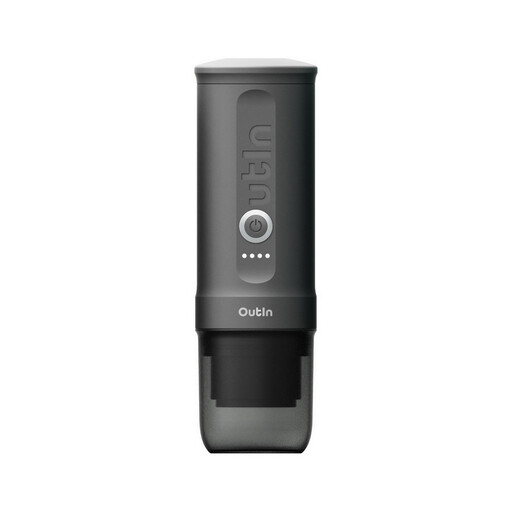
Why this product fits the profile: This compact device combines battery operation, self-heating and the ability to use ground coffee and Nespresso Original capsules. That makes it ideal for commuters, small offices and occasional travel.
The product specifications mention both use with cold and pre-heated water. Capsule compatibility is also limited to Nespresso Original, rather than suggesting vague universal compatibility.
20-bar pump, USB-C charging option, 50–80 ml brew volume and up to around five portions when heating cold water.
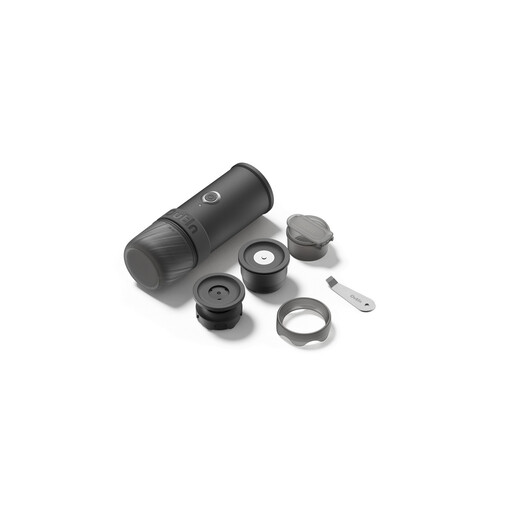
Why this product fits the profile: The combination of PID temperature control, a 22-bar pump and an IP67 rating appeals to users who compare technical specs carefully for office, travel and outdoor use.
Alongside pressure, the temperature control, heating time and protection rating are stated. The IP67 rating refers to water and dust protection; it doesn’t replace the safety instructions about not submerging the main unit.
22-bar pump, PID temperature control, USB-C charging and up to six espressos per charge when using cold water, according to product specifications.
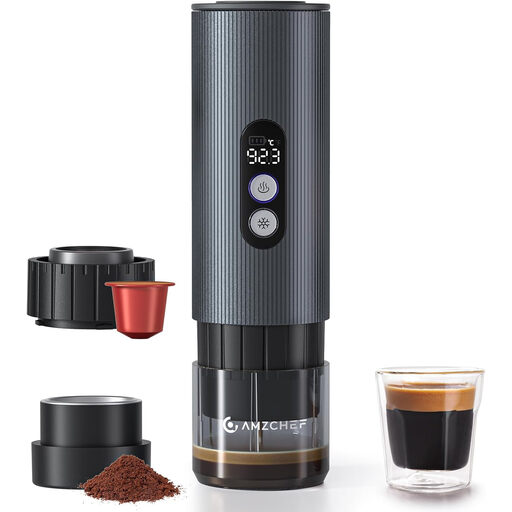
Why this product fits the profile: For road trips, camping, motorhomes and longer stays, the combination of a 9000 mAh battery, 80 ml tank and two coffee formats could be of interest.
The product description distinguishes between hot and cold preparation, as well as between espresso and larger drinks. For your buying decision, the stated quantities should be understood as manufacturer specifications, not as a blanket expectation for everyday use.
20-bar pump, support for NS capsules and up to 12 g of ground coffee, touch operation and display for temperature and battery level.
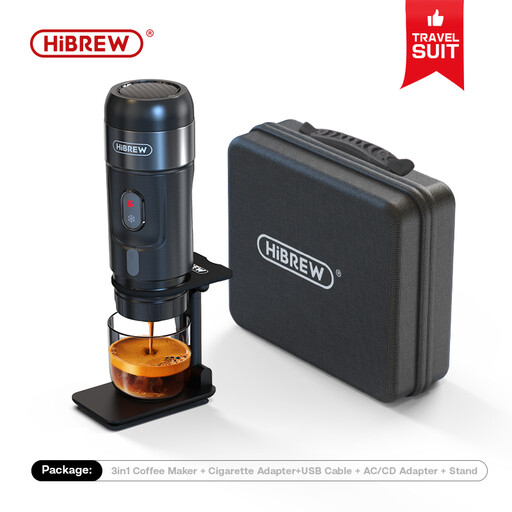
Why this product fits the profile: This model is designed for a 12-volt power supply and can therefore serve as a car coffee machine for journeys, breaks or the campsite.
The power supply, water tank size and supported coffee formats are clearly stated. Before buying, however, you should still check whether your vehicle’s 12-volt socket can deliver the required power.
12-volt operation, 60 ml water tank, support for NS and DG espresso capsules as well as ground coffee; the product specification states 15 bar pump pressure.
We’ve put together a complete, regularly updated list of products that fully meet these strict selection criteria and the safety regulations in force in the EU.
The runtime depends on whether cold water needs to be heated. For the OutIn Nano, up to around five portions with cold water are stated according to product specifications, and for the OutIn Mino up to six. With pre-heated water, more extractions are possible because the battery has to supply less heating energy. The actual number can be affected by water temperature, charge level and environment.
Yes, provided the model is designed for the available socket. A 12-volt car coffee machine needs a suitable vehicle connection and sufficient power. USB-C models can also be charged in the car if a compatible adapter is used. Brewing should only be done when the machine is safely positioned and not while driving.
Models with a built-in battery and self-heating are practical for camping and outdoor use because no separate kettle is required. Before buying, check the protection rating, battery reserve, charging option and cleaning. On flights, a battery-operated device must not be operated according to product specifications; for transport, the respective rules of the airline and the battery apply.