
Lieferung heute & morgen

Qualitätsgarantie

Willkommens-Angebote freischalten: KOSTENLOSE Lieferung | Bis zu 80 % RABATT | Kostenlose 30-Tage-JoyPlus-Testphase
App herunterladen
A portable espresso machine is designed to make coffee without relying on a plug socket, a kitchen or a stationary coffee machine. But not every compact device suits every lifestyle. Commuters need different features from campers, van-lifers or people who only occasionally drink espresso at the office.
Figures like 20 bar or 22 bar look convincing at first glance. However, pump pressure alone doesn’t describe how evenly the water is forced through the coffee grounds or the capsule. Just as important are temperature control, the filter holder, water volume and the build quality of the brewing unit.
An espresso machine with 20 bar pressure can be a sensible choice for travel, provided the other components are well matched. But the bar rating shouldn’t be your only deciding factor.
The number of cups you can expect depends heavily on whether cold water needs to be heated. When brewing with already-hot water, the machine uses significantly less energy than during a full heating cycle. Claims like “up to six espressos” should therefore be understood only under the manufacturer’s specific test conditions.
Before you buy, check:
“Capsule-compatible” doesn’t automatically mean every capsule will fit. Some machines are designed for Nespresso Original capsules, while Dolce Gusto capsules or other systems aren’t supported. If you prefer to use freshly ground coffee, you should also check for a suitable filter basket and the maximum fill quantity.
An electric portable espresso machine with a built-in heater is more independent than a model that only works with pre-heated water. However, it requires more battery power and usually a few minutes of preparation time.
For a single espresso, the recommended water volumes for the machines considered here are roughly between 50 and 80 millilitres. That’s enough for a classic small shot, but it’s not the same as a large cup of coffee. If you need to serve several people, take into account the number of brews per battery charge and the recharging time.
A battery-powered espresso machine should be chargeable from a power source you have access to in daily life. USB-C is practical for the office, home working and travel luggage. For the car, what matters is whether a suitable 12-volt or 24-volt adapter can be used and what minimum power output is required.
The machine shouldn’t be operated loose while the vehicle is moving. Place the portable coffee maker on a stable, level surface and follow the instructions regarding hot liquids and pressure.
Coffee residue and milk deposits can build up in the filter and brewing chamber. Removable parts make cleaning easier. Stainless steel water tanks or food-grade components can be verified in the product specifications; vague claims about improved taste, on the other hand, aren’t factually justified.
A stated ingress protection rating like IP67 describes protection against dust and temporary immersion under defined test conditions. It doesn’t mean the entire device can be operated underwater permanently. The main electrical unit must not be deliberately submerged.
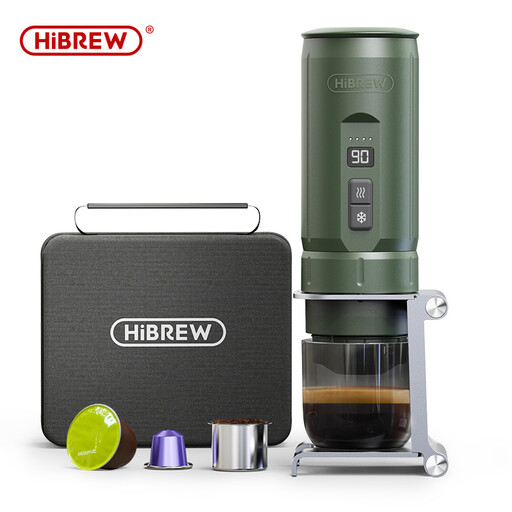
Why this product fits the profile: The H4C offers multiple water markings and a replaceable battery. That’s handy for users who want straightforward operation and a longer-lasting design.
The markings at 50, 75 and 100 ml help you fill the water in a controlled way. The product specs also mention 20 bar pump pressure and a battery system that can be swapped out.
120 W power, stainless steel water tank and digital display for temperature and brew time according to the product description.
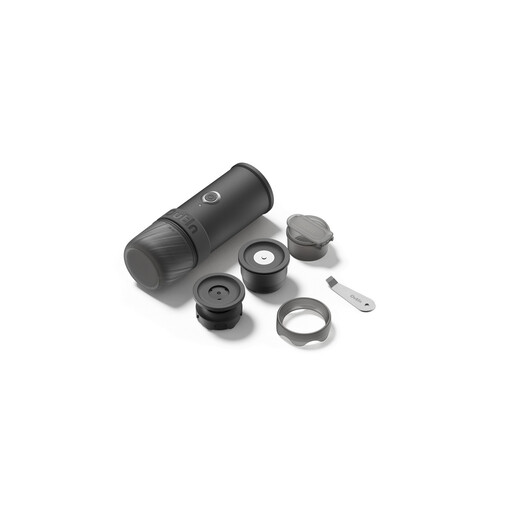
Why this product fits the profile: For commuters and travellers looking for a self-heating travel espresso machine with clearly defined technical specs, this model offers a compact feature set.
The specs distinguish between use with cold and pre-warmed water. Capsule compatibility is also clearly limited to Nespresso Original.
22 bar pump system, PID temperature control, USB-C charging and IP67 ingress protection according to the product specs.
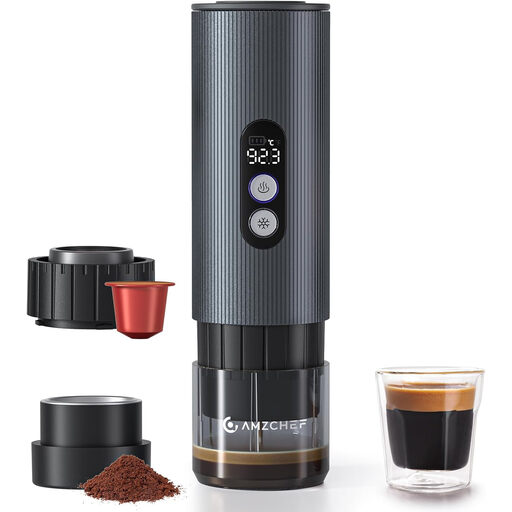
Why this product fits the profile: This machine is aimed at campers, van-lifers and people who want to switch between capsules and ground coffee.
The 2-in-1 design makes the supported coffee system clear: NS capsules and up to 12 g of coffee powder. The water volume is limited to a maximum of 80 ml.
20 bar pump pressure, 9000 mAh battery, touch controls and stainless steel water tank according to the product data.
We’ve put together a full, regularly updated list of products that fully meet these strict selection criteria and the safety regulations in force in the EU.
For an espresso machine for the car and office, we recommend a fixed routine:
When camping, make sure you have enough drinking water available. A self-heating machine saves you needing a separate kettle, but it uses more battery capacity when heating from cold.
The run time depends on the battery capacity, water temperature and number of brews. With pre-warmed water, you can usually get more extractions than when repeatedly heating cold water. The manufacturer’s specific figures should be taken as a guide, not as a guaranteed real-world performance.
Many USB-C models can be charged via a suitable car adapter. What matters is the minimum power output required and compatibility with 12-volt or 24-volt sockets. The machine shouldn’t be operated while the vehicle is moving, as hot water and pressure pose a safety risk.
No. For the machines listed here, compatibility is stated as Nespresso Original. Dolce Gusto capsules, for example, aren’t supported on the OutIn models mentioned. Before you buy, check the system name, capsule size and any supplied adapter.