
Lieferung heute & morgen

Qualitätsgarantie

Willkommens-Angebote freischalten: KOSTENLOSE Lieferung | Bis zu 80 % RABATT | Kostenlose 30-Tage-JoyPlus-Testphase
App herunterladen
By the Joybuy Product Recommendation Officer, August 28, 2026
When temperatures rise, a portable fan promises quick and easy cooling—whether in the office, at home, or on the go. But the market is flooded with devices whose real-world performance often falls short of their marketing claims. Before you make a purchase, it helps to understand the typical weaknesses that can quickly turn a supposed lifesaver into a useless gadget.
This guide will show you what to look for to avoid a bad purchase and find a device that truly meets your needs.
Many devices look promising at first glance but prove impractical in daily use. Pay close attention to these three points to avoid disappointment:
To avoid the pitfalls mentioned above, you should check three core technical aspects before buying. These will give you an objective basis for your decision, beyond marketing claims.
The most important metric for a battery-powered fan is its capacity, measured in milliampere-hours (mAh). A higher mAh value generally means a longer runtime.
Also, check the charging options. A USB fan with a modern USB-C port can usually be charged faster and more conveniently than models with an outdated Micro-USB port.
An effective fan doesn't have to be loud. Performance is often specified in cubic metres per minute (m?/min) or as maximum air speed (m/s). At the same time, the noise level in decibels (dB) is a crucial factor.
The fan's form factor determines where and how you can best use it.
Based on the criteria above, we have identified a few models that represent a smart choice for specific user profiles and use cases.
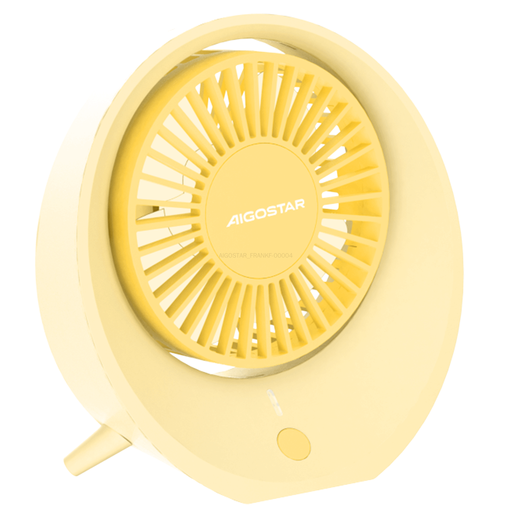
Why It's a Good Fit: Ideal for users looking for a simple and functional solution for their desk or nightstand without breaking the bank. The device focuses on core functions and provides reliable cooling for your personal space.
This model avoids the unstable design pitfall with its solid base. It doesn't promise exaggerated airflow but delivers a gentle, quiet breeze designed for close-range use, thus avoiding the noise trap.
Compact design for the desk; USB-rechargeable for flexible power options; 3 speed settings for customisation.
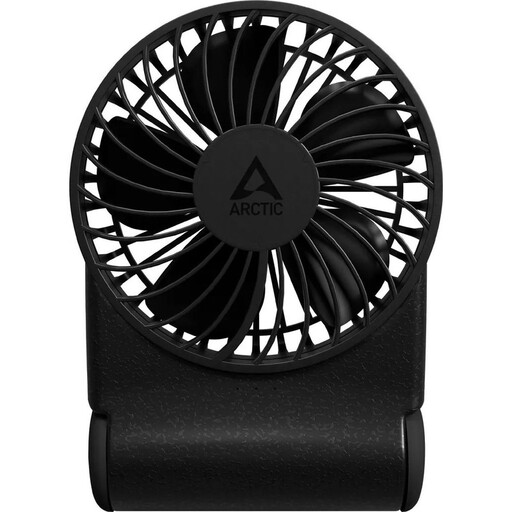
Why It's a Good Fit: Perfect for commuters, travellers, and outdoor enthusiasts who need long battery life and a strong airflow. This device is designed for intensive mobile use.
It directly addresses the "battery bluff" with a 5000 mAh capacity and a manufacturer-stated runtime of up to 77 hours. The variable speed control up to 4300 RPM avoids the weak airflow pitfall.
Very high battery capacity; stepless speed adjustment; flexible tilt angle (up to 260°); can be used as a handheld or desk fan.
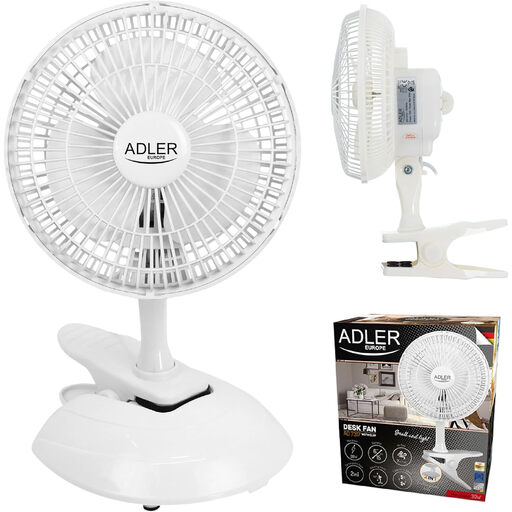
Why It's a Good Fit: For anyone who needs a space-saving and flexible cooling solution in the office or at home. The combination of a stand and a clip allows it to be mounted at almost any workstation.
This model solves the problem of unstable construction and lack of space with its dual design. With a stated noise level of 46 dB, it is designed for office environments, thus avoiding the noise trap of many powerful but loud devices.
Sturdy clip and stand for maximum flexibility; adjustable tilt angle; two speed settings for different needs.
We have compiled a complete, up-to-date list of products that fully meet these strict selection criteria and German safety regulations.
The actual battery life depends heavily on the selected speed setting and the battery capacity (mAh). The maximum runtime stated by the manufacturer is almost always achieved on the lowest setting. For a realistic estimate, you should use the runtime at a medium setting as a reference, which is often only 25–50% of the maximum stated time. Models with over 4000 mAh typically offer enough power for a 6- to 8-hour workday.
A portable fan creates a cooling effect on the skin through air circulation. However, it does not lower the actual room temperature. A so-called mini air conditioner or air cooler also uses water evaporation (adiabatic cooling) to cool the passing air by a few degrees. This effect is noticeable in dry environments but increases humidity and is not comparable to the performance of a real compressor-based air conditioner.
For devices from established manufacturers that have safety certifications (e.g., CE), continuous operation is generally safe. Ensure the fan is stable and that no loose objects like papers or curtains can get into the rotor blades. It is advisable to choose models with a brushless motor, as they are designed for a longer lifespan and lower energy consumption.