
Lieferung heute & morgen

Qualitätsgarantie

Willkommens-Angebote freischalten: KOSTENLOSE Lieferung | Bis zu 80 % RABATT | Kostenlose 30-Tage-JoyPlus-Testphase
App herunterladen
A portable gas hob needs to work reliably on the go, take up little space and be compatible with the fuel you use. Even so, some marketing claims often lead to poor purchases: a high wattage doesn’t automatically mean shorter cooking times, a low weight can come with less stability, and the stated burn time depends heavily on the cartridge, flame level and outside temperature.
This buying guide shows which specifications actually matter and which camping stove, camping gas hob or outdoor gas hob suits different usage scenarios.
The power of a gas hob is usually given in watts. A model with 3,240 W can heat water faster than one with 1,220 W, but it generally uses more gas on a full flame. For a coffee or a simple meal, a lower power output is often sufficient. If you need to heat larger pans or cook for several people, you should also pay attention to the pan support, wind protection and flame control.
An ultralight gas hob weighing 26 g is appealing to backpackers who count every gram. However, such devices often require a compatible pan and a suitable gas cartridge. A very small burner frame also offers less support surface than a wider camping stove. For families, larger pans or uneven ground, a slightly heavier model can be the more practical choice.
Not every portable gas hob works with every cartridge. Specifications like EN 417, 7/16 thread, butane or a propane-butane mixture describe different connection and fuel options. Adapters are not always included either. So before you buy, you should be clear about:
For occasional heating and small meals, around 1,200 to 1,500 W can be enough. Models with up to 3,240 W are better suited for fast cooking and larger portions. A continuously variable or finely adjustable flame is especially important for gentle heating, simmering or delicate foods.
An integrated camping stove piezo ignition makes lighting easier, but it doesn’t replace a safety check. Before each use, you should inspect the valve, seals and connections for visible damage and possible leaks.
When trekking, weight and pack size matter. A trekking stove with folding legs can be stored compactly. However, the load capacity of the pan support and the width of the base are also crucial when choosing. A device weighing 240 g with a stated load capacity of up to 5 kg can be suitable for various pan sizes, whereas a 26 g burner is designed more for lightweight cookware.
A gas hob with a pan can simplify packing because the burner, pan and lid can be stored inside one another. An insulating sleeve can make handling the hot vessel easier. With separate burners, you need to choose a compatible pan.
The burn time should always be seen as a guide. The OUTFIT model states up to four hours, but the actual duration depends on the gas volume, power level and weather conditions. In windy conditions, a wind shield can reduce heat loss; however, it must not be used in a way that overheats the cartridge.
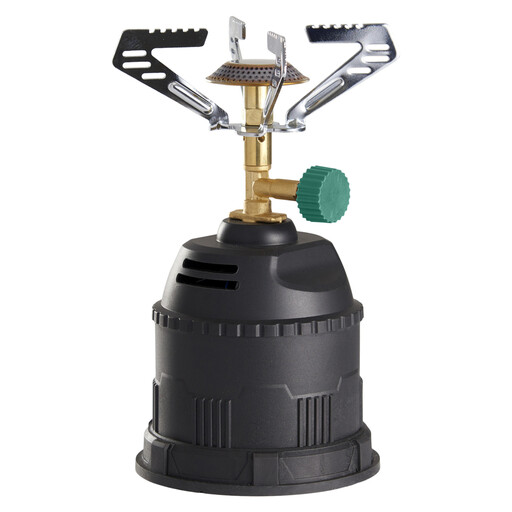
Why this product fits the profile: This compact camping stove combines a weight of 0.495 kg with 1.22 kW of power and a stated burn time of up to four hours.
The specifications for weight, power and burn time make it easier to assess before buying. The flame can be adjusted, rather than just switching between on and off.
0.495 kg net weight, 1.22 kW power and a steel-plastic construction. For outdoor use only.
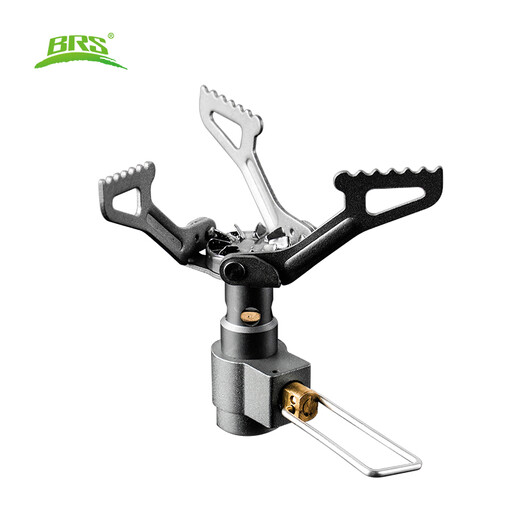
Why this product fits the profile: This titanium burner is aimed at minimalists who prioritise a very low weight and compact construction.
The weight of 26 g is clearly stated. Folding pan supports reduce the pack size, but they require a compatible pan that isn’t excessively large.
Titanium construction, 1,940 W power, adjustable flame and a stated guide time of around 2 minutes 58 seconds for 1 litre of water.
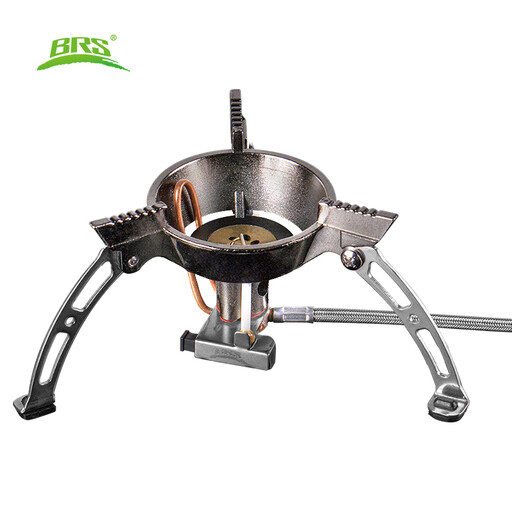
Why this product fits the profile: This outdoor gas hob offers up to 3,240 W, piezo ignition, a wind shield and several stated fuel options for regular outdoor use.
Compatibility is specifically described with butane cartridges, 7/16 thread and EN 417 cartridges. The adapter and mounting base are listed as included.
240 g weight, up to 5 kg stated load capacity, folding design, piezo ignition and carry bag.
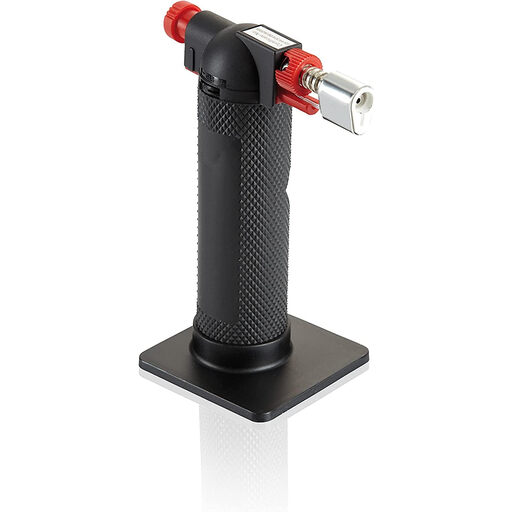
Why this product fits the profile: This kitchen flambé torch is designed for controlled work in the kitchen, such as caramelising or flambéing, and is not a camping stove.
Its intended use is clear: it is a butane gas burner for kitchen applications with a base, child safety lock and piezo ignition.
Refillable with standard butane gas, maximum temperature stated at 1,300 °C, 64 ml tank and a stable base. The device is supplied empty.
We’ve put together a full, regularly updated list of products that fully meet these strict selection criteria and the safety regulations in force in the EU.
A portable gas hob must only be used in well-ventilated outdoor areas. Tents, vehicles, indoor spaces and other enclosed areas are not suitable due to the risk of carbon monoxide. In addition:
First, choose a level, non-flammable surface outdoors. The control valve must be closed before connecting the cartridge. Then check the connection and seal. Only when no damage or leak is visible should you ignite it according to the instruction manual.
A general answer isn’t possible. The run time depends on the cartridge size, power, flame level, wind and outside temperature. A burn time of up to four hours stated by the manufacturer should therefore be understood as a guide for specific operating conditions, not as a guaranteed usage time.
The ongoing costs come from the price and size of the cartridge, as well as the gas consumption of the particular model. A powerful gas burner for camping can use more fuel on a full flame. If you only heat small amounts, you’ll usually reduce consumption by using a lower flame setting and a suitable pan size.