
Lieferung heute & morgen

Qualitätsgarantie

Willkommens-Angebote freischalten: KOSTENLOSE Lieferung | Bis zu 80 % RABATT | Kostenlose 30-Tage-JoyPlus-Testphase
App herunterladen
A portable grill offers the promise of freedom: spontaneous barbecues in the park, on the balcony, or during a camping trip. But the selection is vast, and not every model delivers on its promise. Many buyers are frustrated by flimsy construction, uneven heat, or laborious cleanup. To help you make an informed decision, we'll highlight the crucial features and show you how to avoid common pitfalls.
This guide, created by the Joybuy Product Recommendation Officer, will help you separate the wheat from the chaff and find a model that truly fits your needs.
Before we dive into the details, here are the three most common problems that can quickly ruin your barbecue fun:
To avoid these traps, you should check three key aspects before buying. These determine the durability, functionality, and safety of your grill.
The choice of material directly impacts the grill's stability, heat resistance, and susceptibility to rust.
Be sure to check the stability of the legs and the quality of the handles. Folding mechanisms should lock securely in place, and handles should be heat-insulated.
The choice of fuel is a fundamental decision that depends on your preferences and intended location of use.
A portable grill must be, above all, mobile. Therefore, pay attention to the following points:
To help you make your decision, we have matched some models to typical user profiles.
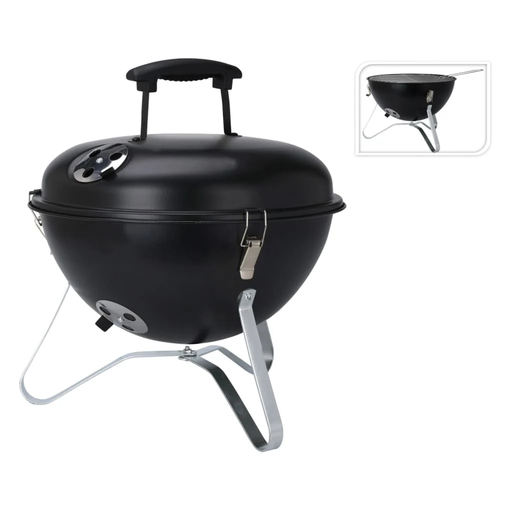
Why This Fits Their Persona: Perfect for spontaneous use in the park or on a small balcony. This model focuses on the essentials: straightforward charcoal grilling in a compact format. Ideal for beginners who appreciate that classic barbecue flavour.
The kettle shape with a lid and two air vents allows for basic heat regulation, thus avoiding the trap of uncontrollable heat.
Compact design with locking clips for easy transport. The zinc ash pan simplifies cleanup.
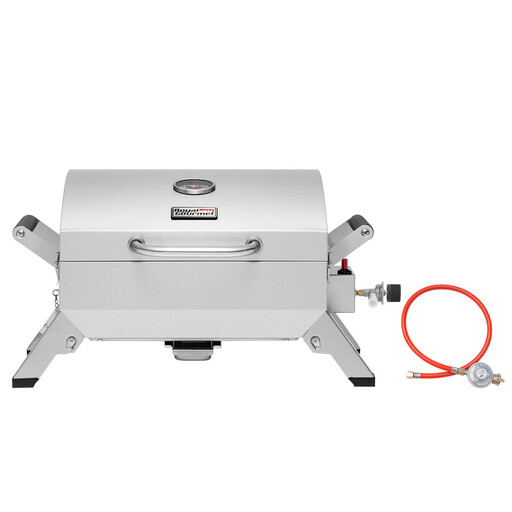
Why This Fits Their Persona: This gas grill is designed for mobility and quick deployment. It's ideal for camping, RV trips, or outings where you don't want to wait long for embers to heat up. The stainless steel body is robust for outdoor use.
The locking, foldable legs ensure a stable base and secure transport (avoids Trap 1). The integrated thermometer and U-shaped burner allow for precise heat control (avoids Trap 2).
Quick, battery-free piezo ignition. The removable grease tray and smooth stainless steel surfaces simplify cleanup.
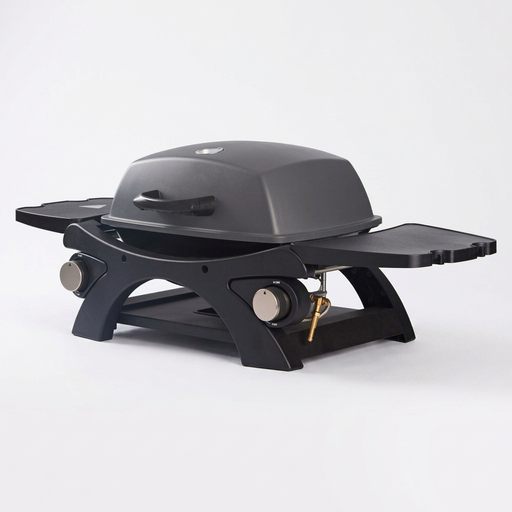
Why This Fits Their Persona: For those who don't want to sacrifice performance on the balcony. With two burners and a cast-iron grate, this grill offers the power of a larger model in a compact, tabletop format. The detachable side shelves are invaluable in limited spaces.
The two independently controlled burners enable both direct and indirect grilling, offering maximum heat control (avoids Trap 2). The solid stainless steel and aluminium construction ensures a stable footing (avoids Trap 1).
The cast-iron grate provides excellent heat retention and sear marks. Includes detachable side shelves for extra workspace.
We have compiled a complete, up-to-date list of products that fully meet these strict selection criteria and all relevant safety regulations.
This depends on your building's regulations and your lease agreement. In many apartment buildings, using a charcoal grill on the balcony is expressly forbidden due to smoke and fire hazards. A portable gas grill or an electric grill is often the permitted alternative. When in doubt, always check your building's rules first to avoid conflicts with neighbours and your landlord.
The best method is the "burn-off." After you're done cooking, heat the grill on the highest setting with the lid closed for 10-15 minutes. Food residue will burn to ash and can then be easily scrubbed off the grate with a grill brush. The grease tray should be emptied regularly and cleaned with warm, soapy water. Always wait until the grill has completely cooled down before giving it a thorough cleaning inside and out.
Direct heat means placing the food directly over the heat source (charcoal or gas burner). This method is suitable for quick, high-heat searing of items like steaks, sausages, or vegetables. Indirect heat is used on grills with a lid and at least two burners (or by strategically arranging the charcoal). The food is not placed directly over the flame. This gentler method is ideal for larger cuts of meat, chicken, or fish that need to cook through slowly and evenly without burning on the outside.