What should you look for when buying?
Single induction hob
A good fit if: your pot has a ferromagnetic base and fits the cooking zone.
Things to consider: Power levels and timers don’t prove the temperature of the broth or that it can be kept safely hot.
HiLight ceramic glass hob
A good fit if: you want to keep a pot that isn’t suitable for induction and use a compatible radiant heating zone.
Things to consider: The heating surface stays warm after the hob is switched off. The Rommelsbacher CT 2203/TC lets you choose a 140 or 210 mm zone.
Cast-iron hotplate
A good fit if: you’re looking for a single non-induction hob for your existing pot.
Things to consider: The Severin KP 1091 has a continuously adjustable control; don’t assume it switches off automatically without checking.
| What you need |
What to check when buying |
Who is this important to? |
| Keeping broth available between meals |
Check whether you can monitor the temperature of the food throughout; don’t mistake a timer or preset for a temperature reading. |
If I want broth to be ready between meals, I need to be able to plan safe hot-holding and storage. Around 33% of consumers prioritise this. |
| Controlling boiling and simmering |
Compare the controls and power levels of the exact model; at low settings, the power output may pulse intermittently. |
If I want to adjust the heat precisely after bringing the broth to the boil, clear settings are important. Around 27% of consumers prioritise controllable simmering. |
| Pot size and available space |
Check that the pot base suits the cooking zone and, if the pot is full, check its total weight too. |
If I use a larger broth pot, it needs to fit the cooking zone and the space available. Around 20% of consumers focus mainly on pot size and available space. |
| Keeping an existing pot |
Check the heating method and the requirements for the pot base; a ceramic glass surface alone doesn’t tell you whether the hob uses induction. |
If I want to keep my existing cookware, the heating method needs to be compatible. Around 20% of consumers prioritise pot compatibility. |
For hot food, the German Federal Institute for Risk Assessment recommends a minimum temperature of 60 °C throughout, in its updated guidance of 19 March 2024. A display or setting on the hob doesn’t prove that the broth has reached this temperature.
Hobs at Joybuy
The range includes portable induction hobs as well as ceramic and ceramic glass hobs. For models with several cooking zones, check that the space required and the set-up suit where you plan to use the hob.
 No image available
IsEasy induction hob, 2,100 W, nine heat settings
For broth that needs the heat adjusting after it comes to the boil; cookware must be magnetic.
The description specifies cookware with a diameter of 12–26 cm. The product title states that it has an 8-hour timer.
View at Joybuy
 No image available
Induction hob with two cooking zones and five temperature settings
Could be suitable if you need a second cooking zone alongside your broth pot; check the space required and whether the pot base is compatible.
The product title specifies five temperature settings. According to the description, the two cooking zones can be controlled independently.
View at Joybuy
 No image available
Portable induction hob, five power levels, 1,000 W
A single cooking zone for bringing broth to the boil and then adjusting the heat, provided the pot is suitable for induction.
The title specifies five power levels and 1,000 W; the description says a rotary control is used to select the heat setting.
View at Joybuy
 No image available
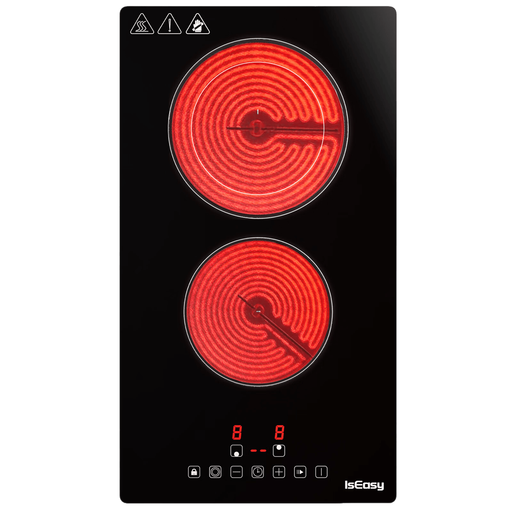
Ceramic hob with two cooking zones, 3,200 W
Could be an option if you need two cooking zones and your cookware is suitable for the hob.
The title and description specify nine power levels and a pause function. The description also states that it has a timer of 1–99 minutes and is suitable for standard cookware.
View at Joybuy
 No image available
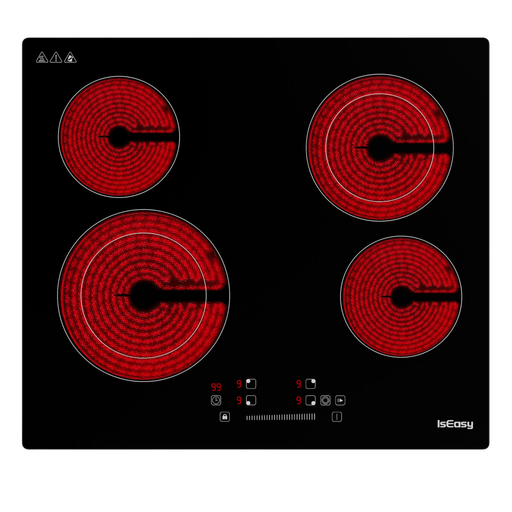
Ceramic glass hob with four cooking zones, 6,600 W
For use with several cooking zones; before choosing, check that the set-up and space required suit your cooking area.
The description specifies nine power levels, a 99-minute timer and the option to use it as a freestanding hob.
View at Joybuy
Frequently asked questions
Can I leave the broth on the hob until the next meal if I set it to 60 °C?
You can’t tell from the setting alone. The German Federal Institute for Risk Assessment recommends keeping hot food at a minimum of 60 °C throughout, so check the broth itself. If you’re not keeping it hot, the Institute recommends cooling it quickly through the temperature range in which bacteria multiply.
How can I check that a hob is compatible with my broth pot?
Check the pot base against the heating method and the specified cooking zone of the exact model. For the CASO ProSlim 2000, CASO specifies a pot size of 12–22 cm and a maximum load of 6 kg; for this model, remember to include the weight of the pot and its contents.
Who should I contact in Germany if the appliance develops a fault after purchase?
For a defect, the seller is generally responsible for the statutory consumer rights. The Verbraucherzentrale (German Consumer Advice Centre) states that the claim period is two years from delivery. This is separate from any voluntary manufacturer’s guarantee.
What should I check when buying an electrical appliance for use in Germany?
The German Federal Network Agency includes CE marking, product and manufacturer details, and German-language instructions with the required warnings among the points it checks when monitoring products on the market. A product listing alone doesn’t prove that a specific appliance meets these requirements.


