
Lieferung heute & morgen

Qualitätsgarantie

Willkommens-Angebote freischalten: KOSTENLOSE Lieferung | Bis zu 80 % RABATT | Kostenlose 30-Tage-JoyPlus-Testphase
App herunterladen
A portable hob is a flexible, space-saving solution for small kitchens, student dorms, offices, or as a supplementary cooktop. However, the market can be overwhelming, and not every model delivers on its promises. Before you make a decision, it's crucial to understand the typical pitfalls that often lead to disappointment and unnecessary expense.
As your Joybuy Product Recommendation Officer, I have filtered the essential information to provide you with a factual basis for your decision. Here, you'll learn what really matters and how to avoid the most common mistakes.
To avoid a bad purchase, you should check three core technical aspects. These determine the performance, safety, and usability of your future hob.
The choice of technology is the most fundamental decision and depends on your priorities.
The wattage figure alone is only half the story. While a high output of 1500W to 2000W is important for rapid heating, the ability to make fine adjustments is just as crucial. Look for models with stepless temperature control or multiple power levels. This allows for both high-heat searing and gentle simmering at low temperatures.
A good portable hob must be stable and safe. Essential features include:
Here are some models that represent a considered choice for specific user profiles, based on objective features.
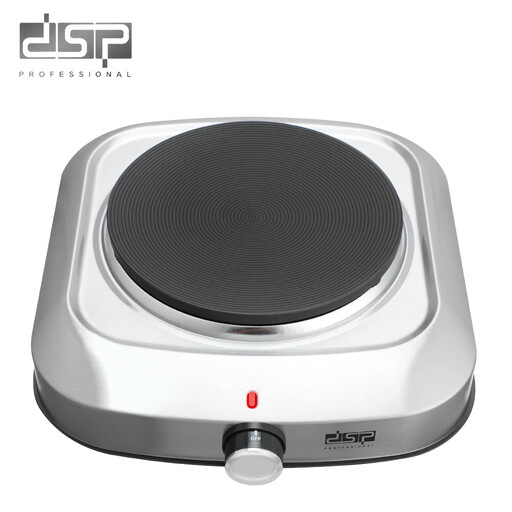
Why This Fits Their Persona: Ideal for students or as a simple secondary hob. This model focuses on the basic function of cooking without complex features. The robust cast iron plate is resilient and designed for daily use.
This model bypasses the compatibility trap (Pitfall 3) as it works with any cookware. The 1500W power rating is realistic for a cast iron plate and is designed for durability.
Universal cookware compatibility and simple, stepless temperature control via a rotary knob. The stainless steel housing is easy to maintain.
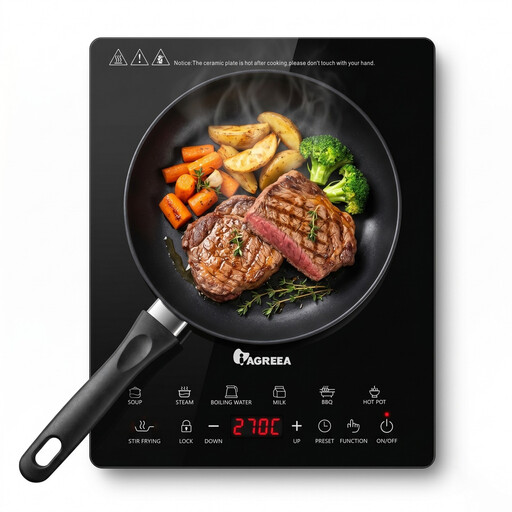
Why This Fits Their Persona: Perfect for modern, small kitchens, the office, or as a mobile hob for a caravan. The ultra-slim design makes storage easy. The 2000W induction power ensures fast and energy-efficient cooking.
Addresses safety concerns (Pitfall 2) with a child lock, pan detection, and overheat protection. The 8 power levels offer transparent and reliable control, instead of vague performance claims.
High efficiency and speed thanks to induction. The slim, portable design and the easy-to-clean glass surface are clear advantages.
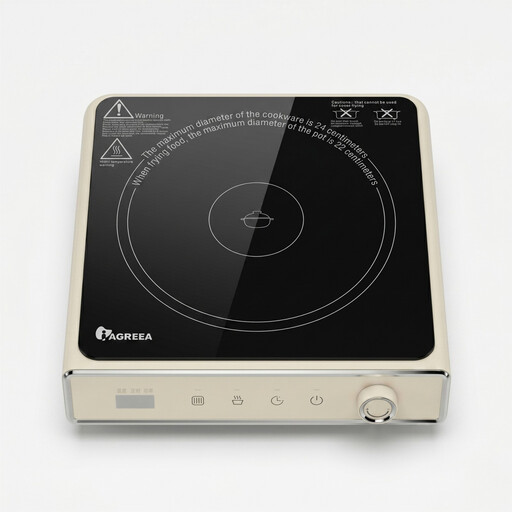
Why This Fits Their Persona: For users who want the high power of a 2000W plate and precise control, but don't want to give up their existing glass, ceramic, or aluminium cookware. The rotary knob allows for intuitive control.
Completely solves the compatibility trap (Pitfall 3), as the infrared heating technology works with all pot materials. Safety features like automatic shut-off and a residual heat indicator ("HO") are integrated.
Combines high power (2000W) with universal cookware compatibility. Many cooks find the control via a large rotary knob more precise and pleasant than pure touch controls.
We have compiled a complete, real-time list of products that fully satisfy these strict selection criteria and UK safety regulations.
1. How many watts should a good portable hob have? For simple tasks like warming up food or simmering sauces, 1000 to 1500 watts are usually sufficient. However, if you regularly want to bring water to a boil quickly or sear meat, a 2000W hob or more is recommended. More important than the maximum wattage, however, is good heat regulation that allows for constant temperatures at different levels.
2. Can I use any pot on an induction hob? No. An induction hob requires cookware with a magnetic (ferromagnetic) base. You can easily test if your pot is suitable: if a magnet sticks to the bottom of the pot, it is induction-compatible. Materials like cast iron, enamelled steel, and special stainless steel alloys work. Pots made of pure aluminium, copper, glass, or ceramic are not compatible without a special induction base layer.
3. Are portable hobs safe to use for camping? Yes, a portable hob is a good option for camping, provided that safety precautions are taken. Look for a model with a stable, wide base and non-slip feet. The hob must be operated on a level, heat-resistant surface, and adequate ventilation must be ensured. Models with integrated overheat protection and automatic shut-off offer additional safety in a mobile environment like a campervan or tent awning.