Caramel makers bringing their own pan
You’re bringing your own pan and want to make sure it will work with the hob and that its base is the right size for the cooking zone.


First, check that your pan is compatible with the heating technology and the stated cooking zone size. Then check the connection and available space at your accommodation. Induction requires compatible cookware, while radiant ceramic-glass and cast-iron hobs can also be used with other types of pan – although their surfaces may remain hot. A power or temperature setting alone does not guarantee that your caramel will cook evenly.
You’re bringing your own pan and want to make sure it will work with the hob and that its base is the right size for the cooking zone.
You need room for the pan and its handle beside the hob, want to stir safely and need to be able to put the appliance away once it has cooled.
You don’t know what the electrical installation will be like in advance, so you want to check the connection, socket and any appliances being used at the same time once you arrive.
Suitable if: Your pan has a ferromagnetic base and is the right size for the specific model.
Bear in mind: An appliance setting doesn’t measure the temperature of the sugar. Keep an eye on the caramel as it browns, and lift the pan off the hob if needed.
Suitable if: You want to keep using a pan that isn’t induction-compatible; ProfiCook states that the PC-EKP 1210 has a rotary control and is suitable for all types of pan.
Bear in mind: The manufacturer’s specifications don’t guarantee particular accuracy when making caramel. Let the heated surface cool before cleaning or putting the hob away.
Suitable if: You don’t want to rely on induction compatibility and are looking for a simple single hob with continuously adjustable settings.
Bear in mind: The cast-iron surface and 1,500 W rating of the Severin KP 1091 are manufacturer specifications. Allow for residual heat when stopping the sugar from browning and before putting the hob away.
| What matters | What to check before buying | Who should consider this? |
|---|---|---|
| Controlling the heat as the sugar browns | How the power settings work; space to put the hot pan down safely. | If you want the controls within easy reach while the sugar browns and need to be able to lift the pan off quickly, an easy-to-use control setup is particularly important. Around 33% of consumers put heat control first. |
| Using a pan you already own | For induction, check that the pan base is ferromagnetic and compare its diameter with the model specifications. | If you’re bringing your own pan, choose a hob with compatible heating technology and a suitable cooking zone. For around 27% of consumers, compatibility with their existing pan is the main concern. |
| Checking the electrical connection | Compare the rated power and appliance instructions with the socket and connection at your accommodation; don’t connect extension leads or multi-socket adapters in a chain. | If you’re cooking somewhere unfamiliar, you’ll want to check that the electrical connection can support the hob and any other appliances being used. Around 20% of consumers prioritise the available power supply. |
| Space and storage | Check the appliance dimensions, pan handle, cable route and available worktop space together; let the hob cool before putting it away. | If worktop space is limited and you plan to put the hob away afterwards, you’ll need enough room to cook safely and let it cool. Around 20% of consumers prioritise a compact setup and easy storage. |
Ceramic glass describes the surface material, not necessarily the heating technology. The CASO S-Line 2100 and ProfiCook PC-EKP 1210 both have ceramic-glass surfaces, but use different heating technologies.
Check the heating technology and pan requirements for the exact model rather than relying on the surface material alone.
If your existing pan isn’t induction-compatible, you may need a different pan for an induction hob.
A power or temperature setting doesn’t measure the sugar in the pan. What matters for caramel is how brown it becomes.
Keep an eye on the cooking process and make sure you have a suitable, clear space to put the hot pan down.
The appliance’s rated power tells you nothing about the electrical installation at your accommodation. Multi-socket adapters can be overloaded.
Check the connection requirements and appliance instructions when you arrive. Don’t connect multi-socket adapters in a chain, and check with your accommodation if you’re unsure.
The S-Line 2100 is a portable single induction hob for compatible pans.
The CT 2010/IN is a portable single induction hob that requires a ferromagnetic pan base.
The PC-EKP 1210 is a radiant ceramic-glass single hob.
The heating technology depends on the model: the KP 1032 is an induction model, while the KP 1091 has a cast-iron hob.
The SIKP 2200 B1 is a portable single induction hob.
The products below include portable induction hobs and an electric single hob. Choose based on pan compatibility, controls and the connection available at your accommodation.
 No image available
An option for portable use if your pan is induction-compatible.
The product title specifies 1,000 W and five power levels. Induction requires compatible cookware.
 No image available
This slim induction hob could be a good option if you’re short on worktop space and your pan is made from magnetic cookware.
The description specifies ten heat settings and touch controls. It can only be used with magnetic cookware.
 No image available
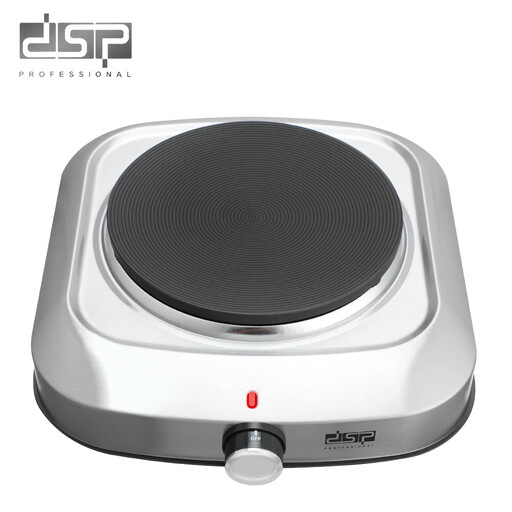
An electric single hob with adjustable temperature control may suit you if you want to adjust the heat using a dial.
The description specifies 1,500 W and a 185 mm diameter cooking plate.
 No image available
Nine heat settings give you options if you want to adjust the setting as you cook.
The description specifies magnetic cookware measuring 12–26 cm. At 2,100 W, you’ll need to pay particular attention to the electrical connection and any appliances being used at the same time at your accommodation.
 No image available
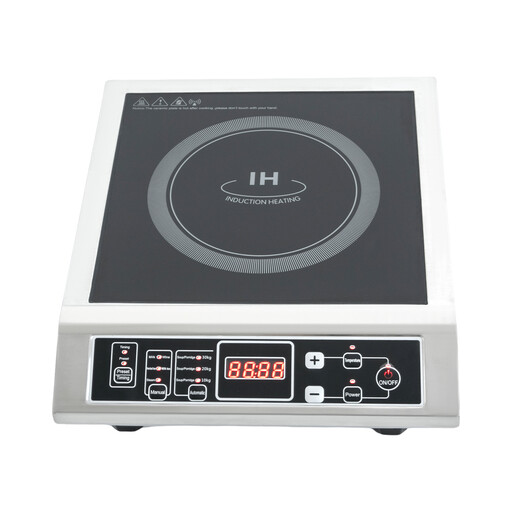
The timer function described may be useful when using the hob. Before use, check that the available connection is suitable for the appliance.
The description specifies ten temperature and power settings, as well as timer and reservation functions. At 3,500 W, you’ll need to check the connection and any appliances being used at the same time particularly carefully.
The pan base must be ferromagnetic and the right size for the specific model. A magnet sticking to the base is a useful first check. The manufacturer specifies 12–24 cm for the CASO S-Line 2100; if your pan isn’t the right size, you could consider a different heating technology.
Check the appliance’s power rating, socket, cable route and setup instructions. ELEKTRO+ points out that multi-socket adapters don’t replace a mains circuit and can be overloaded. Keep an eye on the caramel and leave a safe space for the hot pan.
Let the cooking surface and pan cool first, and follow the appliance instructions for cleaning. A smooth ceramic-glass surface may be easier to clean, but hot residue or residual heat can still cause burns.
Your statutory rights are generally against the seller; a manufacturer’s guarantee is a separate, voluntary service subject to its own terms. Verbraucherzentrale distinguishes between these rights. Before buying, also check whether you’ll need different cookware for the heating technology you choose.
If the relevant EU rules require a CE mark for the appliance, it cannot be made available on the market without the required marking; this is set out in section 7 of the German Product Safety Act (Produktsicherheitsgesetz). Bundesnetzagentur explains that the manufacturer uses the mark to declare conformity under its own responsibility. CE is not an independent quality mark: check the product’s identity and German-language safety information too.