Make sauce at the table
You want to heat the cheese sauce on an extra hob while you eat together, and be able to adjust the heat as you stir.


For cheese sauce on an extra hob, a single-hob model is enough if you’re only making the sauce on it; if you want to heat a side dish at the same time, a double hob may be a better fit. The key things to consider are the base and diameter of your pan, how easy it is to adjust the heat, and whether you have enough space and a suitable socket. Adjustable temperature settings don’t replace keeping an eye on the sauce or stirring it.
You want to heat the cheese sauce on an extra hob while you eat together, and be able to adjust the heat as you stir.
You want to choose a hob that suits your sauce pan, rather than finding you need to buy new cookware.
You need a second cooking zone for a side dish while you make the sauce, and have room for an additional appliance.
The Swissmilk recipe calls for constant stirring while bringing the sauce base to the boil. So don’t choose based on maximum power alone. Consider how easily you can adjust the heat while stirring, too.
| What matters | What to check before buying | Who should consider this? |
|---|---|---|
| Adjustable heat | Controls and low power settings: is it easy to turn the heat down while stirring? | If I’m making the sauce on an extra hob, I want to be able to adjust the heat as I stir. Around 36% of consumers rank heat control as their top priority. |
| A suitable sauce pan | For induction, check that the base is ferromagnetic and that its diameter is within the permitted range. | If you want to keep using your existing pan, check that its base and size are compatible with the hob. Around 29% of consumers prioritise pan compatibility. |
| One or two cooking zones | Decide whether you’ll be heating a side dish at the same time; check the dimensions and power of each zone. | If you want to cook the sauce and a side dish on the extra appliance at the same time, you’ll need two usable zones. Around 21% of consumers prioritise cooking two things at once. |
| Positioning and operation | Check the appliance dimensions, connection details and safety instructions against the space you plan to use. | If you cook in a shared kitchen, you’ll need a suitable place for the appliance and may want to check the operating conditions in advance. Around 14% of consumers put this first. |
The settings don’t determine how the cheese sauce behaves in the pan. The Swissmilk recipe calls for constant stirring while bringing it to the boil; keep an eye on the sauce as the cheese melts, too.
Compare the controls and the lowest settings available. Adjust the heat as needed and stay with the hob while you cook.
An induction hob needs a suitable ferromagnetic pan base. The base diameter also needs to be compatible with the model you choose.
Check the pan’s markings or see whether a magnet sticks to the base, then compare its diameter with the hob’s specifications.
For the ROMMELSBACHER CT 3410/IN, the manufacturer specifies 2,000 W and 1,400 W for the two zones. That doesn’t mean each zone delivers 3,400 W.
Compare the power of each cooking zone and decide whether you actually need the second one for a side dish.
The S-Line 2100 is an example of a portable, single-zone induction hob.
The range includes single and double induction hobs, as well as the radiant single hob CT 2200/E.
The KP 1091 is a portable single cast-iron hob, making it an alternative to an induction hob.
The SIKP 2200 B1 is a portable, single-zone induction hob.
The selection below includes portable single hobs for making the sauce, plus a double hob for when you want to heat a side dish at the same time.
 No image available
A single extra cooking zone, provided your pan is suitable for induction.
Eight temperature settings; power range of 800–3500 W; timer and overheat protection. The product details list cast-iron and stainless steel cookware as compatible.
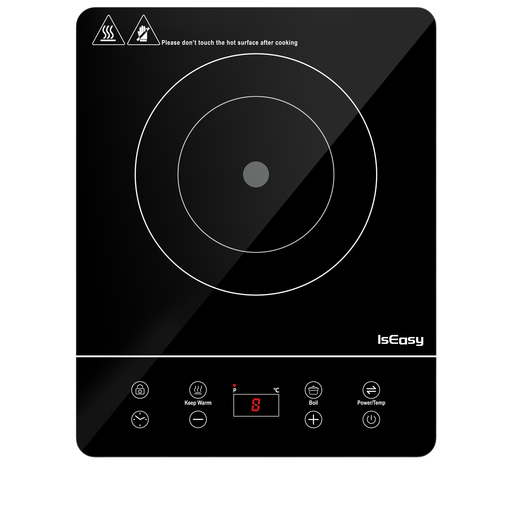 No image available
A portable cooking zone for making sauce, if your existing pan meets the appliance’s induction requirements.
Nine power levels and nine temperature settings; 8-hour timer; child lock. The product details specify a suitable magnetic pan base with a diameter of 12–26 cm.
 No image available
Could be a good fit if you want to heat the sauce and a side dish on the extra appliance at the same time, and both pans are suitable for induction.
Two independently usable cooking zones and five temperature settings. The product description lists functions for keeping food warm, boiling, simmering, frying and slow cooking.
 No image available
A single hob as an alternative if your pan isn’t suitable for induction; the product description specifies that heat-resistant pans are required.
Ceramic cooking surface, timer, and touch and rotary controls.
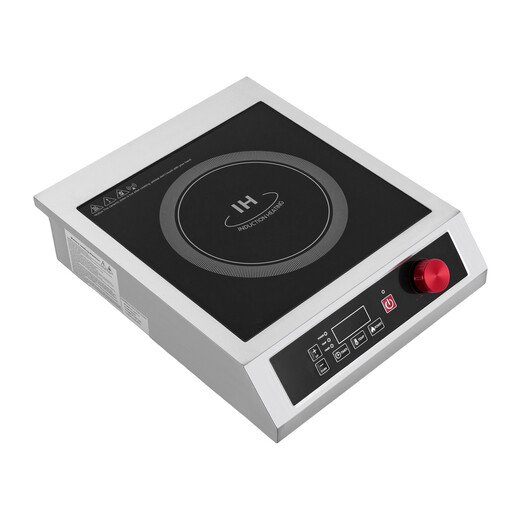 No image available
A single cooking zone for making sauce, provided the pan base is suitable for induction and the connection details work for your chosen location.
Ten power levels and ten temperature settings; EU plug. The product details specify a flat pan base with a diameter of up to 9.84 inches.
Not necessarily. Check that the pan has a ferromagnetic base and that its diameter is suitable for the appliance you choose. For the CASO S-Line 2100, the manufacturer specifies a range of 12–24 cm.
No. Allow time to stir the sauce and keep an eye on it. The Swissmilk recipe calls for constant stirring while bringing the sauce base to the boil; a timer is an appliance feature, not an indication of how the sauce will behave.
Check the appliance dimensions and connection details against the space you plan to use, and read the positioning and safety instructions for the specific model. The radiant ROMMELSBACHER CT 2200/E has an indicator to show residual heat.
Yes. If the appliance falls within the scope of the EU Low Voltage Directive, the relevant conformity requirements apply, including CE marking. The European Commission describes CE marking as the manufacturer’s declaration that the product meets the applicable EU requirements; it isn’t an independent quality mark.