Batch-cooking tagine
You’re preparing several lunches in one pot and want to control the heat after bringing it to the boil, before chilling the portions.


First, check that the base of your specific tagine is compatible with the heating method and cooking zone: ROMMELSBACHER requires a ferromagnetic base for the CT 2020/IN, while Emile Henry explicitly states that its Delight tagines are suitable for induction. A single hob is enough for one pot, provided the cookware, filled weight, available space and power supply are all suitable. A second zone is mainly useful if you want to cook a side dish at the same time. Cooked portions should be chilled promptly, whatever hob you use: the German Federal Institute for Risk Assessment (BfR) recommends cooling leftovers to below 7 °C within a few hours.
You’re preparing several lunches in one pot and want to control the heat after bringing it to the boil, before chilling the portions.
You want to keep using your cookware, so you check its stated hob compatibility, base and size.
You want to prepare a side dish while the main dish simmers, so you’ll need to allow for a second zone, space and a suitable power supply.
A good choice if: your specific cookware is explicitly stated to be suitable for induction and you’re cooking on one zone.
Bear in mind: ROMMELSBACHER requires a ferromagnetic base for the CT 2020/IN; the material name alone doesn’t prove compatibility.
A good choice if: your pot is suitable for this heating method and you prefer a smooth cooking surface.
Bear in mind: the ROMMELSBACHER CT 2203/TC has a selectable 140/210 mm heating zone and a residual heat indicator; allow space for the surface to cool after cooking.
A good choice if: your existing pot is suitable for the heating method and one cooking zone is enough.
Bear in mind: SEVERIN lists a cast-iron plate and continuously variable control for the KP 1091; check the controls and compatibility for the specific model and cookware.
| Criteria | What to check before buying | Who should pay particular attention? |
|---|---|---|
| Controlling the simmer | Compare low power settings and controls; a timer doesn’t prove that the food will stay at a constant temperature. | If I want to keep the dish at a controlled simmer after bringing it to the boil, easy-to-use low settings matter to me. Around 36% of consumers prioritise control over simmering. |
| Keeping your existing cookware | Check the manufacturer’s guidance on the heating method, ensure the base makes flat contact, and check the hob’s permitted base diameter. | If I want to keep my tagine, I first check its specific hob compatibility and base. Around 29% of consumers prioritise compatibility with cookware they already own. |
| Space and weight | Compare the appliance dimensions and space required, and check the permitted load if applicable, with the weight of the filled pot. | If I’m cooking several portions at once or have limited space, the hob must safely support the filled cookware. Around 21% of consumers focus mainly on the space available and the weight of the pot. |
| Second cooking zone | Consider a double hob only if you’ll be cooking two things at once; check its dimensions, power supply requirements and the space it needs. | If I want to cook a side dish at the same time, I’ll need a second zone and enough space. Around 14% of consumers prioritise cooking two things at once. |
A ceramic-glass surface doesn’t tell you how the hob heats. The ROMMELSBACHER CT 2203/TC is a radiant hob, not an induction hob.
Check the hob’s heating technology and your cookware’s stated compatibility separately.
If your existing cookware isn’t suitable for the heating method you choose, you may need to buy additional pots and pans.
Power settings and a water-boiling test don’t prove that a chickpea tagine will simmer evenly over a low heat.
Compare how easy the lower settings are to use, and keep an eye on the heat and liquid in the pot as you cook.
With a full pot, you also need to account for the handles, the space needed and the load limit specified for that model.
Check the dimensions, placement instructions and load limit against your filled cookware, as well as the appliance’s power supply requirements.
A second cooking zone needs extra space.
An automatic shut-off function won’t cool cooked portions. The BfR highlights the importance of keeping food sufficiently chilled during storage and transport.
Divide the food into portions after cooking, and plan how you’ll keep it chilled both in storage and on your commute.
The models listed use different heating methods, making them useful for comparing with the cookware you already own.
The ProMenu 2100 is a portable single induction hob, so you can check its compatibility with your cookware size and the load limit.
The models listed include a single cast-iron hotplate, a single induction hob and a double induction hob.
The EKI 3569 is a portable single induction hob with touch controls.
The SIKP 2200 B1 is a specific portable single induction hob.
The Joybuy products below are portable hobs for cooking tagine and preparing meals in advance. Check the heating method, number of cooking zones and cookware compatibility for each specific model.
 No image available
This model could suit you if you need a single cooking zone for one pot; check that your cookware is compatible with the heating surface.
Heating ring: 18 cm; 1.500 W.
 No image available
A portable induction cooking zone; your tagine must be explicitly stated to be suitable for induction.
2100 W; 28 cm; 9 heat settings; timer up to 8 hours; touch controls; glass surface.
 No image available
Two cooking zones could be useful if you want to prepare a tagine and a side dish at the same time; make sure you have enough space.
Induction; two cooking zones; 5 temperature settings.
 No image available
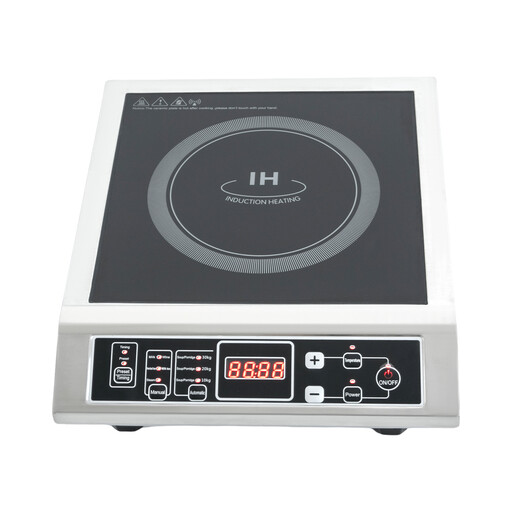
This induction model is only suitable for cookware explicitly stated to be induction-compatible; check that its base matches the cooking zone.
3500 W; IGBT heating; timer and preset function.
 No image available
This infrared hob could be suitable if your specific cookware is approved for this heating method; check the manufacturer’s guidance.
3500 W; timer; touch controls and rotary dial.
Don’t assume it’s suitable just because it’s made of ‘ceramic’. Emile Henry explicitly states that its Delight range of tagines is suitable for induction; check the approval for your specific cookware, as well as the hob’s base and size range.
A timer confirms that the hob can switch off at a set time, but it doesn’t monitor the cooking process or the food’s temperature. Follow the operating and placement instructions for your specific appliance, and keep an eye on the dish while it cooks.
The BfR recommends cooling leftovers to below 7 °C within a few hours. To help them cool, divide larger amounts between several shallow containers, store them in the fridge and eat them within two to three days. Keep food that needs chilling cold while you’re out, too.
According to Your Europe, CE marking is required when relevant harmonised EU rules require it for the product. It is the manufacturer’s declaration of conformity, not an independent performance test. The Verbraucherzentrale distinguishes between your statutory rights against the seller and a voluntary guarantee.
Whether it works out cheaper depends on whether you actually use both zones at once and how long they’re on for. Compare appliances based on their actual power consumption when used in the same way; the rated power alone won’t tell you the cost of cooking a meal.