If you already have a soup pan
If you want to keep using your existing pan, check that its base is suitable for induction and matches the diameter of the cooking zone.


A portable single-zone induction hob is a good fit if your soup pan has a magnetic base that matches the model’s cooking zone. If your pan isn’t suitable for induction, consider a conventional single-zone hob instead. In a shared kitchen, you should also check the available worktop space and the electrical connection. A second cooking zone is only really useful if you regularly cook with another pan at the same time.
If you want to keep using your existing pan, check that its base is suitable for induction and matches the diameter of the cooking zone.
If other kitchen appliances might be in use at the same time, check the appliance instructions and the actual electrical connection and installation conditions.
A single cooking zone may be enough for one pan of courgette soup. A double hob is mainly worth considering if you regularly use another pan at the same time.
A good fit if: Your soup pan has a ferromagnetic base that matches the specified cooking zone range.
Worth noting: Unsuitable cookware won’t work; the glass surface may still be warm after cooking because of the hot pan.
A good fit if: Your existing pan isn’t suitable for induction and matches the specified cooking zone.
Worth noting: The radiant heating element warms the cooking surface, so residual heat matters when you’re clearing away and cleaning.
A good fit if: You want a simple single cooking zone without needing an induction-compatible pan.
Worth noting: Let the cast-iron cooking surface cool down before putting the hob away.
A good fit if: You regularly need to use a second pan alongside your soup.
Worth noting: It takes up more space; how power is shared and the connection requirements depend on the model.
| What to consider | What to check | Who should pay particular attention? |
|---|---|---|
| Pan and cooking zone compatibility | For induction, compare the magnetic base and its diameter with the specifications for the exact model. | If I want to keep using my existing soup pan, I’ll check its base and diameter first. Around 33% of consumers focus primarily on whether their pan fits the cooking zone. |
| Connection and positioning | Check the rated power, appliance instructions and actual connection requirements; a multiway adaptor doesn’t provide an additional circuit. | In a shared kitchen, I want to be able to use the hob with the intended connection, even when other appliances are in use. Around 25% of consumers prioritise connection and positioning requirements. |
| Adjusting the heat for simmering | Compare the controls and power settings, or whether the heat can be adjusted continuously; a timer doesn’t replace following the instructions. | For my soup, I want to be able to turn the heat down appropriately after bringing it to the boil. Around 25% of consumers prioritise being able to adjust the heat when switching to a simmer. |
| Available space and cooking zones | Check the space available and the required clearances; only choose a second zone if you’ll actually cook with two pans at once. | If worktop or storage space is limited, the hob needs to fit; I only cook with a second pan when I genuinely need to. Around 17% of consumers prioritise the space required or the number of cooking zones. |
Ceramic glass describes the surface; on its own, it doesn’t tell you whether a hob is induction or conventionally heated. The two heating methods have different requirements for pans.
Check the heating method of the specific model. For induction, make sure the pan base is magnetic and compatible with the cooking zone.
Several high-powered appliances may be in use at once in a shared kitchen. ELEKTRO+ and Das sichere Haus warn that unsuitable multiway adaptors can cause overloading and fire hazards.
Follow the appliance instructions and the actual connection requirements, rather than plugging additional appliances into a power strip.
A second cooking zone isn’t automatically useful for a single pan of soup; on double hobs, power may be shared between the zones.
Choose according to how often you really need to cook with two pans at once, and check the power limits and compatible pan sizes for the specific model.
The CT 2020/IN and CT 2200/E demonstrate two different heating methods in portable single-zone hobs.
The Touch 2000 is a portable single-zone induction hob, while the ProGourmet 3500 is a double hob.
The KP 1071 and KP 1091 are portable single-zone hobs that use different heating methods.
The IK 35 is a portable induction model with one cooking zone.
The SIKP 2200 B1 is a portable induction model that has also been covered in an independent product test.
The portable single-zone induction hobs below are designed for use with a soup pan. Before buying, check that your pan base is magnetic and compatible with the specified range for the exact model.
 No image available
Suitable for a soup pan if its base is magnetic and compatible with the hob.
Nine heat settings and an 8-hour timer are listed. The product description specifies magnetic cookware with a diameter of 12–26 cm.
 No image available
A portable single-zone hob for one pan; with induction, the pan base must be suitable.
The product title specifies 1.000 W and five heat settings.
 No image available
For bringing soup to the boil and then adjusting the heat; the pan must be suitable for induction.
The description lists ten temperature settings, a timer and an automatic soup function.
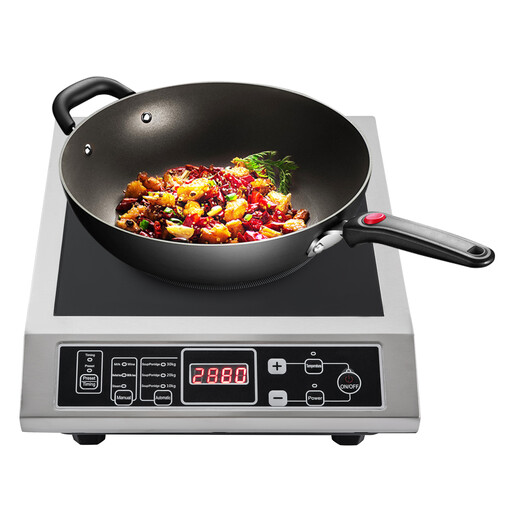 No image available
Suitable for a soup pan with a compatible magnetic base; check the controls allow you to set the heat as required.
The description lists a soup mode, eight temperature settings and a timer.
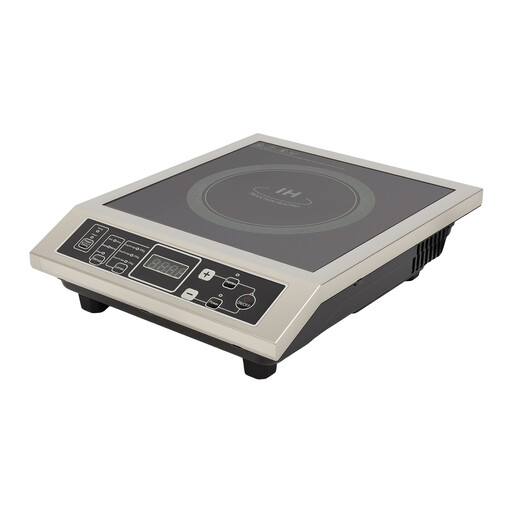 No image available
For one soup pan, as long as its base is suitable for induction.
The product title specifies ten power levels, a timer and preset function, and an EU plug.
Check whether a magnet sticks to the base of the pan, then compare its diameter with the range specified for the exact hob model. The diameter of the pan’s rim alone isn’t enough to assess compatibility.
Don’t assume that a multiway adaptor provides extra electrical capacity. Follow the appliance instructions and check the connection and usage requirements where you are; general guidance can’t tell you whether a particular shared kitchen’s installation is suitable.
One cooking zone may be enough for a single pan of soup, as long as the pan and cooking zone are compatible. A second zone is mainly useful if you regularly use another pan at the same time.
The German Environment Agency recommends cooking with a lid on and turning down the heat after the initial heating. Let the hob cool down before cleaning, as instructed in the appliance manual; conventionally heated surfaces may retain heat.
A new hob placed on the German market and covered by the 1. ProdSV must carry the required CE marking. The Federal Institute for Occupational Safety and Health explains the requirements for electrical equipment. The CE mark alone doesn’t prove that the product has undergone independent safety testing.